4 Weeks Pregnant hCG Levels
Finding out about the pregnancy at 4 weeks can lead to a rollercoaster of feelings like excitement, hope and, curiosity. At this time, the body has just started to change and one of the first signs of a healthy pregnancy is the elevation in the HCG hormone.
In this article blog, we are going to talk about normal HCG levels after 4 weeks, the reasons what low HCG levels after 4 weeks do, when they rise, the effects on what their levels are, when you need to talk to a doctor, and how specialists at SCI IVF are able to track your early pregnancy with the most care and focus.
What Is HCG and Why Is It Important?
HCG is one of the first pregnancy hormones the body makes after an egg implants into the uterus, indicating a pregnancy, and is what tests pick up to detect a pregnancy. HCG is a critical pregnancy hormone as it keeps the levels of progesterone high to maintain the pregnancy. Stable levels of heroin are a good indicator of a healthy and progressing pregnancy. Abnormal levels of HCG can indicate problems.
Key Points
- Confirms a pregnancy
- Keeps progesterone levels high
- Used in early stages of pregnancy to support the developing fetus
- Levels in blood increase in the early stages of pregnancy to indicate a healthy pregnancy
Normal HCG Levels at 4 Weeks Pregnant
There is not just one “perfect” number when it comes to healthy HCG levels at 4 weeks, and that is because each woman’s body produces HCG at different rates and implantation can take place at different times. Each body is different.
Typical levels of HCG at 4 weeks can be anywhere from 5 to 426 mIU/mL.
A value within this range—and even slightly outside of it—can still result in a perfectly healthy pregnancy. If your HCG is on the lower side, it may simply mean you implanted a bit later. If your levels are on the higher side, it could mean strong implantation, earlier conception than calculated, or the possibility of twins.
The key factor doctors look for is not the number itself, but whether the levels increase appropriately every 48–72 hours.
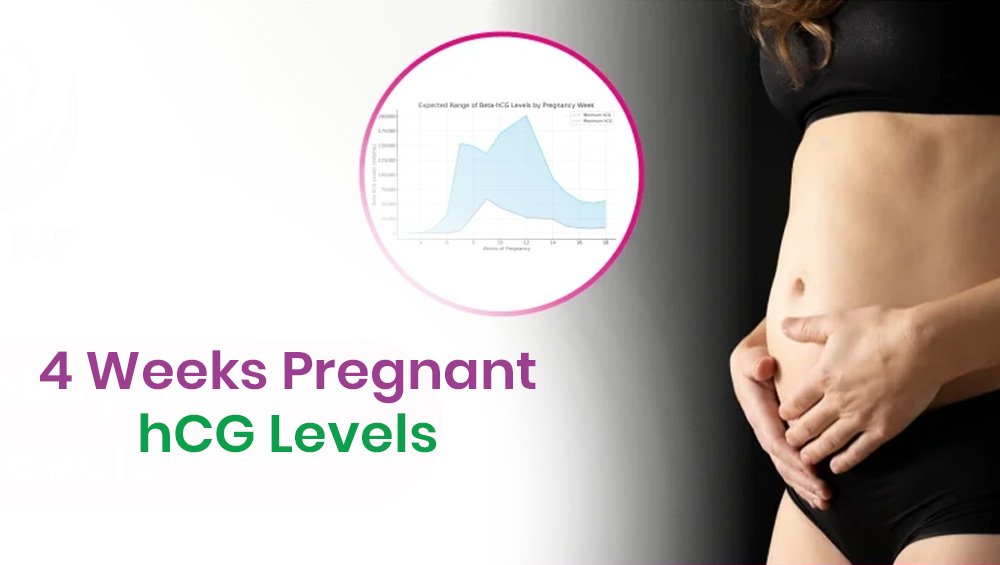
HCG Levels Chart at 4 Weeks
Below is a simple chart to give context to how HCG progresses around this stage:
At 4 weeks, your HCG is just beginning to rise significantly. Even if the number appears low, it can double rapidly and soon enter a higher range. The speed of rise is a much better indicator than the starting value.
Low HCG Levels at 4 Weeks: What Does It Mean?
Anxiety can be caused by witnessing low HCG levels at 4 weeks; however, more often than not, it does not signify a problem. Every woman is different with timing their pregnancy, especially if ovulation is late or if implantation takes longer than usual.
Reasons low HCG levels can be observed at 4 weeks include, but are not limited to:
- Delay in implantation or ovulation
- Miscalculated dates on the menstrual cycle
- Testing too early
- An HCG rise that is slower, but is still considered healthy
In these situations, just waiting 48 hours to take a test again is typically enough to determine progress. If the HCG levels double normally, it is probable the pregnancy is healthy.
Regardless, if the levels stay the same or not rise as the doctor is anticipating, there is the possibility of:
- Very early pregnancy loss
- Possible miscarriage risk
- Ectopic pregnancy
That’s why early HCG monitoring is an indispensable instrument in determining next steps, but it should always be done so in context.
High HCG Levels at 4 Weeks: What Could It Indicate?
Having low HCG levels in pregnancy can be worrying, but the opposite can raise concerns too. If you find yourself in this situation, understand that high levels at 4 weeks can be completely normal.
The following are some of the completely normal reasons that can explain why a woman may have high HCG levels.
- Getting pregnancy date wrong
- Implantation occurs earlier than usual
- Initial placental development is rapid
- Pregnant with multiples
In IVF, HCG levels can be higher than normal since embryo implantation is done with precise timing.
The only way to find the exact cause of the elevated HCG levels is with a follow-up test or a early ultrasound. So long as there are no concerning symptoms, elevated HCG levels are rarely risky.
When Should You Be Concerned About HCG Levels?
While changes in HCG levels h are normal, some changes could indicate a problem that needs a doctor's care. You should reach out to your physician in any of the following circumstances:
- HCG Values increase, but not by at least 60% over a 2 to 3 day period
- HCG Values stay the same or start to go down
- You have severe pain in your abdomen
- You are bleeding a lot
- You have any symptoms of an ectopic pregnancy
A doctor’s evaluation at this time is critical to avoid problems, and the best IVF hospital in Delhi is good at this. Given the changes in the HCG level, other tests and scans may be needed, and the doctors just might want to keep checking in with you.
How HCG Testing Is Performed
To find out how much HCG is present in your body four weeks after getting pregnant, doctors perform what's called a quantitative blood test, or a beta HCG test for short. HCG levels in your blood stream are measured with this test.
Some important points of this test include:
- First test: Confirms pregnancy.
- Second test (after 48 hours): Checks the rate of rise.
- Serial tests: Monitored if there are concerns about how far the pregnancy has progressed
While urine tests can identify a pregnancy, they can't tell you how fast the levels of the hormone are increasing. Blood tests can give doctors the information they need in order to make the right medical decision.
HCG Levels After IVF: How They Differ
After the embryo transfer, IVF patients have their HCG levels tracked 10–14 days after the transfer, and in the case of IVF, the timelines of the implantation of the embryos are easily predictable, making HCG values much more valuable to doctors.
By 4 weeks after embryo transfer in IVF:
- HCG blood test values can be higher or lower but should still be in the same range (no significant changes)
- Being on medication used during IVF (progesterone and estrogen) can impact the HCG symptoms.
- Relying on the trends is more important to a doctor than any one value.
- Monitoring HCG values can help a doctor know the possible issues early on and help fix them.
SCI IVF uses best practices for monitoring so patients know the HCG results with confidence and peace of mind.
Tips for Women Who Are 4 Weeks Pregnant
Being pregnant for the first time can be scary, but it is not too difficult if you follow these basic steps:
- Try to stay calm and don’t over analyze the HCG values
- Listen to your doctor and do what you have to do for testing
- Eat a balanced breakfast and stay hydrated
- Make sure to take your prenatal if you aren’t already
- Do not drink alcohol, smoke or drink too much caffeine
- Get some light exercise and rest
- Use relaxation techniques
These early weeks can be tough but just being mindful of your lifestyle can really help.
Conclusion
The HCG levels at 4 weeks pregnant help you get a sense of your pregnancy, though they are only a small piece of the pregnancy puzzle. Even if your levels are a little low, right on track, or higher than expected, the most important thing is how your levels rise over time. Not every pregnancy complication is indicated by slow or low levels, and a lot of people with abnormal early levels go on to have a healthy pregnancy.
If you ever get the sense that something might be a little off, early evaluation by specialists can be very helpful. At SCI IVF, the best IVF hospital in Delhi, we offer expert HCG trend monitoring, interpretation, and modeling, along with complete care. With appropriate levels of support and helpful early medical intervention, you can be on the right track to a healthy pregnancy.