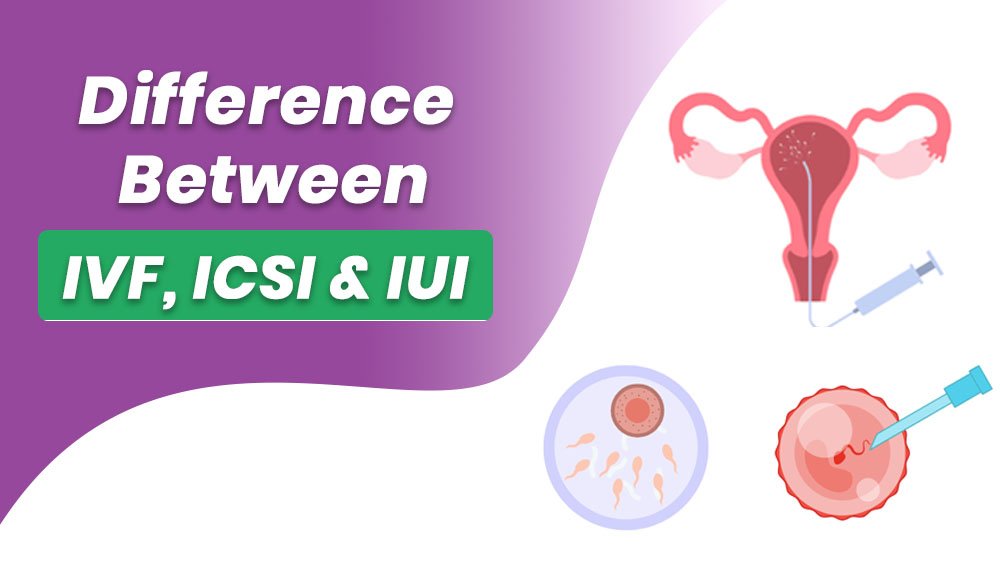
Difference Between IVF, ICSI & IUI
Couples trying to conceive often have to take in a lot of new medical terms at once. Saying IUI, IVF, and ICSI together at a fertility consultation can leave a lot of people wondering what each of these is and why they're prescribed separate treatments.
To make things worse, there is a lot of information online, but there are gaps, and even too much detail for someone who isn't a doctor. Although all three procedures are intended to assist in the conception of a child, they are very different from one another and are utilized for different purposes.
This blog post will clarify what IUI, IVF, and ICSI are, when each procedure is recommended, how they differ from one another, and how doctors determine which procedure to use.
Understanding Assisted Reproductive Treatments
Assisted Reproductive Treatments (ART) refer to medical techniques that help couples conceive when a natural pregnancy does not occur despite regular attempts. The treatments support various reproductive processes which include ovulation, fertilization and embryo implantation.
ART requires medical professionals to select the best treatment through their assessment of available options instead of selecting the latest technology. Fertility experts combine diagnostic testing with clinical history and details about the patient to craft a treatment plan with the greatest chance of conception. They also prioritize the safety and effectiveness of the treatment.
What is IUI?
One of the most common forms of assisted reproduction is Intrauterine Insemination(IUI) during which the healthcare provider implants processed sperm into the uterine cavity and closes the cervix during the ovulatory window.
This is aimed at increasing the number of sperm that can reach the fallopian tubes which helps to improve the chances of fertilization for patients with some male factor infertility, unexplained infertility and cervical obstruction.
Who Is Usually Advised IUI Treatment?
Intrauterine Insemination treatment works best for couples who experience unexplained infertility problems, mild male-factor infertility, ovulation problems and female cervical disorders that block sperm movement. The procedure becomes necessary when couples cannot practice timed intercourse because of their professional commitments or their health conditions.
IUI treatment becomes unsuitable for patients with blocked fallopian tubes, severe male infertility problems or elderly patients who need advanced medical interventions.
What Is IVF (In Vitro Fertilization)?
In Vitro Fertilization(IVF) functions as a fertility treatment that uses laboratory methods to fertilize eggs with sperm to create embryos which doctors then transfer to a patient's uterus for pregnancy initiation. The process contains multiple steps which start with ovarian stimulation and proceed through egg retrieval and fertilization until doctors conduct embryo transfer.
When Is IVF Recommended?
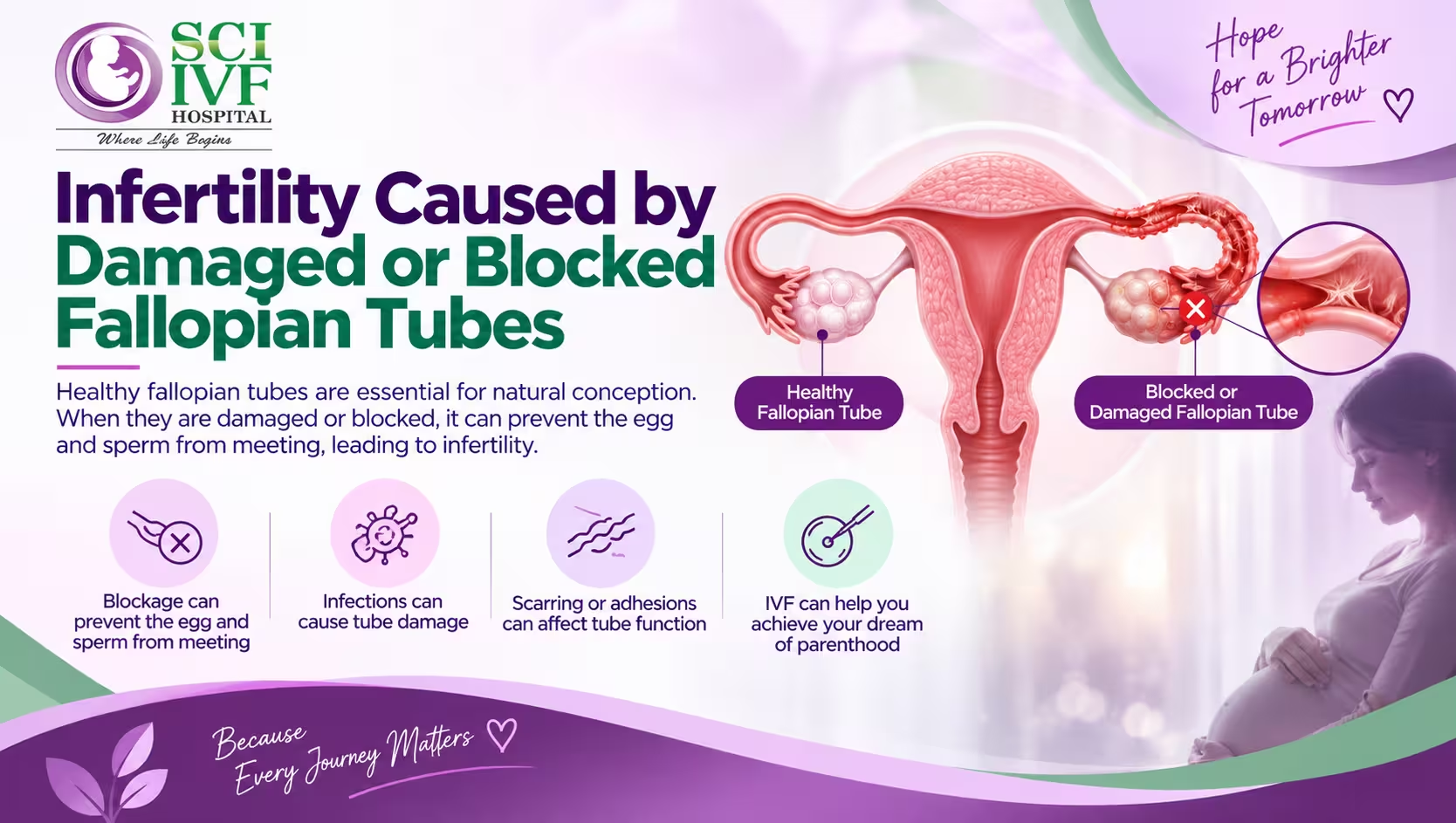
IVF becomes necessary for women who experience blocked fallopian tubes or who have severe endometriosis or who are older or who have unexplained infertility lasting more than one year.
The procedure becomes necessary when all previous IUI treatments have failed to produce results. IVF provides a systematic method for achieving pregnancy by overcoming all natural obstacles that prevent fertilization from occurring.
What Is ICSI (Intracytoplasmic Sperm Injection)?
Intracytoplasmic Sperm Injection (ICSI) represents a specific in vitro fertilization (IVF) method that enables direct injection of one sperm into an egg's cytoplasm for fertilization through artificial means.
The procedure primarily addresses severe male infertility cases which involve low sperm count, poor motility, and abnormal shape, together with previous unsuccessful IVF attempts to create embryos for a successful pregnancy.
In Which Situations Is ICSI Preferred?
ICSI is recommended for treating male infertility cases that show severe problems. The procedure is recommended when surgeons extract sperm from patients or when previous attempts at IVF resulted in insufficient fertilization.
ICSI is used in intravenous fertilization procedures to treat specific medical conditions that require such treatment.
Key Differences Between IUI, IVF, and ICSI
How Fertility Specialists Choose Between IUI, IVF, and ICSI
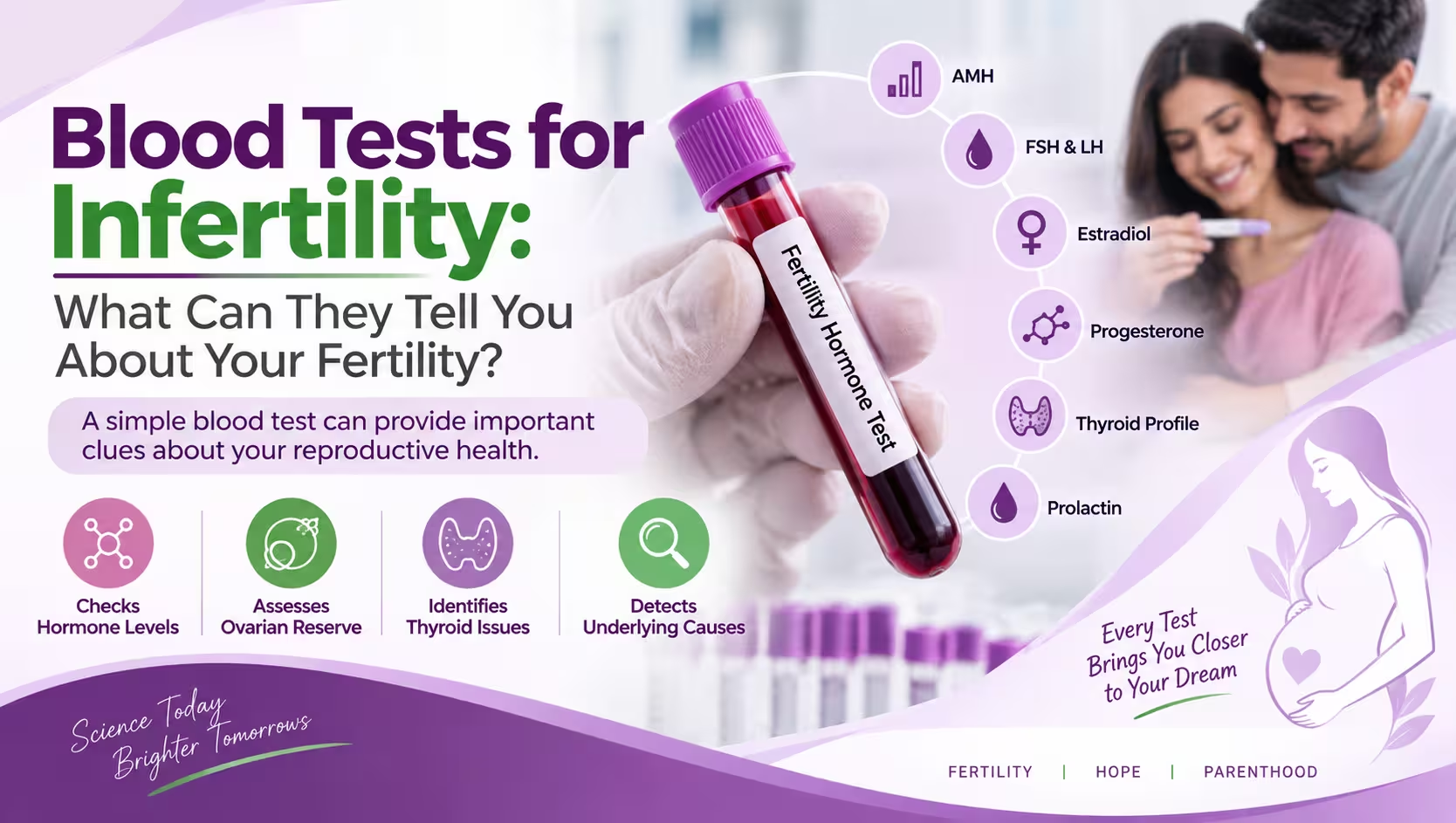
Fertility specialists consider many things before deciding which treatment to prescribe to their patients. These include the age of the woman, her hormone levels, ovarian reserve, fallopian tube health, semen analysis, length of time with infertility, and past treatment experiences.
Fertility specialists always try to go for the most suitable treatment that matches the medical findings and is safe for the patient instead of always opting for the most modern treatment available.
Which Fertility Treatment is Right for You?
Each situation must be properly diagnosed and assessed before you determine what treatment is most appropriate for you. There is no value in ‘self-prescribing’ possible solutions before considering what is appropriate for you. Searching for possible solutions on the internet can cause significant emotional and financial distress.
Final Summary: Making an Informed Fertility Treatment Decision.
Different types of fertility procedures exist for different reasons: IUI, IVF, and ICSI. IUI is the simplest of the three and can be used for specific fertility problems. IVF can be used for more complicated fertility problems and is more extensive, while ICSI is used for problems with fertilization on the male's side.
Fertility treatment is based on proper diagnosis and integrity at SCI IVF Hospital. The Expert fertility professionals at SCI IVF Hospital can assist you in taking the next step with confidence if you are considering fertility options or are trying to understand which fertility procedure may be best suited for you.