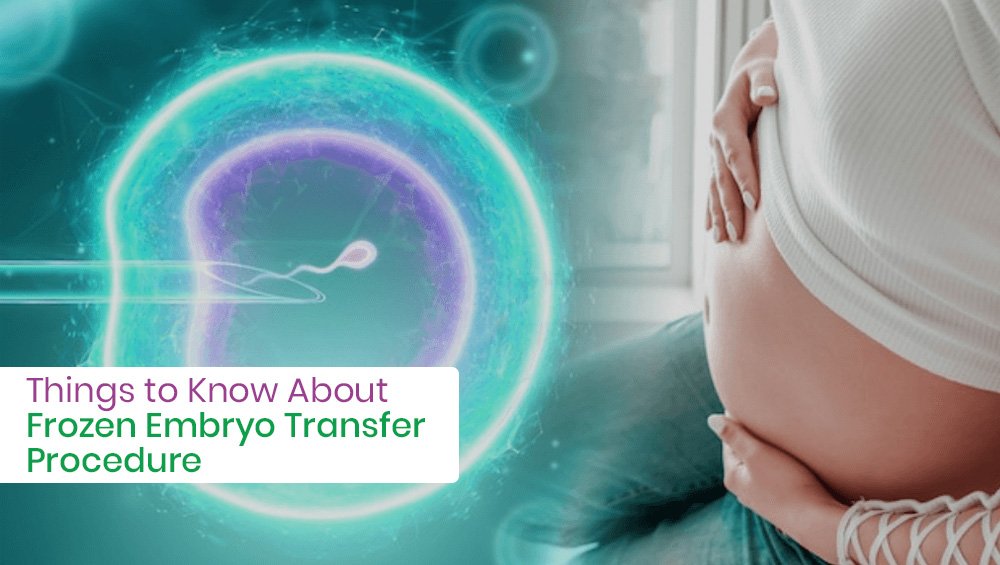
Things to Know About Frozen Embryo Transfer Procedure
There have been some pretty successful advancements in infertility treatments particularly in IVF (In Vitro Fertilisation) with Frozen Embryo Transfer (FET) becoming a success. It has been a frequently recommended option for couples who have gone through IVF, particularly when multiple good quality embryos are developed during the stimulation cycle.
FET provides easy scheduling and higher success rates in certain scenarios. And in cases where a woman medically or hormonally isn’t in a good place for a fresh embryo transfer, FET provides a safer alternative. It is helpful to understand FET and the IVF process as a whole, whether you are prepping for your very first IVF or moving to FET after a FET cycle.
This piece breaks down the process of Frozen Embryo Transfer, its working process, benefits, success rates and risks and increases in couples opting for FET instead of fresh embryo transfers.
What Is Frozen Embryo Transfer (FET)?
A Frozen Embryo Transfer (FET) is when a woman’s uterus is prepared for and then thawed frozen embryos are transferred at the optimal time in her menstrual cycle. Embryos are created and frozen in IVF cycles when multiple eggs are fertilized and the best embryos are then selected for freezing.
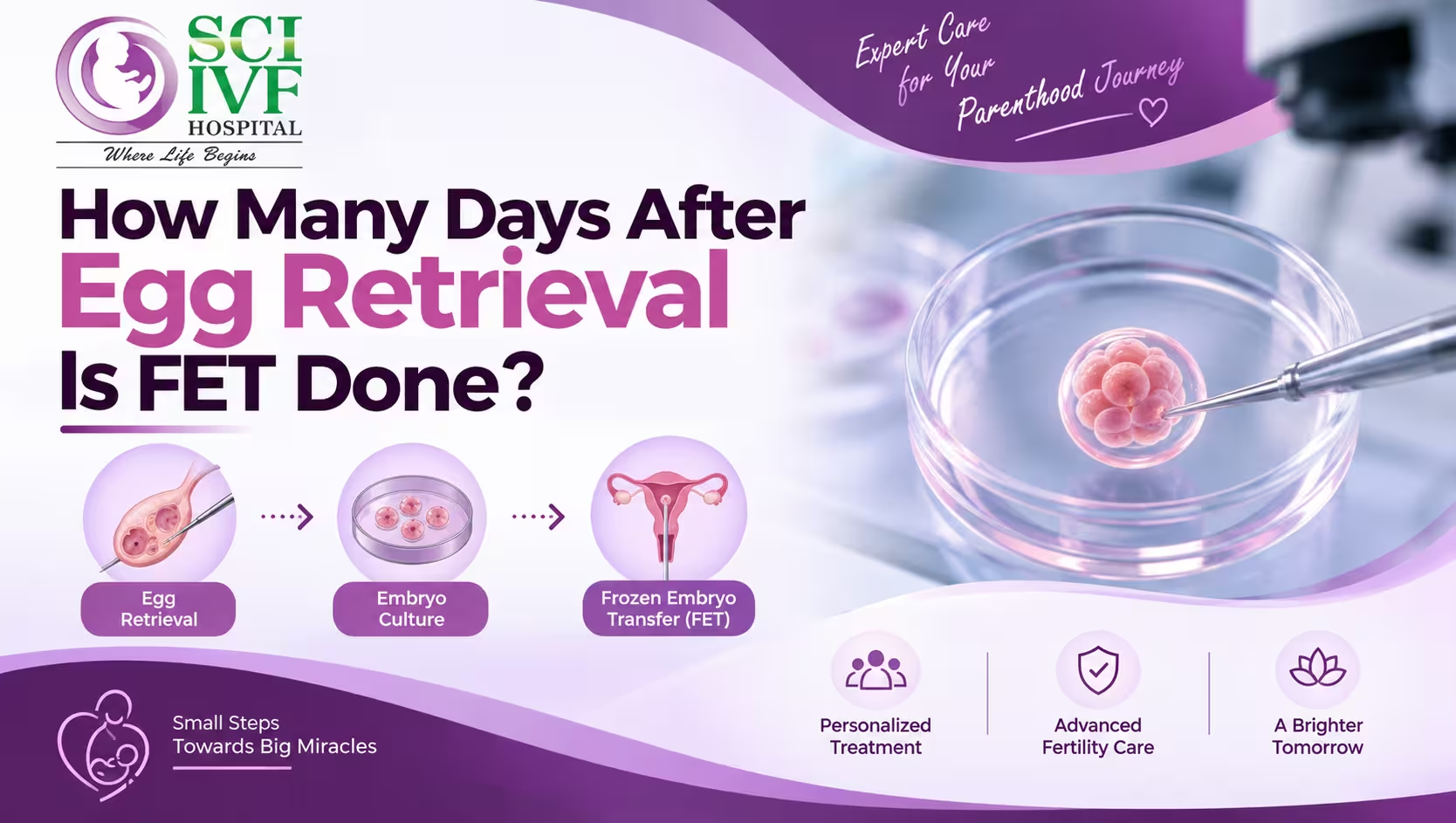
In fresh embryo transfers, placings takes place in the uterus 3-5 days after retrieval of the eggs, and during the same cycle. With FET, transfers occurs in a later cycle, thus enabling a more controlled hormonal preparation of the uterus.
Key points to understand
- FET uses previously frozen embryos which undergo a procedure known as vitrification.
- This enables couples to make attempts at pregnancy without the need for repeated egg retrieval.
- Due to more advanced cryopreservation techniques, the embryo quality continues to be very similar as the time when it was frozen.
Why Do Couples Choose Frozen Embryo Transfer?
Doctors have lots of good reasons- medical, emotional, and practical- for why they sometimes recommend FET over fresh transfer too.
Medical Reasons
- Avoid OHSS
- Hormonal levels won't be good for fresh transfer
- Uterine lining wasn't ready in the original IVF cycle
- Frozen embryos available from the previous IVF cycle, successful or unsuccessfull
- The patient is still recovering from medication given post-egg retrieval
Lifestyle & Planning Reasons
- Couples want to delay pregnancy for work or health reasons or for personal reasons
- They want to plan for a second baby and have embryos from a previous cycle
- Customarily gives emotional space & flexibility to avoid the rush to a fresh transfer
Higher Success in Certain Cases
Several studies show that FET may provide better implantation and pregnancy outcomes because the uterus is not under the stress of ovarian stimulation drugs.
Step-by-Step Frozen Embryo Transfer Procedure
Here’s what will happen during your FET cycle:
For your First IVF cycle- Eggs will be retrieved, fertilized and embryos will be frozen.
Cycle Preparation for FET- This will be done by either using a natural or a hormone-controlled cycle.
Embryo Thawing- Embryos will be thawed a few hours before their scheduled transfer.
Embryo Transfer - A thin, flexible tube will be used to put the embryo into the uterus.
Rest - You will be given progesterone and other hormones to assist the embryo in implanting.
Pregnancy Test - Done after about 10 to 14 days as a blood test (beta hCG) to confirm if you are pregnant.
It’s a straightforward procedure that will take a few minutes and will be done without anesthesia.
How Doctors Prepare the Woman’s Body for FET
There are two main approaches:
Natural Cycle FET
- Used in women with regular menstrual cycles
- No heavy medication required
Medicated / Hormone-Controlled FET
- Used in women with irregular cycles or hormonal issues
- The timing is controlled by doctors rather than natural ovulation
Both approaches have good success rates. The choice depends on the woman's age, hormone levels, cycle patterns and medical history.
Success Rate of FET vs Fresh Embryo Transfer
Not every IVF center will have the same success rates. However, plenty of research shows Frozen Embryo Transfers tend to have the same or even better success rates. This is especially the case when:
- The patients’ estrogen levels were clinically high while going through stimulation
- The facility chose a “freeze-all” approach to sidestep certain risks
- The uterus had to rest sequentially for a period to allow a rebalancing of hormones
Why the success rate may be higher in FET:
- No hormonal imbalance from stimulation injections
- Uterus is better prepared
- Only the best-quality embryos are frozen and later used
- Lower risk of complications like OHSS
Factors That Affect FET Success
Even with technological advancements, some factors still influence success:
Doctors often recommend pre-conception wellness changes such as weight management, better sleep and micronutrient supplements for improving success.
Recovery & Post-Transfer Care Tips
After every embryo transfer, most women immediately go home and continue with light activities. Although some precautions should be taken during the two-week wait.
Do’s
- Take your progesterone and other meds
- Maintain relaxation while avoiding stress
- Balanced and high-fiber foods should be included for every meal
- Stay Hydrated
- Sleep should be a minimum of 7–8 hours
Don’ts
- Avoid heavy lifting or other high-intensity workouts
- Stay away from smoking, and limit alcohol and caffeine
- Avoid hot baths, saunas and other extreme heat
- Don’t use the internet to self-diagnose or panic
- Don’t be shocked, it’s normal to feel slight cramps or tiredness because of progesterone.
Possible Risks or Complications of Frozen Embryo Transfer
Most people think FET is quite safe. Still, every treatment has small risks like:
- Being pregnant with more than one baby if more than one embryo is transferred.
- Possible side effects due to hormones such as bloating.
- Implantation failure.
- Very rare chance of embryo not surviving thawing.
- Emotional distress due to waiting.
The use of modern vitrification technology reduces embryo-damage risks to under 2–5%.
Why Choose SCI IVF Hospital for Frozen Embryo Transfer
I’m sure you expect high quality service when it comes to dependable frozen embryo transfers! Each embryology lab holds unique frozen embryo transfers as the centre adheres to renowned standards. Using custom made physiologic protocols and employing evidence based protocols to maximize embryo viability and implantation is well-attended.
- Modern IVF lab with competent embryologists
- Treatments with proven success in FET cycles
- 20+ years of experience in reproductive medicine
- Counseling and emotional support for couples
- Ethical treatment approach with evidence based medical plan
Conclusion
Having the option of a frozen embryo transfer is a great alternative to the traditional instant transfer method of IVF will enable patients to better manage the timing of implantation, safely plan pregnancies, avoid unnecessary health risks, improve hormonal balance and reduce stress associated with the IVF cycle. FET is the way to go whether you are transferring frozen embryos from a previous IVF procedure or planning embryo IVF for future family building. The scientific and clinical evidence for this method is indisputable.
If you wish to have a frozen embryo transfer treatment in Delhi, the SCI IVF Hospital is the one you should go to for integrated personalized care and advanced reproductive technology. Compassionate care and cutting-edge reproductive technology are integrated for customized care tailored to your parenting aspirations.