Chocolate Cyst: Causes, Symptoms, and Treatment
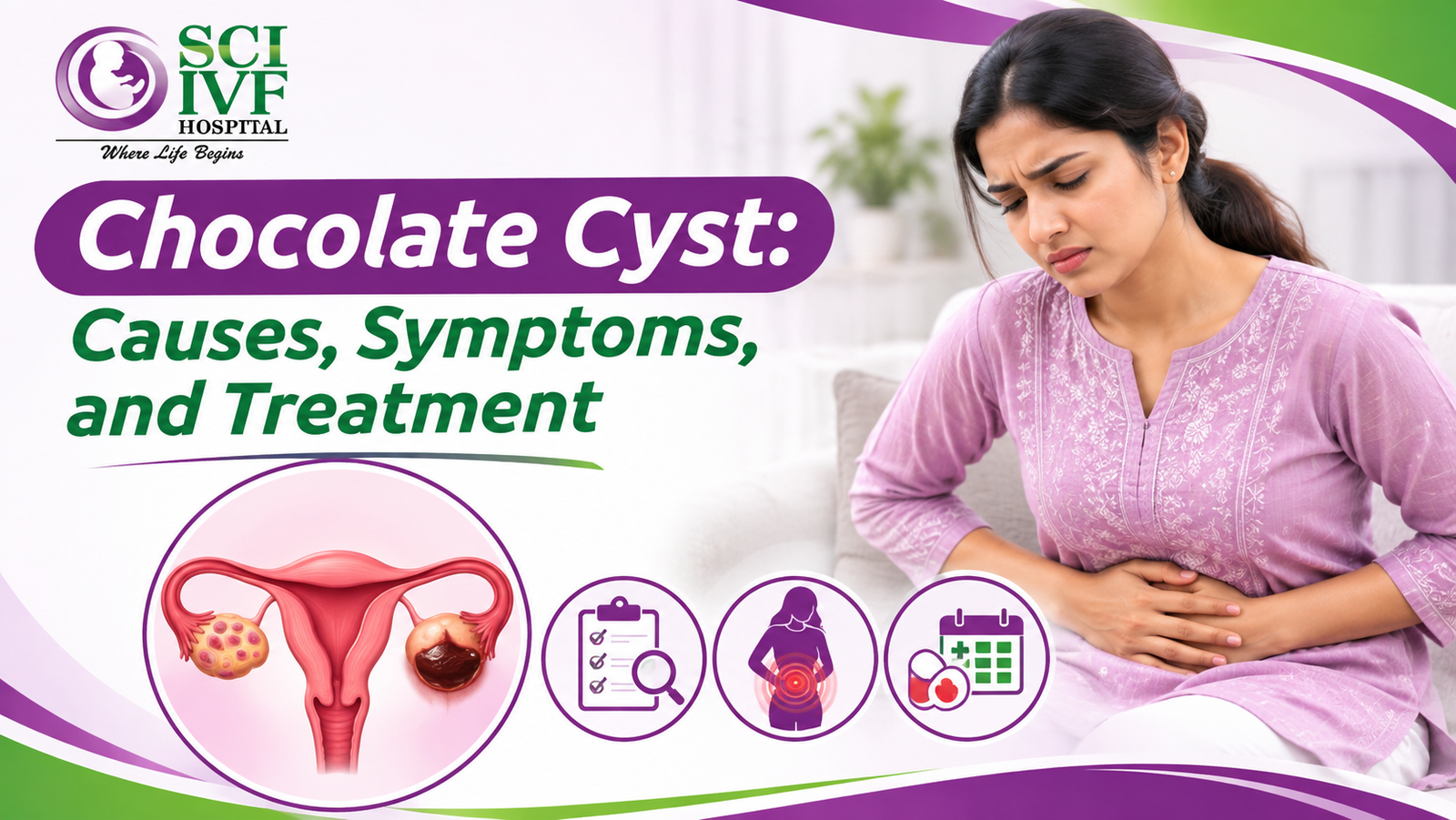
A chocolate cyst (medically known as an ovarian endometrioma) is a benign cyst on or inside an ovary filled with thick, dark brown old blood. It is a common sign of endometriosis, a condition where tissue similar to the lining of the uterus grows outside the uterus.
What Is a Chocolate Cyst?
A chocolate cyst, medically known as an ovarian endometrioma, is a type of ovarian cyst associated with endometriosis. It develops when tissue similar to the uterine lining grows on or inside an ovary and forms a cyst.
This tissue responds to hormonal changes during the menstrual cycle and may bleed. Over time, old blood collects inside the cyst, creating a thick, dark-brown fluid that resembles melted chocolate. This is why it is commonly called a chocolate cyst.
It can develop in one or both ovaries and may vary in size. While some women experience pain and menstrual problems, others may not have noticeable symptoms.
What Causes Chocolate Cysts?
Chocolate cysts develop due to endometriosis, although the exact cause of endometriosis is not fully understood. Several factors may contribute to the development of this condition.
1. Retrograde Menstruation
Retrograde menstruation occurs when some menstrual blood and endometrial-like tissue flow backwards through the fallopian tubes into the pelvic cavity. This tissue may attach to the ovaries and gradually contribute to endometriosis and cyst formation.
2. Hormonal Influence
Oestrogen plays an important role in the growth of endometriosis-related tissue. Hormonal changes during the menstrual cycle can cause this tissue to grow and bleed, contributing to the formation of chocolate cysts.
3. Genetic Factors
Women with a family history of endometriosis may have a higher risk of developing the condition. Genetic factors may influence how the reproductive system responds to hormonal changes.
4. Immune System and Inflammation
Changes in immune system function may prevent the body from clearing endometrial-like tissue growing outside the uterus. Chronic inflammation may also contribute to the development and progression of endometriosis.
Common Symptoms of Chocolate Cysts
The symptoms of a chocolate cyst may vary depending on its size, location and the severity of endometriosis. Some women may not experience noticeable symptoms, while others may have persistent pelvic discomfort.
Common symptoms include:
1. Painful Periods
Severe menstrual cramps are one of the common symptoms. The pain may become intense enough to interfere with daily activities.
2. Persistent Pelvic Pain
Women may experience continuous or recurring pain in the lower abdomen, even when they are not menstruating.
3. Pain During Intercourse
Endometriosis-related inflammation and adhesions may cause pain during or after sexual intercourse.
4. Pain During Urination or Bowel Movements
Some women experience discomfort while passing urine or stools, particularly during menstruation.
5. Abdominal Bloating and Back Pain
A chocolate cyst may cause abdominal fullness, bloating and lower back discomfort.
6. Difficulty Conceiving
Chocolate cysts may affect ovarian function and fertility. Women with endometriosis may also experience inflammation and adhesions that interfere with conception.
Risk Factors and Complications of Chocolate Cysts
Certain factors may increase the likelihood of developing endometriosis and associated ovarian endometriomas. These include:
- Family history of endometriosis.
- Starting menstruation at an early age.
- Short menstrual cycles.
- Periods lasting longer than seven days.
- Certain abnormalities affecting the uterus or fallopian tubes.
If left untreated or if the condition progresses, chocolate cysts may lead to complications such as:
- Fertility Problems: Inflammation and scar tissue may affect the ovaries and fallopian tubes.
- Damage to Ovarian Tissue: The cyst and associated endometriosis may affect healthy ovarian tissue.
- Cyst Rupture: Although uncommon, a chocolate cyst may rupture and cause sudden, severe abdominal pain.
- Bladder and Bowel Problems: Extensive endometriosis may affect nearby organs.
Most chocolate cysts are non-cancerous, although malignant transformation is possible in rare cases.
How Is a Chocolate Cyst Diagnosed?
A fertility specialist or gynaecologist may recommend certain examinations and imaging tests to identify a chocolate cyst and assess the extent of endometriosis.
Common diagnostic methods include:
- Pelvic Examination: Helps identify tenderness, discomfort or an ovarian mass.
- Transvaginal Ultrasound: Uses sound waves to examine the ovaries and identify the size, location and appearance of the cyst.
- MRI Scan: May be recommended to obtain detailed images of the ovaries and surrounding pelvic structures.
- Laparoscopy: In selected cases, a minimally invasive surgical procedure may help confirm endometriosis and assess its extent.
The diagnosis and treatment plan depend on the symptoms, imaging findings and overall reproductive health.
Chocolate Cyst Treatment Options
Treatment depends on the cyst's size, symptoms, age, ovarian reserve and pregnancy plans. Not every chocolate cyst requires surgery.
1. Regular Monitoring
Small cysts that do not cause significant symptoms may be monitored through regular ultrasound examinations. This helps doctors track changes in their size and appearance.
2. Hormonal Treatment
Hormonal medications, including birth control pills and progestin-based treatments, may help control endometriosis activity and reduce pain. However, these medications do not permanently remove existing cysts.
3. Pain Management
Doctors may recommend suitable pain-relieving medications to manage menstrual cramps and pelvic discomfort.
4. Laparoscopic Surgery
Surgery may be considered when a cyst causes significant pain, grows larger or has concerning features. Laparoscopic cystectomy involves removing the cyst through small abdominal incisions while preserving as much healthy ovarian tissue as possible.
However, surgery may reduce ovarian reserve, so women planning pregnancy should discuss the potential benefits and risks with their specialist before undergoing the procedure.
Can You Get Pregnant with a Chocolate Cyst?
Yes, many women with chocolate cysts can conceive naturally. However, fertility may be affected depending on the cyst's size, ovarian health and severity of endometriosis.
Inflammation, adhesions and damage to ovarian tissue may interfere with ovulation and fertilisation in some women.
For those experiencing difficulty conceiving, fertility treatments such as In Vitro Fertilisation (IVF) may be considered. A fertility specialist can evaluate ovarian reserve, age and reproductive health to recommend an appropriate treatment plan.
Surgery is not always necessary before IVF, as removing an endometrioma may affect ovarian reserve. Therefore, treatment decisions should be made according to individual fertility needs.
Conclusion
A chocolate cyst is an ovarian condition associated with endometriosis that may cause painful periods, pelvic discomfort and fertility problems. Although most chocolate cysts are non-cancerous, early diagnosis and appropriate treatment are important for protecting ovarian health. Treatment may involve regular monitoring, medication or surgery, depending on individual symptoms and pregnancy plans.
If you experience persistent pelvic pain or difficulty conceiving, consulting a fertility specialist can help identify the underlying cause. SCI IVF Hospital, Best Fertility & IVF Center in India, offers fertility assessment, advanced reproductive treatments and personalized guidance to help women make informed decisions about their reproductive health and parenthood journey.
Frequently Asked Questions (FAQs)
1. Is a chocolate cyst dangerous?
Most chocolate cysts are non-cancerous. However, they may cause pelvic pain, affect fertility or lead to complications in some women.
2. Can a chocolate cyst disappear on its own?
Chocolate cysts generally do not disappear naturally like some functional ovarian cysts. They may require monitoring or medical treatment.
3. Can a chocolate cyst affect fertility?
Yes, endometriosis-related inflammation, adhesions and ovarian damage may affect fertility, although many women with chocolate cysts can still conceive.
4. Is surgery necessary for every chocolate cyst?
No. Treatment depends on the cyst's size, symptoms, ovarian reserve and pregnancy plans. Some cysts only require regular monitoring.
5. Can IVF help women with chocolate cysts?
Yes, IVF may help women experiencing fertility difficulties associated with endometriosis or ovarian endometriomas.