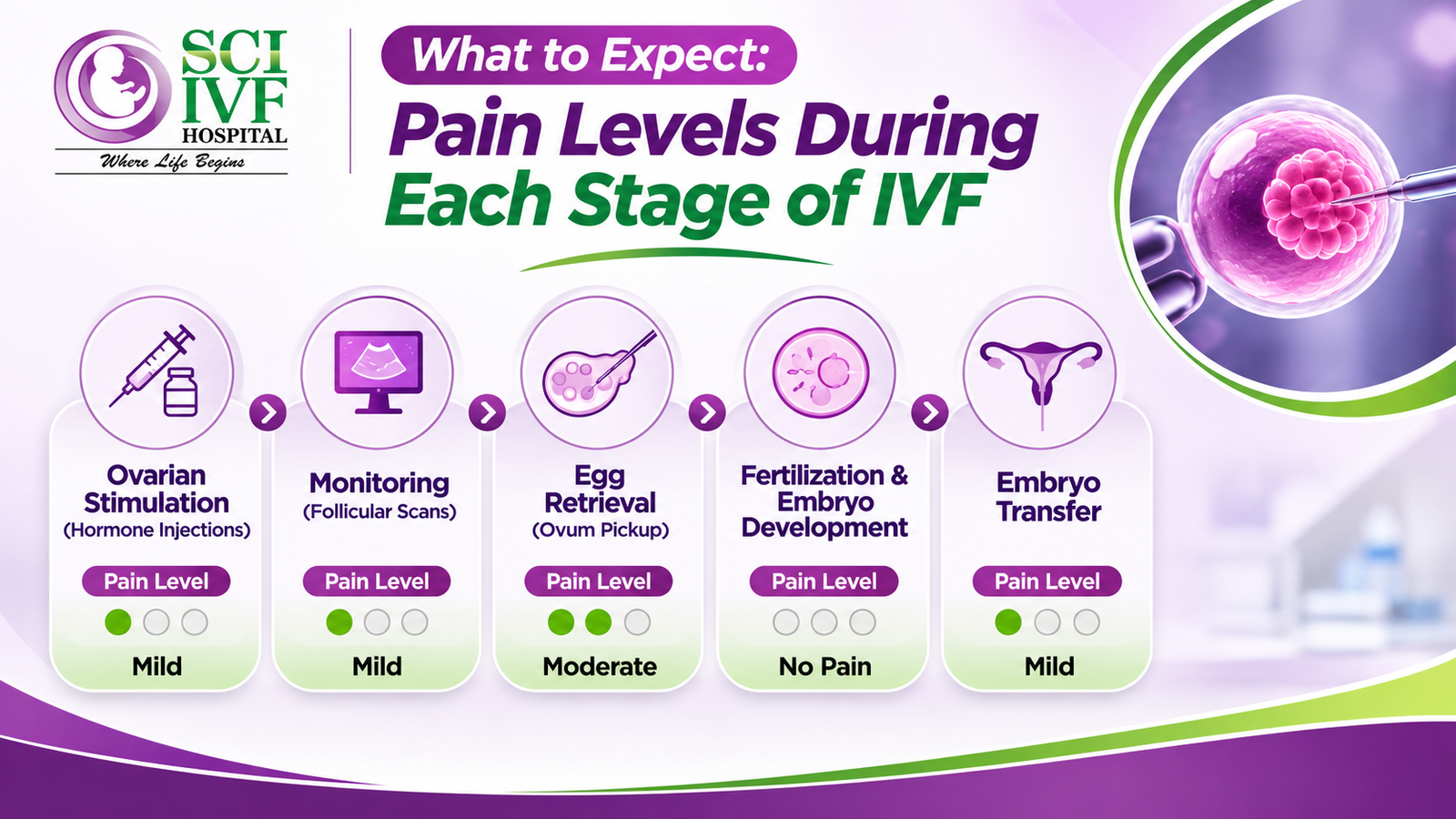
What to Expect: Pain Levels During Each Stage of IVF
IVF is generally marked by mild, short-lived physical discomfort rather than severe pain, with procedures done under sedation or anesthesia. Pain levels vary across each stage of the cycle.
Is IVF Painful? How the Procedure Works?
IVF is generally not severely painful, although most women experience mild-to-moderate discomfort, bloating, or cramping during different stages of treatment. The procedure involves retrieving eggs from the ovaries, fertilising them with sperm in a laboratory, and transferring the resulting embryo into the uterus.
Some stages of IVF involve hormone injections and medical procedures that may cause temporary discomfort. Egg retrieval is usually performed under sedation, so patients generally do not feel pain during the egg collection itself. However, mild cramps or soreness may occur afterward. The level of discomfort varies from person to person depending on individual responses to fertility medication and treatment.
Pain Levels During Each Stage of IVF
Each of the IVF phases is associated with a separate technique, so the physical process will be unique to each phase.
1. Fertility Drugs and Hormone Injections
In the first stage, there are fertility drugs used to stimulate the ovaries for production of more than one egg rather than the single egg that is produced during a normal menstrual cycle.
These drugs are normally given through injections every day for several days.
Discomfort associated with the above include:
- Mild pain where the injection is made.
- Bruising and reddening at the injection point.
- Pelvic heaviness.
- Tenderness of the breasts because of the hormonal changes.
The injections are mostly done using very small needles.
2. Procedure for Egg Retrieval
After the maturation of the eggs, the fertility expert goes ahead to perform the egg retrieval procedure. This is done by passing a needle through the vagina with the help of ultrasound guidance to harvest the eggs from the ovaries.
This process is usually conducted under sedation or anesthesia, hence patients do not usually feel any pain during the process of egg harvesting.
Following the egg retrieval procedure, some women experience:
- Abdominal cramps.
- Vaginal bleeding.
- Bloating.
- Pelvic pain.
The above effects usually resolve in a few days. However, in case of increased pain, you should see your doctor.
3. Sperm Collection and Preparation
In general, sperm collection is a relatively simple and painless process. The man gives a sperm sample through masturbation at the fertility clinic, in accordance with the clinic’s recommendations.
This step does not require any physical suffering. In cases when the collection of sperm must be done through a certain procedure, such as TESE, there can be some physical discomfort, but in this case anaesthesia will be used.
4. Fertilisation and Embryo Development
After the collection of eggs, they are placed together with sperm in the lab. There are two possible ways of fertilization: classical IVF or ICSI.
The development of the embryos is observed for several days.
As these activities are carried out in the lab, there is no physical pain in this step.
5. Embryo Transfer
The procedure of embryo transfer is the stage when the chosen embryo is transferred into the uterus through a special catheter.
The process is relatively fast and anaesthetics are not used.
In most cases, there is no pain involved, but some women might feel:
- Pain similar to menstruation.
- Some pressure during catheter insertion.
- Discomfort.
After the procedure, patients are able to go back to their regular activities according to their doctor's recommendation.
6. Two-Week Wait and Pregnancy Test
The two-week wait starts after embryo transfer and ends with the pregnancy test appointment.
During that period, progesterone and other medications prescribed by the doctor might cause some side effects like bloating, breast tenderness, cramps and tiredness.
Is IVF Painful or Emotionally Challenging?
When the pain of undergoing IVF is being deliberated on, there are other things to consider aside from the physical pain associated with the process.
The visits, hormonal imbalances, fear of the unknown, and waiting for pregnancy test results can be stressful.
Some patients may even feel depressed or frustrated with the entire process.
Support from the partner, family members, and fertility specialist will make the whole process less stressful.
Counselling may also assist in coping with the emotional aspect of the entire treatment process.
Tips to Manage Pain and Discomfort During IVF
Even though some amount of discomfort cannot be avoided, a few steps can help minimize it for you.
- Drink plenty of water: Have enough water during the course of your treatment.
- Have nutritious food: Have balanced food for your overall health.
- Get proper sleep: Your body needs to have time to recuperate, especially after egg collection.
- Take medications as directed: Follow directions to take your fertility drugs and injections.
- Wear loose clothes: Loose clothes may help alleviate discomfort associated with bloating.
- Abide by the activity guidelines: Do not indulge in vigorous physical activities, as recommended by your fertility specialist.
- Talk to your doctor: Notify him about any kind of unusual discomfort that you might experience.
When Should You Contact Your IVF Specialist?
Although mild cramping, bloating, and soreness can happen in IVF treatment, some symptoms might suggest the development of complications and therefore should not be overlooked.
If any of the following symptoms is observed, contact your fertility expert immediately:
- Severe or increasing abdominal pain.
- Heavy vaginal bleeding.
- Swelling or bloating of the abdomen.
- Continued vomiting or fever.
- Breathing difficulties or chest pains.
All the above symptoms could sometimes point to the occurrence of OHSS.
Conclusion
IVF is not normally associated with a painful procedure but there are specific points which may cause some pain. From injections and egg retrieval to embryo transfer, all steps can be easily managed with the proper medical assistance. Knowledge about what to expect will definitely help you to manage your fears.
As every woman experiences these stages in her own way, listening to the doctor’s recommendations is very important. In case you are going to have fertility treatment, you can contact SCI IVF Hospital, Best Fertility & IVF Center in India.
Frequently Asked Questions (FAQs)
1. Is IVF painful from start to finish?
No. Most IVF stages involve mild discomfort rather than severe pain. However, individual experiences may vary.
2. Which stage of IVF is the most uncomfortable?
Ovarian stimulation and recovery after egg retrieval may cause noticeable discomfort, including bloating and abdominal cramps.
3. Does embryo transfer hurt?
Embryo transfer is generally painless, although some women may experience mild cramping or pressure.
4. How long does pain last after egg retrieval?
Mild cramps and discomfort usually improve within a few days. Contact your doctor if pain becomes severe or worsens.
5. Can I continue my daily activities during IVF?
Most women can continue routine activities, but strenuous exercise and certain activities may need to be avoided during specific stages.