Sperm DNA Fragmentation Test: When Is It Needed and Does It Affect IVF?
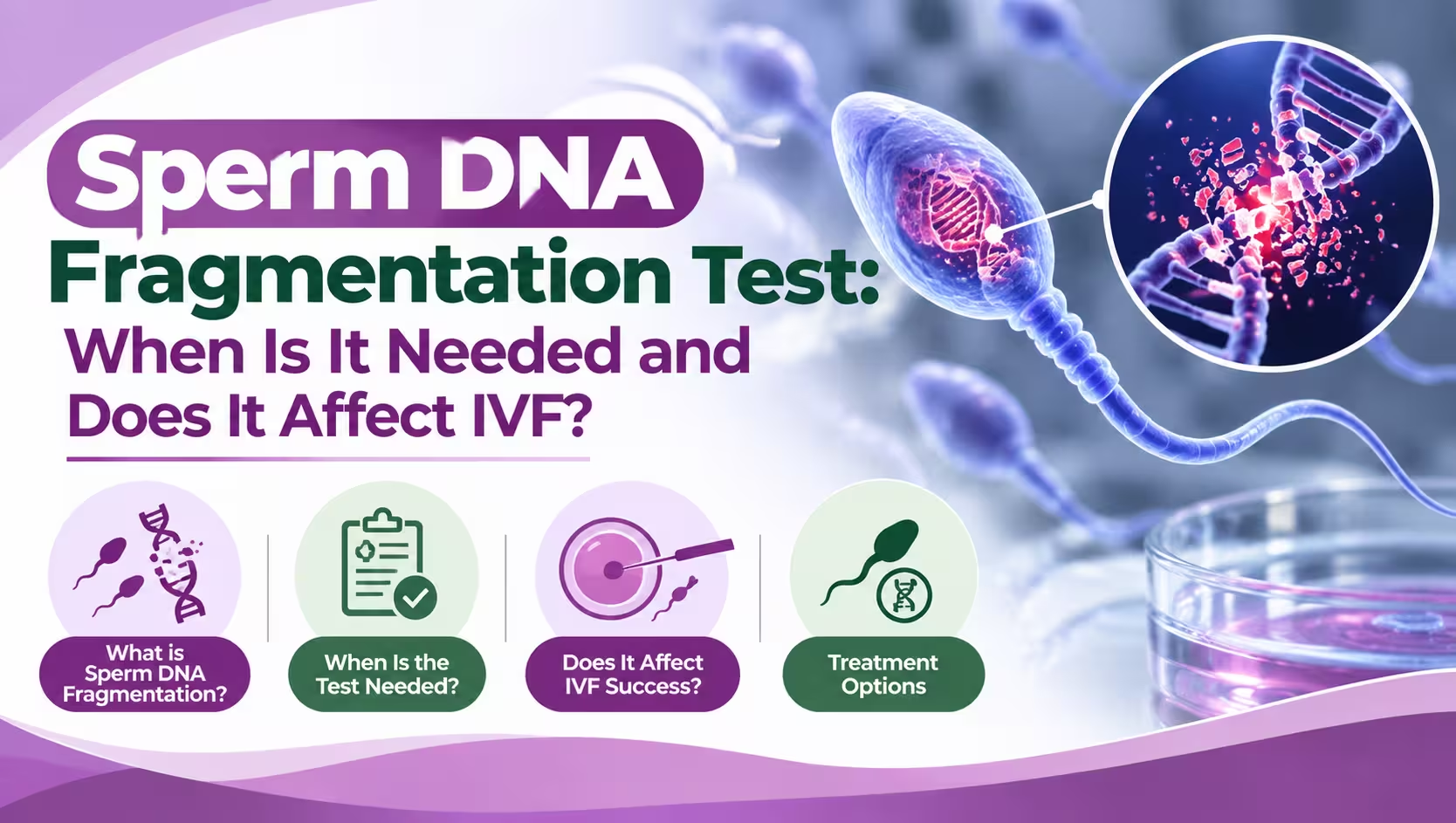
A Sperm DNA Fragmentation Index (DFI) test measures breaks or damage in the genetic material (DNA) inside sperm cells and reports the results as a percentage. A normal semen analysis evaluates sperm count, movement, and shape, but it may not reveal damage to sperm DNA. This test may be considered in selected cases of infertility, recurrent pregnancy loss, or unsuccessful fertility treatment. However, it is not routinely necessary for every man undergoing IVF. Understanding when the test may be useful and how sperm DNA fragmentation may relate to IVF outcomes can help couples discuss appropriate next steps with their fertility specialist.
What Is a Sperm DNA Fragmentation Test?
A sperm DNA fragmentation test is a specialized diagnostic analysis that measures the percentage of sperm cells carrying broken or damaged genetic material (DNA). This genetic material plays an important role in fertilisation and early embryo development.
Unlike a standard semen analysis, which evaluates sperm count, movement, and shape, this test focuses on the integrity of sperm DNA. The results may be reported as a sperm DNA fragmentation index (DFI), with interpretation depending on the testing method and laboratory reference range.
A higher DFI may be associated with certain fertility problems, but it does not automatically mean that a man is infertile or that IVF will fail.
When Is a Sperm DNA Fragmentation Test Needed?
This test may be advised by the fertility expert in some specific scenarios, especially when no reasons can be identified with the help of conventional tests.
It may be advised in the case of:
- Recurrent pregnancy loss: In the case of recurrent miscarriage, it can be one of the reasons that need to be considered.
- Unsuccessful fertility treatment: This test may be advised in the case of multiple unsuccessful IVF and ICSI treatments.
- Unexplained infertility: The test may be conducted in the case of unexplained infertility after all routine fertility tests.
- Specific male infertility problems: Some conditions like the presence of a varicocele, smoking, and any other reason for DNA damage in sperm.
This test is not always required for every male who is being evaluated for his fertility problems initially.
How Is the Test Performed?
The test generally involves getting a semen sample as directed by the laboratory. The methods used to determine sperm DNA fragmentation include:
- SCSA: Assesses the fragility of sperm DNA to damage.
- TUNEL: Determines breaks in the sperm DNA.
- Sperm chromatin dispersion test: Determines DNA integrity from the changes in the appearance of the sperm chromatin.
There may be differences in the requirements for preparing the samples and the interpretation of the results. The DFI will be interpreted along with the other fertility tests.
What Is a Normal Sperm DNA Fragmentation Index?
It should be noted that there is no universal DFI cut-off level that would work in each case for all possible testing procedures and laboratories. The test results that can be called abnormal in one testing procedure cannot be interpreted in an absolutely similar way with other tests.
Higher DFI values mean that a bigger percentage of damaged sperm is present. However, it is not sufficient in itself to prove infertility reasons and possibilities of conceiving naturally or by means of IVF.
Should you receive a high DFI value in your testing report, consult your fertility doctor regarding the meaning of this level according to your laboratory.
Does Sperm DNA Fragmentation Affect IVF Success?
An abnormally high level of sperm DNA fragmentation has also been linked with worse reproductive outcomes in some studies, including miscarriage risks. Nevertheless, there is no strong correlation, and this test is unable to determine the reproductive outcome of an individual IVF cycle.
The following possible implications can arise:
- Fertilization: Damaged DNA will likely affect reproductive results. Still, the sperm will be able to fertilize.
- Embryo development: The integrity of sperm DNA may affect embryo development along with egg quality.
- Miscarriage risk: High levels of DNA fragmentation are sometimes linked with miscarriages, but this is not the only possible cause of the problem.
- IVF and ICSI treatment success: ICSI treatment consists of the introduction of a selected sperm into the egg. This treatment helps overcome some fertilization-related problems, yet it will not fix sperm DNA damage or ensure pregnancy.
There are many other factors that can have an effect on IVF treatment success. Age and egg quality of women and embryo development, among others, are some of them.
What Can Be Done If Sperm DNA Fragmentation Is High?
Treatment would depend on the root cause if that can be established. It may include any of the following steps by a fertility expert or an andrologist:
- Evaluation of Lifestyle Factors: Quitting smoking, limiting the intake of alcohol, having a proper weight and getting sufficient sleep might help in promoting reproductive health.
- Assessment of the condition: There may be an assessment of the presence of infection or clinically evident varicocele.
- Assessment of drugs and exposures: It is important to discuss the medications, supplements being taken, heat exposure, workplace and environmental hazards with your physician.
- Repeat assessment when necessary: It is recommended to repeat assessment because the results may differ with time.
- Discussions on fertility treatment: Your physician may assess the need for modifications in the treatment plan according to the overall clinical condition.
Antioxidants should be taken under medical supervision because the efficacy of their use is questionable. In certain patients, there may be discussions regarding using testicular sperm for ICSI by a specialist. However, this is an invasive procedure and is not appropriate for everyone.
Conclusion
Sperm DNA fragmentation tests can offer more details in certain instances of male infertility, recurrent miscarriage, and failed fertility treatments. It is not necessarily a mandatory test for all patients undergoing IVF, and a positive outcome doesn’t indicate that conception cannot take place. The best course of action will depend on the overall infertility evaluation performed by the couple, which includes semen analysis and other important details. If you have any issues with infertility, visit the professionals at SCI IVF Hospital, an fertility and IVF center in India.
Frequently Asked Questions
1. Is it possible that sperm DNA fragmentation levels are high in a case of normal semen analysis results?
Yes. Sperm count, motility and morphology are examined during a semen analysis, whereas DNA fragmentation is assessed during a sperm DNA fragmentation test. Thus, a man can have normal semen parameters, but high levels of DNA fragmentation.
2. Will sperm DNA fragmentation lead to IVF failure?
No. Sperm DNA fragmentation will not necessarily lead to IVF failure because there are a number of other factors that determine the treatment outcomes, such as egg quality, embryo development, female age, and the treatment process.
3. Can sperm DNA fragmentation be improved?
It might be possible if the reasons for it are determined. Your doctor will advise you whether treatment of the underlying conditions, lifestyle changes or repeat testing are required.
4. Is a sperm DNA fragmentation test painful?
No. Generally speaking, a sperm DNA fragmentation test is a non-invasive test requiring a sperm sample.
5. Does every man require the test prior to IVF?
No. Testing is not needed for each man who is going through a fertility assessment for the first time.