What Is the Ideal Follicle Size for Fertilisation and Pregnancy?
The ideal follicle size for fertilisation and pregnancy is generally around 18 to 24 mm in diameter before ovulation or a trigger injection, although the appropriate size can vary depending on the individual and the fertility treatment being used.
Knowing your follicle size is important when trying to conceive naturally or through fertility treatments. During an ultrasound examination, your doctor monitors follicle development to assess whether the follicles are approaching maturity and ovulation.
However, follicle size alone cannot guarantee fertilisation or pregnancy. Other factors, including egg quality, sperm health, fallopian tube function, and uterine health, also influence the chances of conception.
In this blog, we will explore the ideal follicle size for fertilisation and pregnancy, the stages of follicle development, how ultrasound monitoring works, and other factors that may affect conception.
What Is the Ideal Follicle Size for Fertilisation and Pregnancy?
A follicle measuring approximately 18–24 mm in diameter is generally considered mature around the time of ovulation in many natural and stimulated cycles. However, the ideal follicle size can vary depending on individual factors, the type of fertility treatment, and the timing of the ultrasound scan.
An ovarian follicle is a small, fluid-filled sac inside the ovary that contains a developing egg. During an ultrasound examination, the doctor measures the follicle rather than the egg itself. Therefore, even if a follicle reaches the expected size, this does not guarantee that the egg is mature, fertilisation will occur, or pregnancy will result.
Follicle Size Chart: What Do Different Measurements Mean?
The following chart provides a general guide to follicle development. These measurements are approximate and should be interpreted by a fertility specialist in the context of your cycle.
Follicles do not all grow at the same rate. Your doctor may consider repeated ultrasound scans, hormone levels, and your treatment plan before deciding whether ovulation is approaching.
A follicle smaller than 18 mm may sometimes release a mature egg, while a larger follicle does not guarantee a healthy egg. Therefore, these ranges should not be treated as strict cut-offs.
What Is the Ideal Follicle Size for Natural Pregnancy, IUI, and IVF?
The size of follicle that can be considered suitable for ovulation or egg collection may vary according to the means of conception.
Ideal Size of Follicle for Natural Pregnancy
During the normal menstrual cycle, only one follicle gets developed into the dominant follicle. It is normally thought that follicles measuring 18–22 mm are ready for ovulation. An egg will be released which can be fertilized when sperm are available.
Pregnancy will depend upon various other factors like quality of sperm, patency of fallopian tubes and condition of the uterus.
Ideal Size of Follicle for IUI
As the specialist uses ultrasound to monitor follicle development in cases of intrauterine insemination (IUI), the ideal size of the leading follicle in many cycles is between 18–22 mm depending on the fertility medication used.
It is also important that multiple mature follicles might increase the likelihood of multiple births.
Ideal Size of Follicle for IVF
In the case of the in vitro fertilisation (IVF) procedure, several follicles develop under the influence of fertility drugs. The size of these follicles is used by the specialist to determine the timing of trigger administration and egg retrieval.
In contrast to natural reproduction, the IVF procedure includes the extraction of eggs from ovaries directly. This decision is based on the whole follicle cluster and treatment response.
How Does Follicle Size Affect Egg Maturity and Fertilisation?
The follicles house developing eggs, though the measurement of the follicle's diameter is not a direct indicator of the quality of the eggs. As follicles grow, the eggs in them also grow. Nevertheless, the correlation between the diameter of follicles and the development of eggs is not always perfect.
In the process of IVF, mature eggs are used for conventional fertilization or ICSI. Small follicles usually house immature eggs, but there are instances where small follicles contain mature eggs.
Despite having a mature egg, several factors contribute to fertilization, and they include the quality of the egg, the quality of the sperm, and laboratory conditions. This means that while a 20mm follicle could be ready for ovulation or egg retrieval, it cannot promise pregnancy.
How Does Follicle Size Change During the Menstrual Cycle?
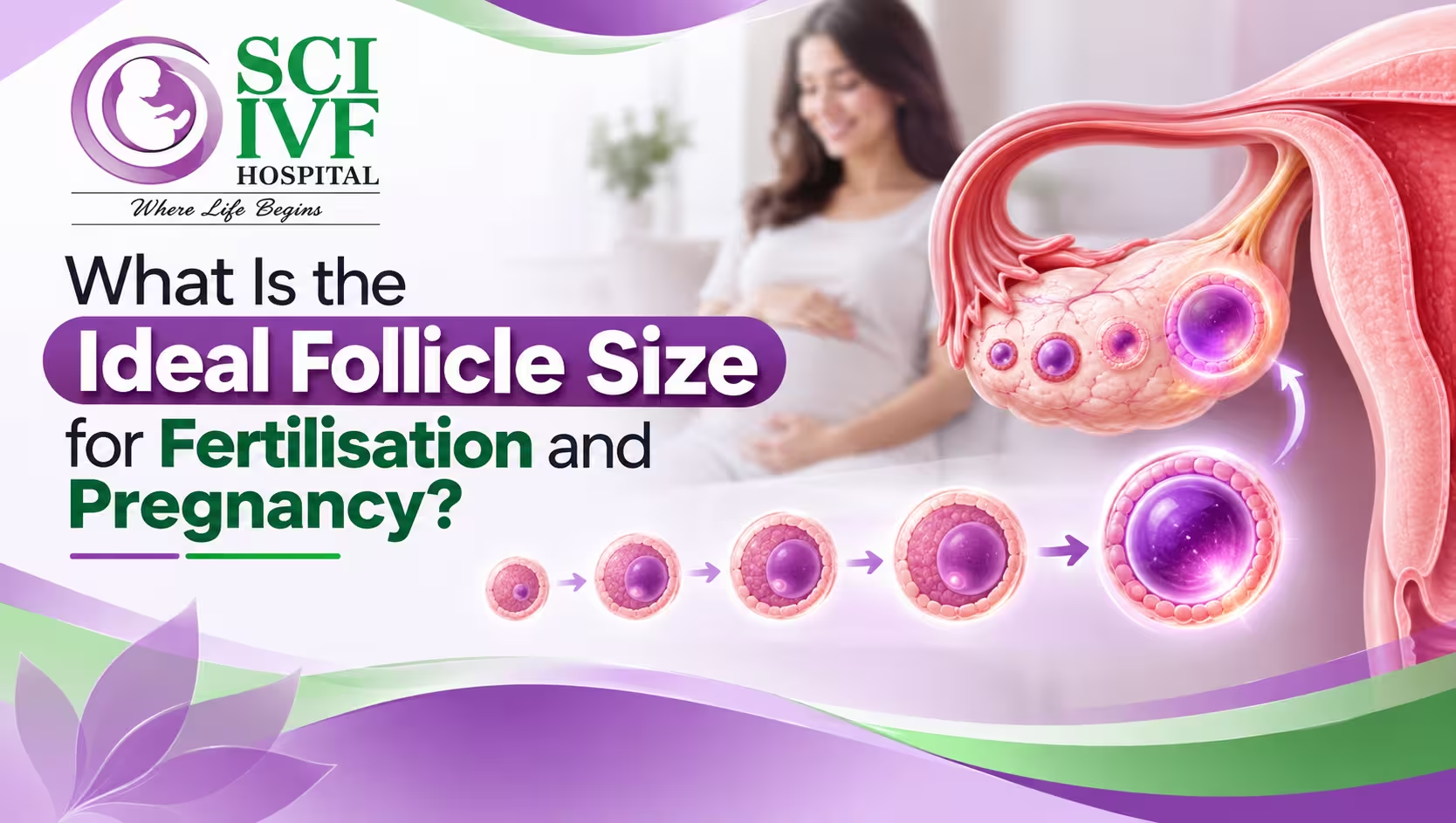
Follicle development takes place during the menstrual cycle, and one follicle emerges as the dominant follicle in an ovulatory cycle. The follicle develops until it is able to rupture and release an egg cell.
The typical rate of growth of follicles is about 1-2 mm per day, although this rate differs from one person to another. Usually, ovulation takes place midway through the menstrual cycle, although there can be variations depending on the length of the cycle.
This process is monitored using a technique referred to as folliculometry, whereby several ultrasound examinations are carried out.
What Factors Affect Follicle Growth and Pregnancy Chances?
There are several things that might affect follicular development and chances for conception.
- Age: Aging may influence the quality of the eggs and the ovaries’ reaction to the medications.
- Ovarian reserve: The level of AMH and the antral follicle count give some idea about the way the ovaries will react to the fertility medications.
- Hormonal balance: Any imbalance in the reproductive hormones can affect follicle development and the process of ovulation.
- PCOS: This condition may cause irregularities in ovulation and follicle development.
- Fertility medications: The medications that induce ovulation may have an effect on follicle development and its quantity.
- Sperm and uterus: Fertilization and conception also depend on the sperm and uterus conditions.
A mature-sized follicle is just one aspect of fertility issues. Your fertility doctor will take into account your medical history, results of the ultrasound scan and other tests when choosing the treatment.
How Is Follicle Size Monitored?
The follicle size is normally determined using transvaginal ultrasound. This ultrasound will give the specialist a clear picture of the ovaries and the growing follicles. Based on the treatment cycle, your specialist might need you to undergo several scans to determine how the follicle size changes.
There may also be blood tests for hormones like estradiol during fertility treatment. All these results will assist the specialist in determining the right time for giving you ovulation medication, IUI, or the trigger injection for egg retrieval for IVF treatment.
Do not use only one ultrasound result to determine when to take your fertility treatment or ovulate.
When Should You Consult a Fertility Specialist?
Seeking fertility help might be a good idea if you experience irregular or no menstrual cycles at all, if you cannot confirm your ovulation, or if you have a history of any reproductive problems, for example, PCOS. Infertility diagnosis is recommended if 12 months of conception attempts have been unsuccessful for women younger than 35, and six months for women aged between 35 and 40.
A fertility doctor will be able to analyze your follicle size along with other results and suggest what needs to be done.
Conclusion
An egg follicle that is about 18-22 mm in size is usually considered mature during ovulation, but the perfect size may vary depending on the individual and the specific fertility therapy used. However, egg size does not always ensure maturation, fertilisation and conception. Ultrasound scanning and hormone tests, among other factors, guide the fertility doctors in formulating a treatment plan.
If you are planning to get pregnant or undergoing IVF, then you should contact SCI IVF for individual fertility evaluation and therapy. SCI IVF Hospital strives to offer individual fertility treatments to be the Best IVF and Fertility Centre in India.
Frequently Asked Questions
1. What should the size of the ideal follicle be to become pregnant?
The follicle should be 18-22 mm in diameter and should be mature during the ovulation period. Yet, there are many more criteria that determine your chances of conceiving.
2. Is it possible to become pregnant if my follicle is 16 mm?
There is a chance to conceive, but you have to take into account that your follicle might grow to reach maturity and release an egg.
3. Is a 20 mm follicle a good one to conceive?
A 20 mm follicle can be considered mature and falls within the average range of follicle sizes. Still, only the egg quality will tell if it is possible to conceive.
4. How fast do follicles develop from 16 mm to 20 mm?
Usually, follicles grow approximately 1-2 mm per day; therefore, this growth can take two to four days. The exact period can differ, but ultrasound will help evaluate the growth.
5. Does a larger follicle indicate better egg quality?
No, because even though follicle measurement can be useful in order to estimate the maturity of the egg, it doesn't give an indication of its quality.
6. What is the appropriate follicle size for egg retrieval in IVF?
The optimal follicle size for egg retrieval in IVF is usually considered to be 18-20 mm, but the choice depends on many parameters.