How Many Days After Egg Retrieval Is FET Done?
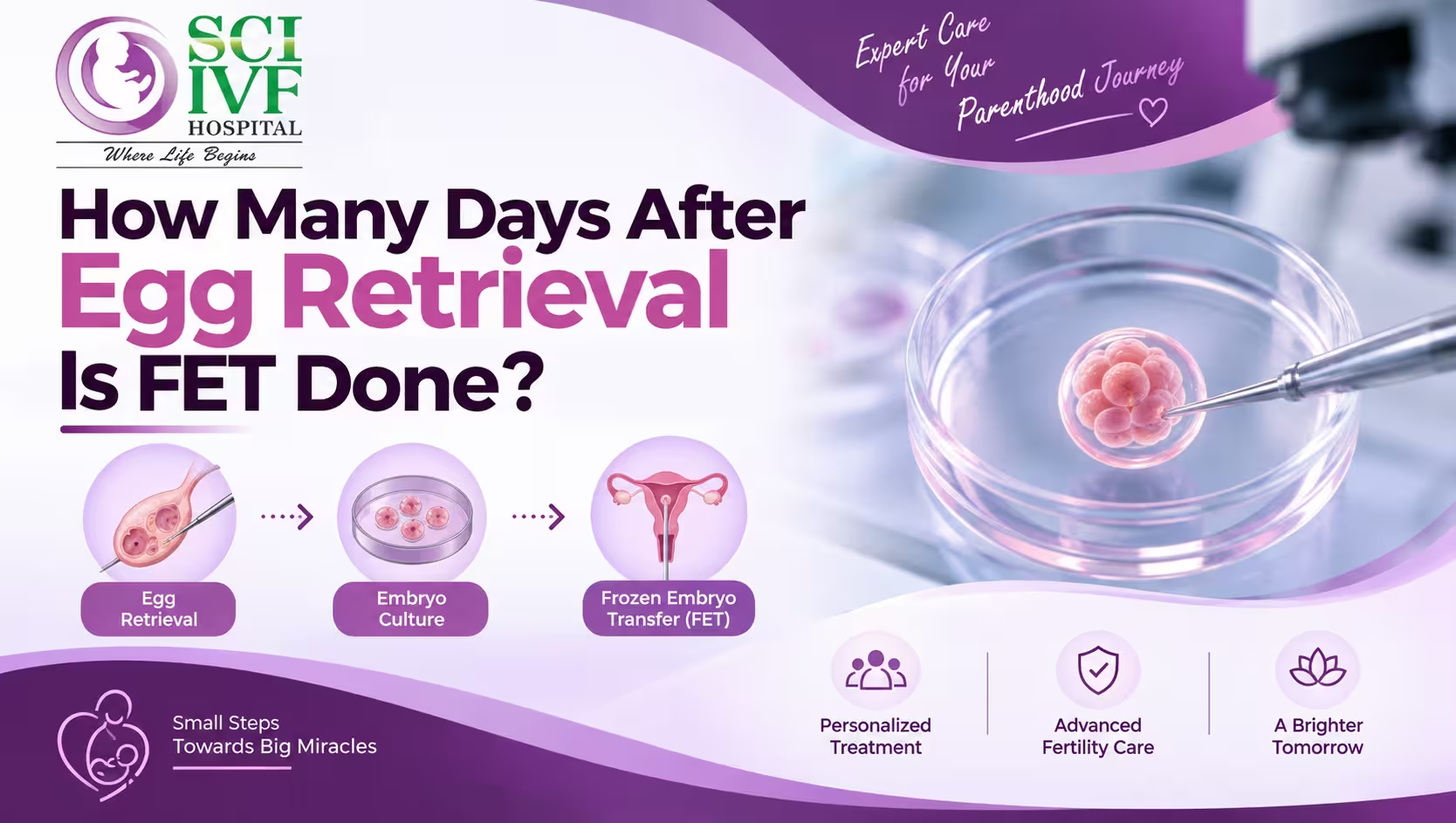
A frozen embryo transfer (FET) is generally performed 4 to 8 weeks, or about 1 to 2 months, after the egg retrieval procedure. Unlike a fresh embryo transfer, FET is scheduled later, after the embryos have been developed and frozen and the uterine lining has been prepared for transfer.
The exact timing can vary from patient to patient depending on embryo development, genetic testing if required, menstrual cycle, ovulation, uterine lining, and the IVF treatment protocol. In this blog, we will discuss how long after egg retrieval FET may be performed, why the transfer may be scheduled later, how the uterus is prepared, and what to expect during the FET cycle.
What Is FET After Egg Retrieval?
A Frozen Embryo Transfer (FET) after egg retrieval is a fertility procedure in which previously cryopreserved (frozen) embryos from an IVF cycle are thawed and placed into the uterus during a separate, later cycle. Unlike a fresh embryo transfer, the embryo is not transferred immediately after egg retrieval and fertilization. Instead, the embryo is frozen and stored until the uterus is prepared for transfer.
The timing of FET depends on factors such as embryo development and the preparation of the uterine lining. Once the appropriate conditions are met, the selected frozen embryo is thawed and transferred into the uterus according to the fertility specialist's treatment plan.
How Many Days After Egg Retrieval Is FET Done?
There isn't a set number of days between retrieval and FET.
For planned Fresh Embryo Transfer, the Egg retrieval can be done a few days earlier depending on the embryos. In cases of planned Frozen Embryo Transfer (FET), a prepared cycle has to be done after embryo retrieval.
Egg retrieval → Fertilization → Embryo development → Embryo freezing → FET preparation → Embryo transfer
Embryos usually take 5 to 6 days to mature into the blastocyst stage. If any embryos are frozen for later transfer, the FET can also be done in the following menstrual cycle.
The answer to "how many days after egg retrieval is FET done?" therefore depends on your particular IVF plan.
Why Is FET Sometimes Done Later?
There are multiple circumstances in which the fertility doctor would suggest freezing of embryos and their transfer in the future.
Genetic Testing
If genetic testing is going to be done, embryos will usually be frozen until the results are ready.
High Response to Stimulation
Women with a high response to stimulation of ovaries may undergo a treatment plan that is known as a freeze-all protocol.
Preparation of Endometrium
In some cases, it might be necessary for the fertility specialist to prepare the endometrium separately in order to synchronize the embryo transfer with the development of the uterine lining.
Other Medical Conditions
Various factors such as hormone levels, ovarian response, recovery period after egg retrieval might affect the schedule of FET.
What Is the FET Timeline After Egg Retrieval?
A typical frozen embryo transfer timeline may look like this:
Day of egg retrieval: Eggs are collected.
Following days: Eggs are fertilized and embryos are monitored as they develop.
Around day 5–6: Suitable embryos may reach the blastocyst stage and can be frozen.
Following cycle: The uterus is prepared for FET.
FET day: The selected embryo is thawed and transferred into the uterus.
The exact timeline can differ considerably between patients.
How Is the Uterus Prepared for FET?
The principal objective of FET preparation is to match the readiness of the uterine lining with the readiness of the embryo.
There are two main types of procedures.
Natural Cycle FET
A natural cycle FET may be considered by women with regular ovulation cycles. The reproductive endocrinologist observes follicular growth and ovulation through ultrasound and sometimes hormone levels. An embryo transfer is scheduled in relation to ovulation.
Medications FET Cycle
In a medication-based or hormone replacement FET cycle, hormones like estrogen and progesterone are utilized for FET preparation and coordinating the timing of an embryo transfer.
Choosing between a natural and medication-based method depends on many aspects, including menstrual cycles and ovulation regularity and the patient's individual situation.
Can FET Be Done in the Same Cycle as Egg Retrieval?
The fresh embryo transfer procedure is conducted within the same IVF process, but a few days after the egg collection procedure.
Unlike this procedure, in the case of FET, the fertilized eggs are frozen initially and then thawed and transferred in another cycle. This means that, when one is asked how many days after egg retrieval FET is carried out, the answer cannot simply be given in terms of several days after the egg retrieval procedure.
The fertility doctor decides whether to carry out a fresh or frozen transfer procedure based on certain criteria.
What Factors Determine the Timing of FET?
The factors that can affect the scheduling of FET include:
- Development and quality of embryos
- Conducting of genetic testing
- Regular menstrual cycle
- Ovulation
- Thickness and development of endometrium
- Levels of hormones
- Reaction to stimulation of ovaries
- Risk of OHSS
- Recovery from egg collection
That is how two patients who are undergoing IVF can differ greatly in FET schedules.
What Happens After FET?
Your doctor may also give you progesterone or some other drugs after transferring the embryos based on your individual protocol.
You may have some cramping or pelvic pain or light bleeding but these can’t be counted on as signs of implantation or pregnancy.
Your fertility clinic will inform you about the timing for taking a pregnancy test. It’s better to go by their timing than your symptoms.
Conclusion
The exact number of days after egg retrieval for FET varies from one patient to another. In contrast to fresh embryo transfers, FET is typically carried out in a cycle after the embryo is thawed and the endometrium has been readied.
The time taken for this depends on embryo development and genetic analysis, ovulation, endometrial preparation and how well you respond to the IVF treatment. Delay doesn't necessarily mean anything is wrong in most cases; it is part of a deliberate treatment plan.
SCI IVF Hospital, the best fertility and IVF center in India, provides customized treatment for IVF and FET.
Frequently Asked Questions
How long after egg retrieval is FET?
There is variability, and FET is performed in a later cycle once the embryos are developed and the uterine lining is also prepared.
Can FET be performed immediately after the egg retrieval?
No, FET is performed in a later cycle because the embryo has to be frozen and the uterus is also prepared for the embryo transfer.
For how long after egg retrieval can embryos be frozen?
Embryos are usually cultured for a few days before freezing. An embryo may be frozen in the blastocyst stage on day 5 or 6.
Why is FET after IVF delayed?
There may be genetic tests that are required, recovery after ovarian stimulation, preparation of the uterine lining, hormonal issues or other personal medical issues.