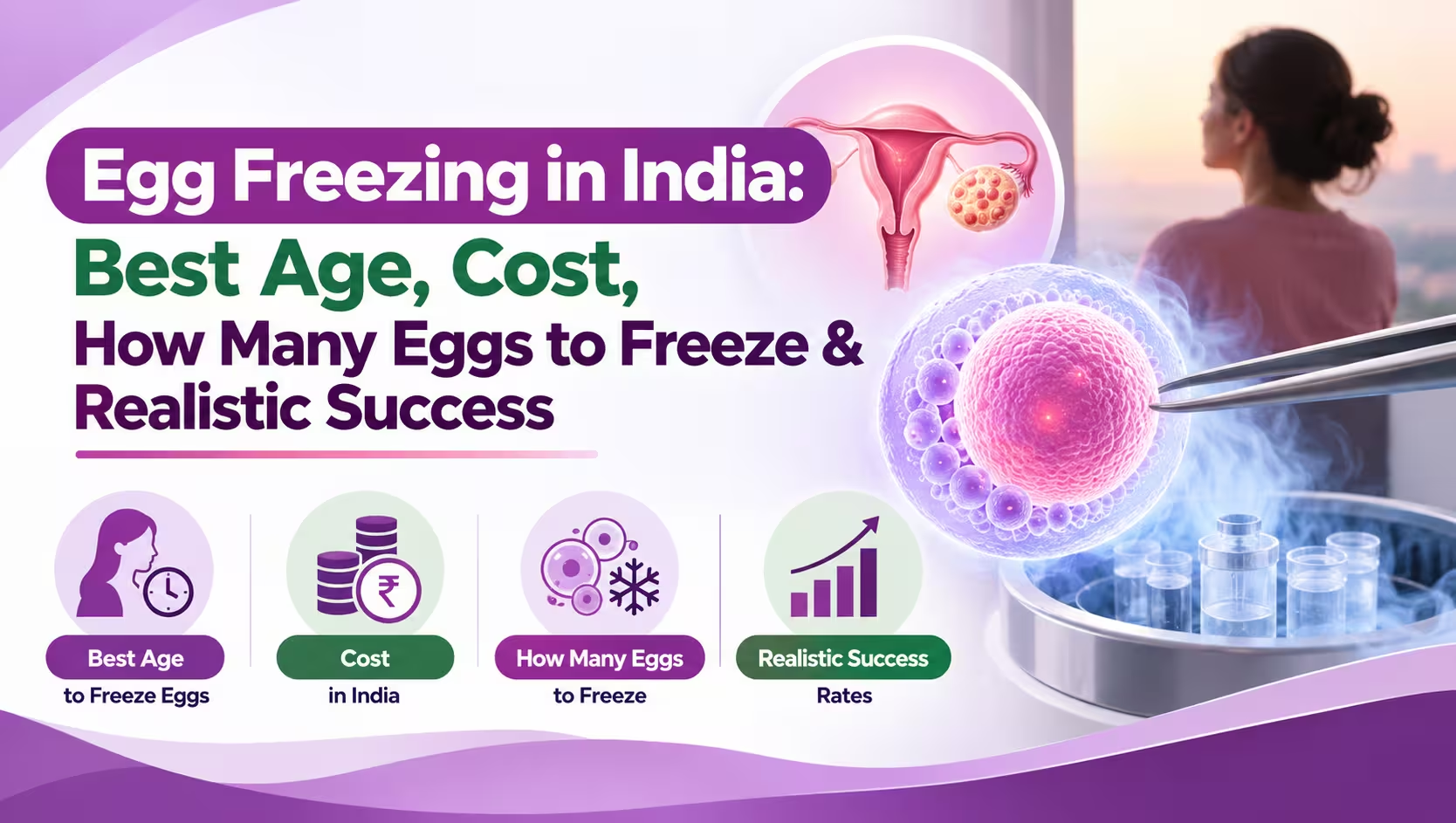
Egg Freezing in India: Best Age, Cost, How Many Eggs to Freeze & Realistic Success
Egg freezing (oocyte cryopreservation) in India is a medical and proactive fertility preservation process that lets women freeze and store mature unfertilized eggs using an ultra-rapid freezing technique called vitrification.
Egg freezing (oocyte cryopreservation) in India typically costs between ₹1,00,000 and ₹2,50,000 per cycle.
What Is Egg Freezing and How Does It Work?
Egg freezing, also known as oocyte cryopreservation, is a medical process in which a woman’s unfertilized eggs are retrieved from the ovaries, frozen, and stored at sub-zero temperatures for future use. It may be an option for women who wish to delay pregnancy or those who need to preserve their fertility before certain medical treatments.
The egg-freezing process involves the following steps:
- Evaluation: Tests such as AMH levels and an ultrasound are used to assess ovarian reserve and help plan treatment.
- Ovarian Stimulation: Hormonal medications stimulate the ovaries to develop multiple eggs.
- Egg Retrieval: The eggs are collected from the ovaries through a procedure performed under sedation or anesthesia.
- Cryopreservation: The mature, unfertilized eggs are frozen using a technique called vitrification and stored for future use.
When a woman is ready to try to conceive, the frozen eggs are thawed and fertilized with sperm, usually through intracytoplasmic sperm injection (ICSI). The resulting embryos may then be transferred into the uterus as part of an IVF cycle.
What Is the Best Age for Egg Freezing?
- Below 25 years: Egg freezing is usually considered only in specific circumstances, such as medical treatment that may affect fertility.
- 25–29 years: Egg quality is generally good, making this a possible option for women who wish to preserve fertility early.
- 30–34 years: Often considered a favourable age range for egg freezing, as egg quality and quantity are generally better than at older ages.
- 35–37 years: Egg freezing may still be beneficial, but egg quality and quantity typically begin to decline more noticeably.
- 38–40 years: Egg freezing is still possible, although success rates are generally lower and more eggs may be needed.
- Above 40 years: Success rates using frozen eggs are generally lower, so an individual fertility assessment is particularly important.
In summary: Egg freezing is generally more effective at younger ages, preferably before 35. The ideal age depends on ovarian reserve, medical history, and future pregnancy plans.
What Is the Cost of Egg Freezing in India?
The cost of freezing eggs in India might vary from about ₹1,00,000 and ₹2,50,000 or even more for each cycle.
The following are some of the costs you might incur during your treatment:
- Tests and consultation
- Medicines for hormonal stimulation
- Monitoring via blood tests and ultrasounds
- Egg harvesting and freezing process
- Yearly cost for storing your eggs
- Thawing, fertilization, embryo transfer, and other associated costs in case of future pregnancy
Remember, not all clinics might offer all these services in their package itself. Make sure to ask for an itemized cost sheet for these services.
How Many Eggs Should You Freeze?
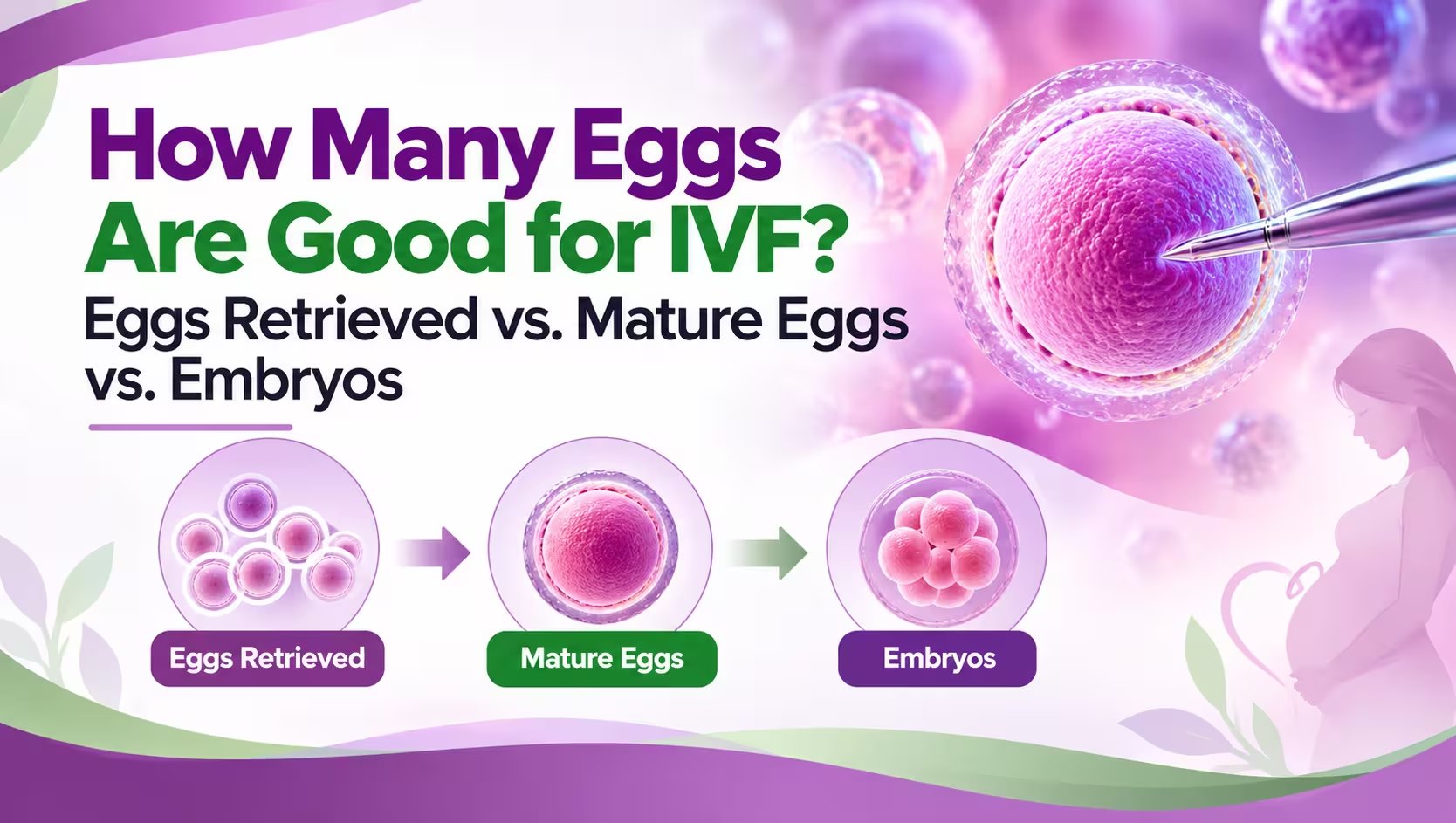
The number of eggs that you would want to freeze will depend largely on your age at the time of egg freezing, ovarian reserve, and future family goals. There isn’t a magic number that would ensure conception.
Freezing multiple mature eggs might be one of the things your fertility expert will mention in order to increase the chance of getting viable embryos for use in the future. The number of eggs per cycle varies greatly, and sometimes multiple stimulation cycles are needed.
AMH test and an antral follicle count done via ultrasound would give you an idea about how your ovaries are going to respond to stimulation. It’s impossible to determine egg quality or future chances of conceiving with them using these tests.
Don’t forget: the number of mature eggs frozen is more valuable information than follicle count done through ultrasound.
What Are the Realistic Success Rates of Egg Freezing?
Egg freezing helps to keep open a possibility of pregnancy, but it will not give you a baby. It depends on the following factors:
- Age of freezing: Younger age usually means higher egg quality.
- Number of mature eggs frozen: The presence of more mature eggs will increase the possibility of having survived, fertilised and developed eggs.
- Egg survival rate after thawing: Not all frozen eggs can survive during the thawing procedure.
- Fertilisation and embryogenesis: Not all eggs can be fertilised and develop into embryos that are suitable for transfer.
- General health status: Your general health condition and uterine condition also count.
According to the American Society for Reproductive Medicine, there is not enough evidence to determine the individual chances of having a live birth after egg freezing. Do not base yourself on one success-rate number; ask your specialist about it.
Who Should Consider Egg Freezing?
Egg freezing may be worth discussing if you:
- Want to delay pregnancy for personal or professional reasons.
- Are concerned about an age-related decline in fertility.
- Need medical treatment that could affect ovarian function.
- Have a condition or planned surgery that may affect fertility.
The decision should follow a fertility consultation. Egg freezing may involve injections, a retrieval procedure, expenses, and emotional uncertainty, so it is important to understand both its benefits and limitations.
Are There Any Risks or Limitations?
Bloating, abdominal pain, and injection site reactions can result from ovarian stimulation. In rare cases, there is a possibility of the development of OHSS, which is a disorder characterized by an abnormal reaction to fertility drugs. There are some risks associated with the procedure of egg collection.
Oocyte cryopreservation does not pause aging of the human body and it is not possible to promise pregnancy in the future. Duration of storage, cost and consent laws need to be addressed at the clinic.
Conclusion
In India, egg freezing could potentially be an alternative to preserve fertility for those women who prefer to conceive later on or would like to preserve their fertility for some medical reasons. The most suitable age, egg count, costs, and chances of success can be different for each individual patient. Prior to going ahead, have a consultation with a specialist in reproductive medicine regarding ovarian reserve tests, egg retrieval expectations, costs of procedures and future possibilities of conception. SCI IVF Hospital, one of the best IVF centres in India, provides fertility assessment and counselling to help you get a clear picture of the situation.
Frequently Asked Questions
1. When is the optimal time for egg freezing in India?
Egg freezing is better done when one is younger than 35 years of age. But this could depend on personal situations. One can always get an idea about this from a fertility expert.
2. How much does it cost to freeze eggs in India?
The cost of a single cycle could range anywhere between ₹1 lakh and ₹3 lakhs or even more. Medications, storage fees, and subsequent IVF costs could be extra.
3. How many eggs should I freeze for a pregnancy in the future?
There is no particular answer to this question. Many factors determine the number of eggs that you could freeze for yourself.
4. Does egg freezing assure me pregnancy in the future?
No, because some eggs might fail to survive thawing, fertilisation or might not form an embryo.
5. Can I freeze my eggs after 35?
Yes, this procedure could be performed after 35 but with reduced egg quality and quantity.