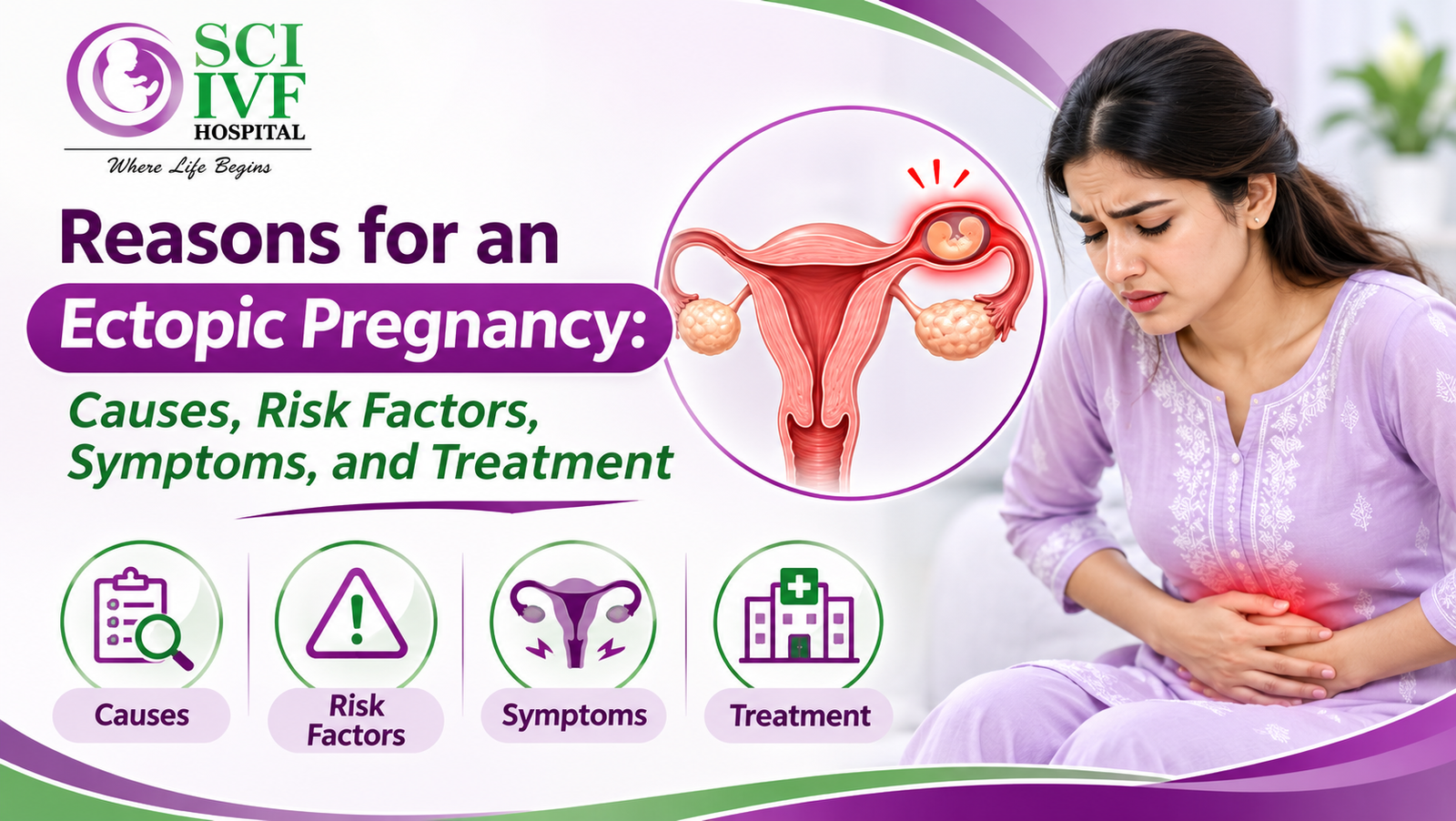
Reasons for an Ectopic Pregnancy: Causes, Risk Factors, Symptoms, and Treatment
An ectopic pregnancy happens when a fertilized egg implants outside the main cavity of the uterus—most commonly inside a fallopian tube. This occurs because something slows down or blocks the egg's normal journey toward the womb, or impairs the movement of the tiny hair-like structures (cilia) inside the tubes.
What is Ectopic Pregnancy?
An ectopic pregnancy, also known as an extrauterine pregnancy, is a pregnancy complication in which a fertilized egg implants outside the main cavity of the uterus. Instead of reaching the uterus, the fertilized egg attaches to another location and begins to develop there.
In about 90% or more of cases, ectopic pregnancy occurs in the fallopian tube. This is known as a tubal pregnancy. Other, less common types include ovarian pregnancy, abdominal pregnancy, cervical pregnancy, and Caesarean scar pregnancy.
Since these locations cannot support the normal development of a pregnancy, an ectopic pregnancy requires timely medical evaluation and appropriate treatment to prevent serious complications.
What Causes Ectopic Pregnancy?
For a fertilized egg to reach the uterine cavity and implant there, it must travel through the fallopian tube. For different reasons, the egg may stop moving through the tube and implantation may occur in a different location apart from the uterus.
If you want to know more about the location of ectopic pregnancies and their causes, symptoms, diagnosis and treatment, keep reading.
Common Causes
1. Damage to Fallopian Tubes
The fallopian tubes may become damaged from scarring or infection. This may prevent the normal movement of the fertilized egg. Scarring may occur from previous surgeries or infections.
2. Pelvic Inflammatory Disease (PID)
PID is a type of infection that can affect the female reproductive organs. This may cause scarring and inflammation of the fallopian tubes, therefore increasing the risk of an ectopic pregnancy.
3. Endometriosis
Endometriosis occurs when the lining of the uterus grows in other areas outside of the uterus. This condition may also cause scarring and inflammation of the nearby fallopian tubes.
4. Previous Pelvic Surgeries
Scar tissue may form from previous surgeries on the pelvic organs. This scar tissue may block the normal movement of the fertilized egg.
5. Abnormal Structure of Fallopian Tubes
Malformations of the fallopian tubes, whether present at birth or acquired later, may block the normal movement of the fertilized egg.
Risk Factors That Increase the Chances of Ectopic Pregnancy
Although ectopic pregnancy can occur to any woman, certain factors may increase the likelihood of this occurring.
- Previous Ectopic Pregnancy - Women who previously had an ectopic pregnancy have an increased risk of it occurring again.
- Sexually Transmitted Infections - Certain STIs can damage the fallopian tubes.
- Pelvic Tubal Surgery - Any surgical procedures on the fallopian tubes can affect the normal function of these tubes.
- Fertility Treatments - Ectopic pregnancy can occur after some assisted reproductive technologies, for example, after in vitro fertilization (IVF).
- Cigarette Smoking - Women who smoke have an increased risk of ectopic pregnancy compared to non-smokers.
- Increasing Age - Women above 35 years have an increased risk of ectopic pregnancy.
- Pregnancy with an IUD - While IUDs minimize the chance of pregnancy, pregnancy with an IUD occurs and requires an evaluation to rule out an ectopic pregnancy.
Many women with ectopic pregnancies do not have any identifiable risk factors.
Symptoms of Ectopic Pregnancy
Early signs of an ectopic pregnancy can be similar to early signs of a normal pregnancy and may go unnoticed. Symptoms that warrant a visit to the doctor should not be ignored.
Symptoms include:
- Bleeding and/or spotting
- Pain in the lower abdomen, pelvis and/or back
- Weakness and/or dizziness
Sudden and severe abdominal pain can indicate internal bleeding and is an emergency situation. If you have shoulder tip pain in addition to this, this is a medical emergency and you should go to the hospital.
What Is a Ruptured Ectopic Pregnancy?
If a fallopian tube becomes pregnantly infected and the tube then ruptures, this is called a ruptured ectopic pregnancy. Continued growth of an embryo in a fallopian tube would cause the tube to rupture since it cannot stretch and expand like the uterus.
This then leads to severe internal bleeding and can quickly become a life-threatening condition.
Signs of a ruptured ectopic pregnancy include:
- Dizziness and/or weakness
- Abdominal Pain
- Shoulder tip pain
- Fainting
This is a medical emergency and you should immediately go to the nearest hospital.
How Is an Ectopic Pregnancy Diagnosed?
Early diagnosis enables the physician to ascertain the location of the pregnancy and choose the right method for treating it. Common techniques of early diagnosis include:
- Transvaginal ultrasound: Enables viewing the uterus and adjoining organs to detect the location of the pregnancy.
- Blood hCG Test: Tests for levels of pregnancy hormones. Repeat tests help the doctor understand how these levels fluctuate.
- Pelvic examination: Assists in detecting any tenderness that could be characteristic of an ectopic pregnancy.
The doctors commonly use more than one technique in making their diagnosis.
Treatment Options for Ectopic Pregnancy
Treatment is based on several factors including where the pregnancy is located, its size, the levels of hCG, and whether the tube has ruptured.
Some of the options include:
1. Expectant Management: Used in select women with a naturally resolving pregnancy. Requires frequent tests and office visits.
2. Medication (Methotrexate): Used in eligible women with an unruptured ectopic pregnancy. Requires frequent tests to evaluate recovery.
3. Surgery: Used to remove the ectopic pregnancy and fallopian tube. May preserve or remove the tube, depending on its condition.
4. Emergency Surgery: Used if there is a ruptured tube or if there is significant bleeding.
Can You Get Pregnant After an Ectopic Pregnancy?
Yes. Women who have previously had an ectopic pregnancy can go on to have a healthy pregnancy. This is dependent on the condition of the other fallopian tube, and the woman's overall health and treatment.
It is possible to have natural conceptions after a fallopian tube is removed. Fallopian tube damage can also be treated with IVF.
If you become pregnant again, early medical evaluation and ultrasound are needed to confirm if the pregnancy is in the uterus.
Conclusion
Ectopic pregnancy is a condition where pregnancy occurs outside the uterus. It is a serious condition and requires immediate medical care. Early recognition of causes, risks, and symptoms of ectopic pregnancy helps women to seek medical care and avoid complications like ruptured ectopic pregnancy. Having an ectopic pregnancy can be a challenging experience both physically and mentally. Many women can have a successful pregnancy later with proper medical care and support.
Women with ectopic pregnancy or women with infertility concerns should consult a qualified doctor. SCIIVF Hospital, best IVF center in India offers a range of fertility and pregnancy care and support services to couples to help them achieve parenthood.
Frequently Asked Questions (FAQs)
1. What is the most common cause of ectopic pregnancy?
Issues like damage, inflammation or scarring can obstruct the movement of fertilized eggs through the fallopian tubes to the uterus.
2. Can ectopic pregnancy happen without symptoms?
Some women may not experience symptoms during the early stages of ectopic pregnancy and it can be discovered during a pregnancy test or an ultrasound.
3. Is tubal pregnancy the same as ectopic pregnancy?
Tubal pregnancy describes a situation whereby a fertilized egg implants in one of the fallopian tubes. Thus ectopic pregnancy and tubal pregnancy mean the same thing.
4. Can an ectopic pregnancy resolve naturally?
Some early cases of ectopic pregnancy can be resolved naturally, with the guidance of the healthcare team and close monitoring to avert complications.
5. Can IVF help after an ectopic pregnancy?
IVF can be useful for women who have fertility challenges because of damage to the fallopian tubes. A fertility specialist can provide more details.