Infertility Caused by Damaged or Blocked Fallopian Tubes
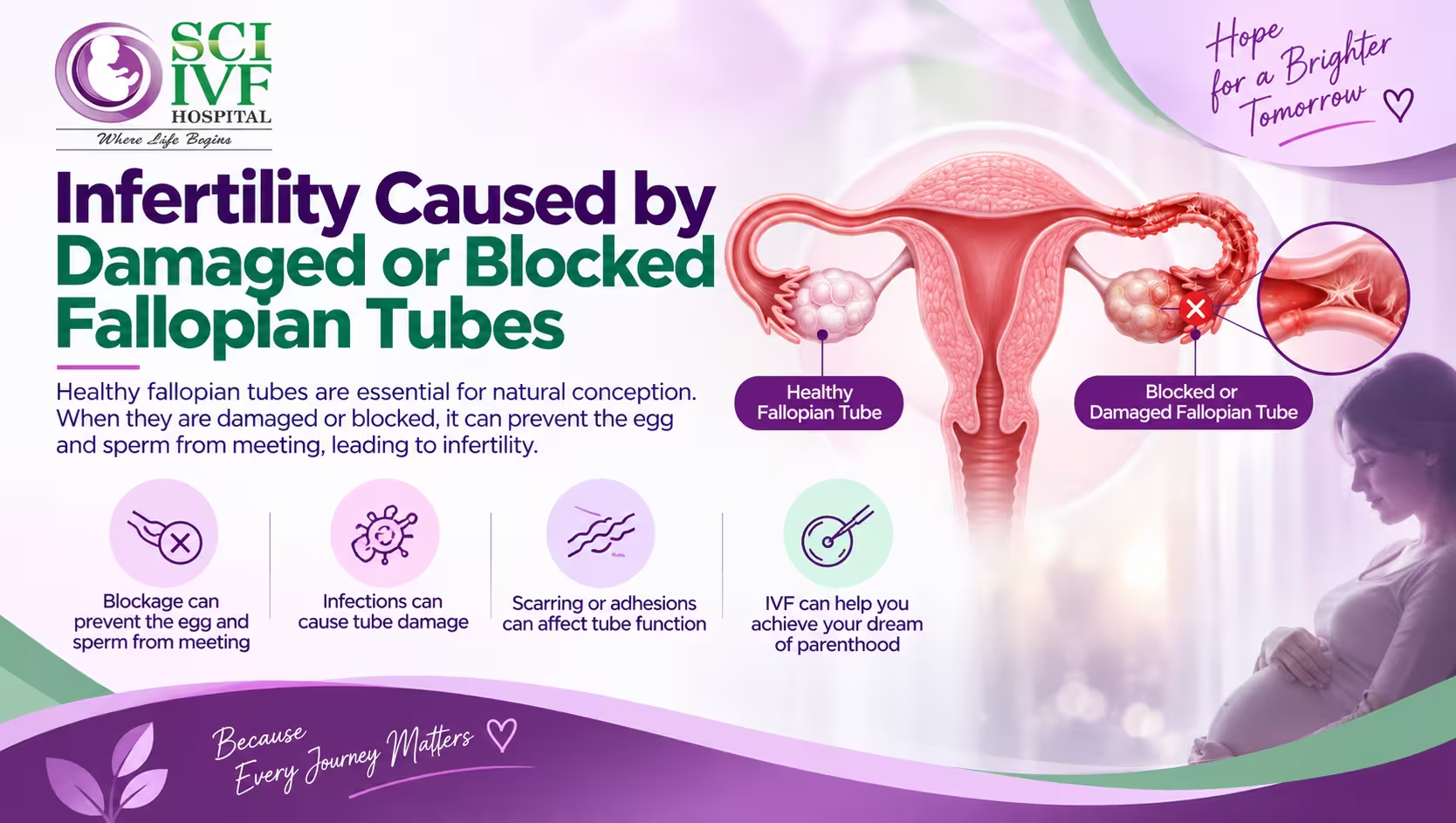
Damaged or blocked fallopian tubes can prevent pregnancy by stopping sperm from reaching the egg or by blocking the fertilized egg from traveling to the uterus. When the tubes are blocked or damaged, the normal process of fertilization and embryo transport may be disrupted, making natural conception more difficult.
Tubal factor infertility can develop due to pelvic infections, endometriosis, previous pelvic or abdominal surgery, or other conditions affecting the fallopian tubes. In some cases, there may be no obvious symptoms, and the problem may only be discovered during a fertility evaluation.
In this blog, we will discuss the causes and symptoms of blocked fallopian tubes, how tubal blockage is diagnosed, available treatment options, and when IVF may be considered.
What Are Fallopian Tubes and Why Are They Important for Pregnancy?
Fallopian tubes are a pair of hollow, muscular ducts connecting the ovaries to the uterus that serve as the essential pathway for an egg and sperm to meet. After ovulation, the released egg enters one of the fallopian tubes, where fertilization can occur if sperm reaches the egg.
Once fertilization takes place, the resulting embryo travels through the fallopian tube toward the uterus, where it may implant and continue developing. For natural conception to occur, the fallopian tubes generally need to be open and functioning properly, as blockage or scarring can interfere with the movement of the egg, sperm, or embryo.
How Do Blocked or Damaged Fallopian Tubes Cause Infertility?
Blocked or damaged fallopian tubes cause infertility by physically blocking the path where the sperm, egg, and fertilized embryo need to travel. When a tube is blocked, sperm may not be able to reach the egg, making fertilization difficult. If both fallopian tubes are blocked, natural conception can become significantly more difficult.
When one fallopian tube is blocked while the other is open and healthy, pregnancy may still be possible. However, damaged or blocked tubes can also affect normal tubal function and may increase the risk of an ectopic pregnancy, in which a pregnancy develops outside the uterus.
Because tubal problems are an important cause of female-factor infertility, evaluating fallopian tube health may be an important part of a fertility assessment.
What Causes Blocked or Damaged Fallopian Tubes?
Several different conditions can obstruct or scar fallopian tubes.
Pelvic Inflammatory Disease
This is caused by untreated infections within the reproductive system and can affect and scar the fallopian tubes.
Sexually Transmitted Infections
Infections including chlamydia, gonorrhea and many others, if left untreated, may permanently damage the reproductive system.
Endometriosis
This condition may affect and damage the fallopian tubes. It can cause inflammation and scar formation, leading to adhesions in the reproductive tissue.
Pelvic Surgery
Some pelvic or abdominal surgeries may cause fallopian tube scarring or adhesions.
Damaged Fallopian Tubes
A previous ectopic pregnancy may cause scarring of the fallopian tubes as the more the tubes are damaged, the more scar tissue and adhesion are developed.
Blocked Fallopian Tube
This condition occurs when one of the fallopian tubes becomes blocked and fills with fluid. This may require special management before assisted reproduction treatment.
What Are the Symptoms of Blocked Fallopian Tubes?
One challenge of blocked fallopian tubes is no apparent symptoms. Women experience certain symptoms once they become infertile.
Symptoms can include but are not restricted to:
- Pain during intercourse
- Pelvic pain
- Infection-related symptoms
- Painful periods
- Infertility
However, having any of these symptoms does not confirm your fallopian tubes are blocked. Testing would need to be done to make that claim.
How Are Blocked Fallopian Tubes Diagnosed?
A fertility specialist may order the HSG test to see if your fallopian tubes are open.
HSG Test for Blocked Fallopian Tubes
HSG is the most common X-ray examination to test fallopian tube patency. During an HSG, a fluid is placed into the uterus, and an X-ray is taken to see if it can go through the fallopian tubes.
HSG can show if there is tubal blockage and can show the shape of the uterine cavity and tubes.
Ultrasound-Based Testing
Hysterosalpingo-Contrast Sonography can also be used to test whether the tubes are open.
Laparoscopy
In certain cases, Laparoscopy is appropriate, mostly when pelvic adhesions or endometriosis are suspected. In those cases, Laparoscopy may be necessary, but it is not the first test done in the evaluation of infertility.
Can You Get Pregnant With Blocked Fallopian Tubes?
It depends on the symptoms. The symptoms include how many fallopian tubes are blocked and how healthy the other reproductive structures are.
Having one open tube and a blocked tube could still allow for pregnancy to occur naturally. But if both fallopian tubes are blocked, sperm and egg cannot meet and natural conception is incredibly difficult.
An obstetrician can help you determine how healthy and functioning your reproductive structures are. They can help you decide what to do about the blockage and its location.
What Is the Treatment for Blocked Fallopian Tubes?
Treatment is given based on where, how much, and why tubal damage occurred, alongside factors including age and other fertility-related problems.
Potential options are as follows:
Treatment of an Infection
If an infection is present, treatment may be given. Treatment of an infection will not repair tubal scar tissue.
Tubal Cannulation
Tubal cannulation may be an option in selected cases of blocked proximal tubes.
Tubal Surgery
Reconstructive surgery may be an option for tubal damage in some cases. However, the decision should be made on a case-by-case basis.
IVF
Eggs are removed from the ovary during IVF and are fertilized in the laboratory. The resultant embryo is then placed in the uterus so the sperm and egg do not need to meet in the fallopian tube.
Therefore, IVF may be an option for women with bilateral tubal blockage or extensive tubal damage, based on their overall fertility.
Blocked Fallopian Tubes and IVF: When Is IVF Considered?
Blocked fallopian tubes do not necessarily mean IVF is a must for every woman. Your fertility specialist will consider:
- Your age
- Whether one or both tubes are blocked
- Severe tubal damage, whether it is central or peripheral
- Ovarian reserve
- Egg-related factors
- Sperm quality
- Presence of endometriosis or other conditions
- Prior fertility treatments
For extreme cases of tubal disease, IVF is often suggested over surgical treatment for tubal disease.
In some cases of hydrosalpinx, treatment of the affected tube is sometimes suggested before IVF because hydrosalpinx may adversely affect the outcome of IVF.
When Should You See a Fertility Specialist?
You may consider a fertility evaluation if you have difficulty conceiving along with a history of conditions that may affect the fallopian tubes or reproductive health, such as:
- Endometriosis
- Ectopic pregnancies
- Abdominal or pelvic surgery
- Sexually transmitted infections
- Pelvic inflammatory disease
- Tubal disease
Not all of these conditions necessarily cause fertility problems or require an immediate evaluation. However, if you have a known risk factor, you may benefit from discussing your fertility with a specialist rather than waiting for the usual evaluation period. Dr. Shivani Sachdev Gour, a Gynecology & Infertility Specialist, can help assess your fertility concerns and determine whether further evaluation is appropriate.
Conclusion
Damaged or obstructed fallopian tubes naturally lead to difficulties with conception and are a common cause of tubal factor infertility. Since tubal obstructions may have no clear symptoms, fertility evaluation is often necessary if the expected pregnancy does not occur.
Shell and ultrasound assessments are used to evaluate tubal patency, while the management of tubal obstruction depends on the site and extent of the obstruction and on the other fertility problems.
SCI IVF Hospital, the most respected IVF clinic and fertility center in India, provides personalized fertility assessments and treatment for infertile couples who are battling tubal and other obstruction-related fertility issues.
Frequently Asked Questions
Can blocked fallopian tubes lead to infertility?
Yes. Blocked fallopian tubes can result in infertility due to the inability of the sperm and the egg to meet.
How do I determine if my fallopian tubes are blocked?
Fallopian tube blockages can be found using the HSG (Hysterosalpingogram) test or ultrasounds that focus on finding blockages of the tubes.
Can one blocked fallopian tube lead to infertility?
Yes. If the other fallopian tube is open and healthy and there are no other major fertility issues, a natural pregnancy can still occur.
Can we use IVF if both fallopian tubes are blocked?
Yes. The fallopian tubes are completely avoided in IVF as an egg is fertilized outside the body and an embryo is then transferred to the uterus.