C-Section vs Normal Delivery
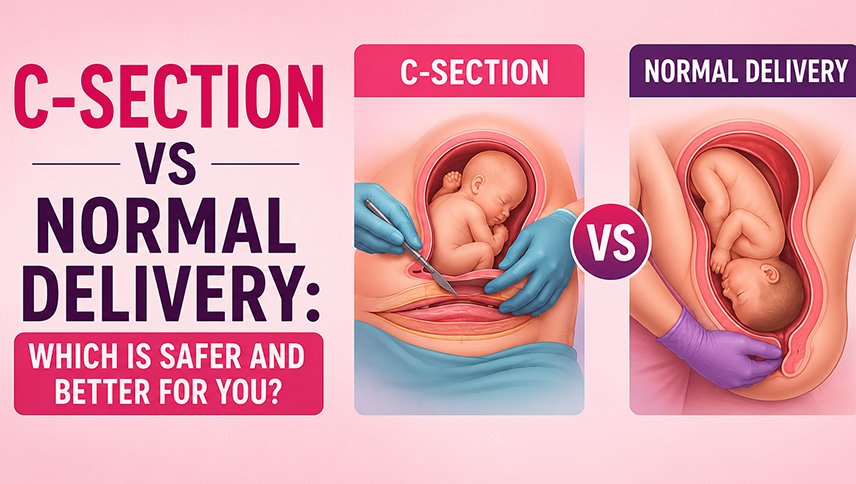
Welcoming a baby is one of life's most memorable experiences, and many expectant parents wonder whether a normal delivery or C-section is the better option. The main difference between a C-section and a normal delivery is how the baby is born. In a normal delivery, the baby is delivered through the birth canal, while a C-section (Cesarean delivery) is a surgical procedure in which the baby is delivered through an incision made in the mother's abdomen and uterus.
Both normal delivery and C-section are safe methods of childbirth when recommended for the right medical reasons. The best delivery option depends on several factors, including the mother's health, the baby's condition, pregnancy-related complications, and the obstetrician's assessment. In this article, we'll explore the difference between C-section and normal delivery, their benefits, risks, recovery process, and when each method may be the safest choice for mother and baby.
What Is a Normal Delivery?
A normal delivery, also known as a vaginal delivery, is the natural process of giving birth through the birth canal without the need for major surgery. It usually occurs between 37 and 42 weeks of pregnancy, once labor begins and regular contractions help the baby move through the birth canal. For women with a healthy pregnancy and no medical complications, normal delivery is often considered the preferred method of childbirth because it is associated with a quicker recovery and fewer surgical risks.
Advantages of Normal Delivery
Normal delivery offers several benefits for both the mother and the baby, including:
- Faster recovery after childbirth
- Shorter hospital stay
- Lower risk of surgical complications and infections
- Earlier skin-to-skin contact with the baby
- Quicker initiation of breastfeeding
- Reduced risk of temporary breathing problems in newborns
- Earlier return to normal daily activities
While normal delivery is the preferred option for many healthy pregnancies, the safest method of childbirth always depends on the mother's health, the baby's condition, and the obstetrician's recommendation.
What Is a C-Section?
A C-section (Cesarean section) is a major surgical procedure used to deliver a baby through incisions made in the mother's abdomen and uterus. Unlike a normal delivery, where the baby is born through the birth canal, a C-section delivery is performed when a vaginal birth is not considered safe for the mother, the baby, or both.
A Cesarean delivery may be planned in advance due to certain medical conditions or pregnancy-related concerns, or it may be performed as an emergency C-section if complications arise during labor. Thanks to advances in medical care and surgical techniques, C-sections are now a safe and effective childbirth option that can help protect the health of both mother and baby when medically necessary.
Normal Delivery vs. C-Section: Key Differences
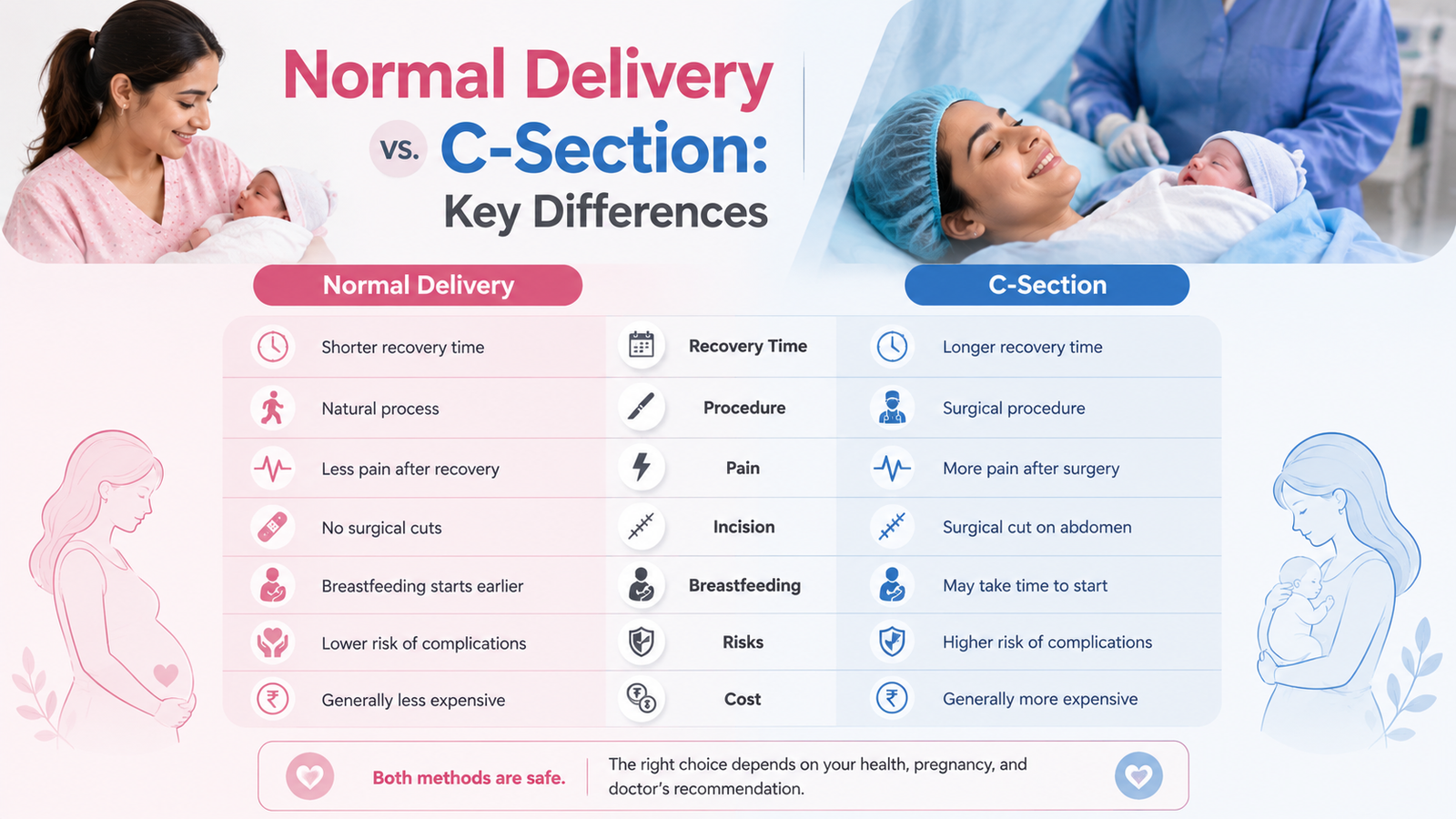
Normal Delivery or Cesarean: Which Is Better?
Many parents are wondering, "Which is better? C-section or normal delivery?"
There is no definitive answer.
Usually, normal delivery is the approach without complications and when the pregnancy is healthy because of the speed of the recovery process and the risk of surgery.
Developing complications usually mean the safest approach is a C-section. A C-section should be decided on without question considering the implications it could have on the mother and baby.
There is no delivery option that is the safest and best. It is really considering what the best approach is in the case of the specific pregnancy.
When Is a C-Section Necessary?
A C-section may be necessary if the mother or baby would be in danger if the delivery were vaginal. Vaginal delivery may be more problematic in the following cases:
- Baby is in a transverse or breech position
- Mother has placenta previa
- The baby is in distress during labor
- Labor is not progressing
- Mother is pregnant with twins or more
- There are problems with the umbilical cord
- Mother has had surgery on the uterus or multiple C-sections
- Mother has severe hypertension
In any of the above cases, C-sections are the safest delivery option.
Benefits of Normal Delivery
There are many benefits of vaginal birth for women.
Quick Recovery
Recovering from a vaginal birth is generally faster and it’s sooner until women can once again participate in normal activities.
Lowered Risk
Since a vaginal birth is not a surgery, women are at less risk of a surgical infection and there’s also no risk of blood loss or anesthesia complications.
Earlier Bonding Experience
Mothers holding and breastfeeding their babies help strengthen the mother-child bonding experience.
Breathing Problems
Babies are less likely to experience temporary breathing problems post-birth because the fluid that’s in their lungs is squeezed out during the birth process.
Benefits of a C-Section
While recovery is longer, a C-section provides many advantages if it is the better option for a mother and baby.
Can Save Lives
It is possible to save lives when C-sections are needed to avoid life-threatening problems during complicated labors.
Scheduled Birth
If the mother or baby is in a vulnerable condition, the risk factors may be diminished if the delivery is scheduled.
Less Birth Trauma
During a complicated pregnancy where the baby is in a difficult position delivery may be traumatic to the baby, but less so if a C-section is done.
Lower Risk for Specific Medical Conditions in the Mother
If the mother is dealing with certain severe medical conditions a scheduled C-section may be beneficial to her and the baby.
Risks of Normal Delivery and C-Section
Like any other medical procedure, both delivery methods involve some risks.
Normal Delivery Risks
- Tears in the vagina
- Injury to the pelvic floor muscles
- Temporary urinary incontinence
- Heavy bleeding (very rare)
C-Section Risks
- Infection of the surgical site
- Increased blood loss
- Blood clots
- Prolonged recovery time
- Complications from scarring
- Slightly higher risk in subsequent pregnancies
Your doctor will go over these with you according to your own health.
Recovery After Normal Delivery vs. C-Section
The recovery process is very different in the two methods.
Normal Delivery Recovery
Mothers are advised to start walking just a few hours after giving birth. They normally feel much better in a few days and have a faster recovery.
C-Section Recovery
As this is major surgery, the recovery process usually takes 6-8 weeks. During this time, the mother needs to:
- Ensure that her incisions remain clean and dry.
- Do not lift anything heavy.
- Take any prescribed medication.
- See the doctor for follow-ups.
- Do light exercises depending on what the doctor recommends.
Most mothers recover well from their surgery.
Can You Choose Between a Normal Delivery and a C-Section?
While some women have preferences regarding which delivery process they would like to go through, the actual choice must be made based on medical assessment.
This includes assessing such things as:
- Your general health
- Complications during pregnancy
- Position of the baby
- Past delivery processes
- Labor progress
- Baby's condition
Discussing your birth plan during prenatal appointments will help you determine the safest way for you to give birth.
Tips to Improve the Chances of a Normal Delivery
Not all cesarean deliveries are preventable but some healthy behaviors could increase your chances of giving birth vaginally.
- Go to all the prenatal visits
- Have a balanced diet
- Exercise regularly through pregnancy-friendly exercises
- Maintain a healthy weight during pregnancy
- Drink plenty of water
- Practice breathing and relaxation methods
- Follow your doctor’s advice throughout your pregnancy
Note that the most important thing in any kind of delivery should be safety and not necessarily a normal delivery.
Conclusion
When comparing C-section vs normal delivery, there is no single option that is best for every pregnancy. A normal delivery is often recommended for healthy, low-risk pregnancies because it usually involves a shorter recovery period and fewer surgical risks. However, a C-section may be the safest choice when pregnancy or labor complications make a vaginal birth unsafe for the mother or the baby.
The most important goal is always a safe delivery and the well-being of both mother and child. If you're planning your pregnancy or need expert guidance on childbirth options, choosing a trusted fertility center in India can help you make informed decisions. At SCI IVF Hospital, our experienced obstetricians and fertility specialists provide personalised pregnancy care, expert delivery planning, and compassionate support to help ensure the healthiest possible outcome for you and your baby.
Frequently Asked Questions
Is a standard birth better than a C-section?
There is no one-size-fits-all answer to this question. Surgical births are also warranted for complicated pregnancies. So for uncomplicated pregnancies, natural births are generally safer than complex surgeries.
Is natural birth or a C-section worse?
Natural births require the C-Section recovery and vice versa. So natural birth is worse during the actual birth and C-Section is worse during recovery.
Is a natural birth after a C-Section common?
Yes, many women who give birth after a C-Section choose a natural birth. It depends on the woman and her specific medical conditions. Your controlled practice would be the best to ask.
How does a C-Section change pregnancy?
Planning for pregnancies after a C-Section would be different and some complications could be an issue, but it’s very possible to have a healthy pregnancy after a C-Section.
Is there a best birth for the baby?
Making the safest choice for both the baby and the woman would be the best birth. In other cases, both are warranted.
If you'd like to learn more about pregnancy, childbirth, and recovery after delivery, you may also find these guides helpful:
- Diet Plan for Mothers After a C-Section
- First Period After C-Section
- Maternity Care: A Complete Guide for a Healthy Pregnancy and Safe Delivery
These resources can help you better understand recovery after childbirth, postpartum care, and what to expect during your journey into motherhood.