Difference Between Internal Fertilisation and External Fertilisation
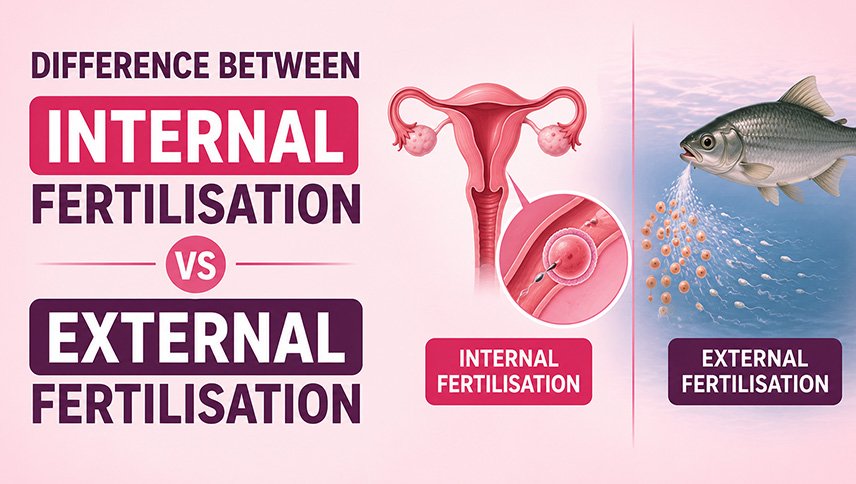
Fertilization marks the beginning of a new life. It occurs when a sperm cell combines with an egg cell to form a zygote, which later develops into an embryo. In nature, fertilization takes place in two main ways: internal fertilization and external fertilization. The primary difference between the two is the location where fertilization occurs. Internal fertilization happens inside the female's body, while external fertilization takes place outside the body in the surrounding environment, usually in water. These two methods also differ in embryo development, protection, and the chances of survival. Understanding the difference between internal and external fertilization is helpful for students, parents, and anyone interested in human reproduction and fertility. In this article, we'll explain both types of fertilization, compare their key features, and discuss how internal fertilization occurs in humans.
What Is Fertilisation?
Fertilisation is the process in which a male sex cell (sperm) joins with a female sex cell (egg or ovum) to form a single new cell called a zygote. This zygote contains genetic material from both parents and marks the beginning of a new life. As it continues to divide and grow, it develops into an embryo. Successful fertilisation is an essential step in reproduction for humans and many other animals.
What Is Internal Fertilisation?
Internal fertilisation is the process in which a sperm cell fertilises an egg inside the female's body. This method of reproduction is common in many land-dwelling animals, where fertilisation takes place within the female reproductive tract.
Animals that use internal fertilisation include:
- Humans
- Mammals
- Birds
- Reptiles
- Some insects
Because fertilisation occurs inside the female's body, the fertilised egg and developing embryo receive greater protection from predators, harsh environmental conditions, and dehydration. This increases the chances of successful fertilisation and healthy embryo development.
Internal Fertilization in Humans
In humans, internal fertilisation usually takes place in the fallopian tube, where a sperm meets and fertilises an egg. Once fertilisation occurs, the newly formed zygote begins its journey toward the uterus, where it continues to develop.
The process involves the following steps:
- During ovulation, one of the ovaries releases a mature egg.
- During sexual intercourse, sperm enter the female reproductive tract and travel toward the fallopian tube.
- A single sperm fertilises the egg, forming a zygote.
- The zygote starts dividing into multiple cells as it moves toward the uterus.
- It develops into an embryo during this journey.
- The embryo implants in the lining of the uterus, marking the beginning of pregnancy.
Because fertilisation and early embryo development occur inside the female's body, the embryo is protected and supported by a stable environment, increasing the chances of a successful pregnancy.
What Is External Fertilisation?
External fertilisation takes place outside the body of the female.
In this form, both the male and female organisms release their reproductive cells into the outer environment, which can be mostly water.
This type of fertilisation is commonly found in:
- Fish
- Frogs
- Toads
- Various aquatic animals
Due to exposure to natural elements and predators, they lay eggs in larger numbers for greater survival chances.
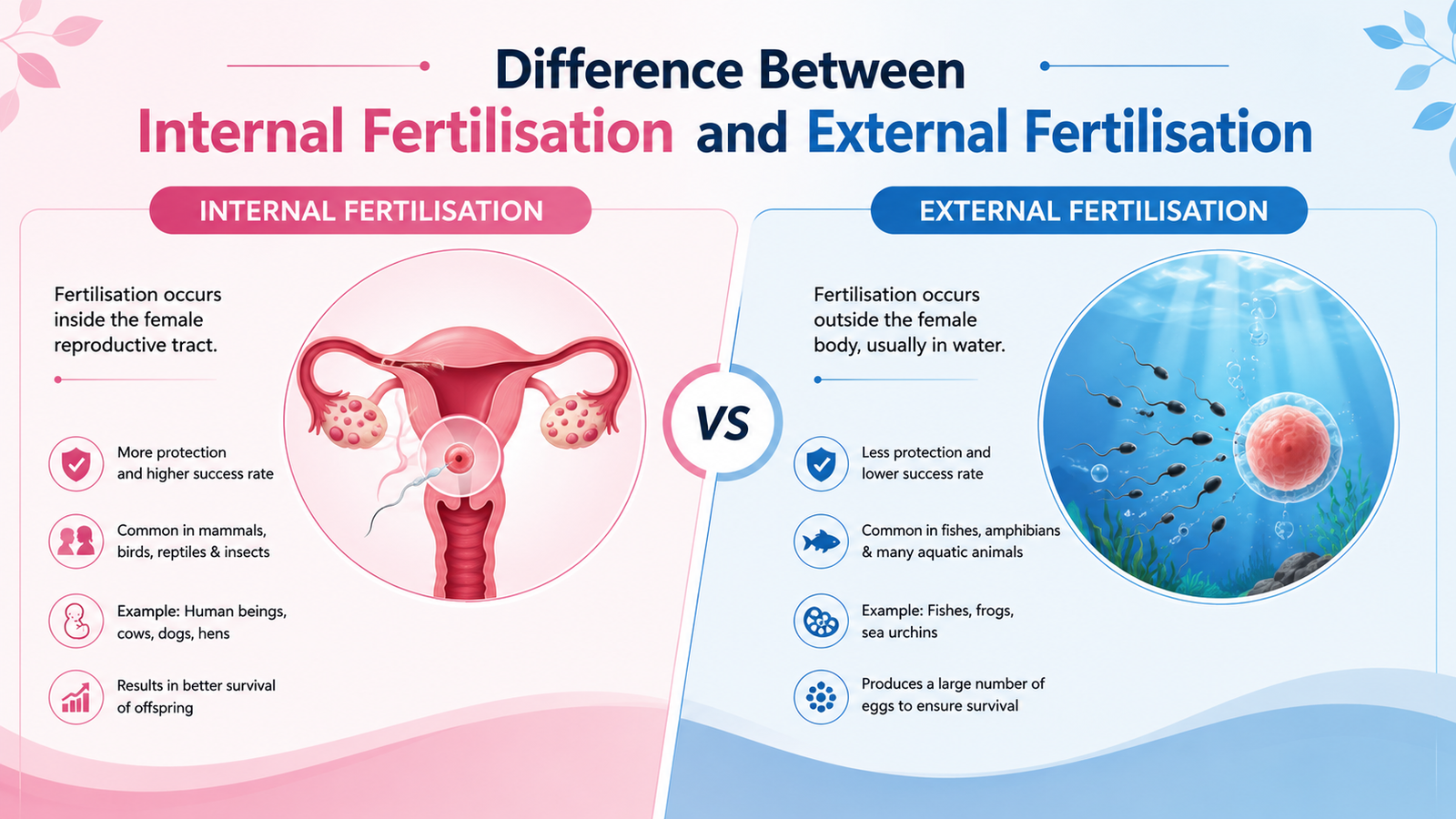
Difference Between Internal Fertilisation and External Fertilisation
This table clearly highlights the difference between internal and external fertilization and why different animals use different reproductive strategies.
Advantages of Internal Fertilisation
Internal fertilisation offers several advantages that improve the chances of successful reproduction and healthy offspring.
Higher Chances of Fertilisation
Since the sperm and egg meet inside the female reproductive tract, the likelihood of successful fertilisation is much higher than in external fertilisation.
Better Protection for the Embryo
The fertilised egg develops within the female's body, where it is protected from predators, harsh environmental conditions, and dehydration during the early stages of development.
Higher Survival Rate of Offspring
Although fewer offspring are usually produced, they receive better protection and support, giving them a greater chance of surviving and reaching maturity.
Suitable for Life on Land
Internal fertilisation does not depend on water for the sperm and egg to meet. This makes it an effective reproductive strategy for humans, mammals, birds, reptiles, and many insects that live primarily on land.
Advantages of External Fertilisation
Though external fertilization may not be as successful, it has some benefits as well.
Many Offspring
A great number of eggs are released by water organisms in order to ensure their survival.
Genetic Variation
The larger number of offspring helps to achieve greater genetic variation among organisms.
Simplified Reproduction
The process of external fertilization does not include the pregnancy of the organism.
Disadvantages of Internal and External Fertilisation
Both have disadvantages.
Internal Fertilization
- Mating required between male and female.
- Fewer offspring are produced.
- Eggs need a lot of energy for gestation.
- Gestation can last for weeks or months.
External Fertilization
- Low rate of fertilization.
- Eggs are prone to predation.
- Needs water for fertilization.
- Not all embryos survive to maturity.
Why Do Humans Have Internal Fertilisation?
Internal fertilization in human beings is preferred because it offers ideal conditions for the development of the embryo.
Some of the key advantages of internal fertilization are as follows:
- Protection of the fertilized egg
- Provision of ideal conditions for the fetus
- Prevention of dehydration and damage caused by the environment
- An increase in the likelihood of survival of the fetus
- Nourishment of the baby by the mother during pregnancy
The above-mentioned advantages have ensured higher rates of successful pregnancies in humans compared to those where external fertilization occurs.
Internal Fertilisation and IVF: What's the Difference?
Despite natural conception in human beings being achieved via internal fertilization, the method followed by assisted reproductive methods such as IVF is somewhat different.
In IVF,
- Eggs are retrieved from the ovaries.
- Fertilization is achieved in the laboratory rather than within the body.
- The fertilized egg is observed for proper growth.
- If the egg develops properly, it is then placed back into the uterus.
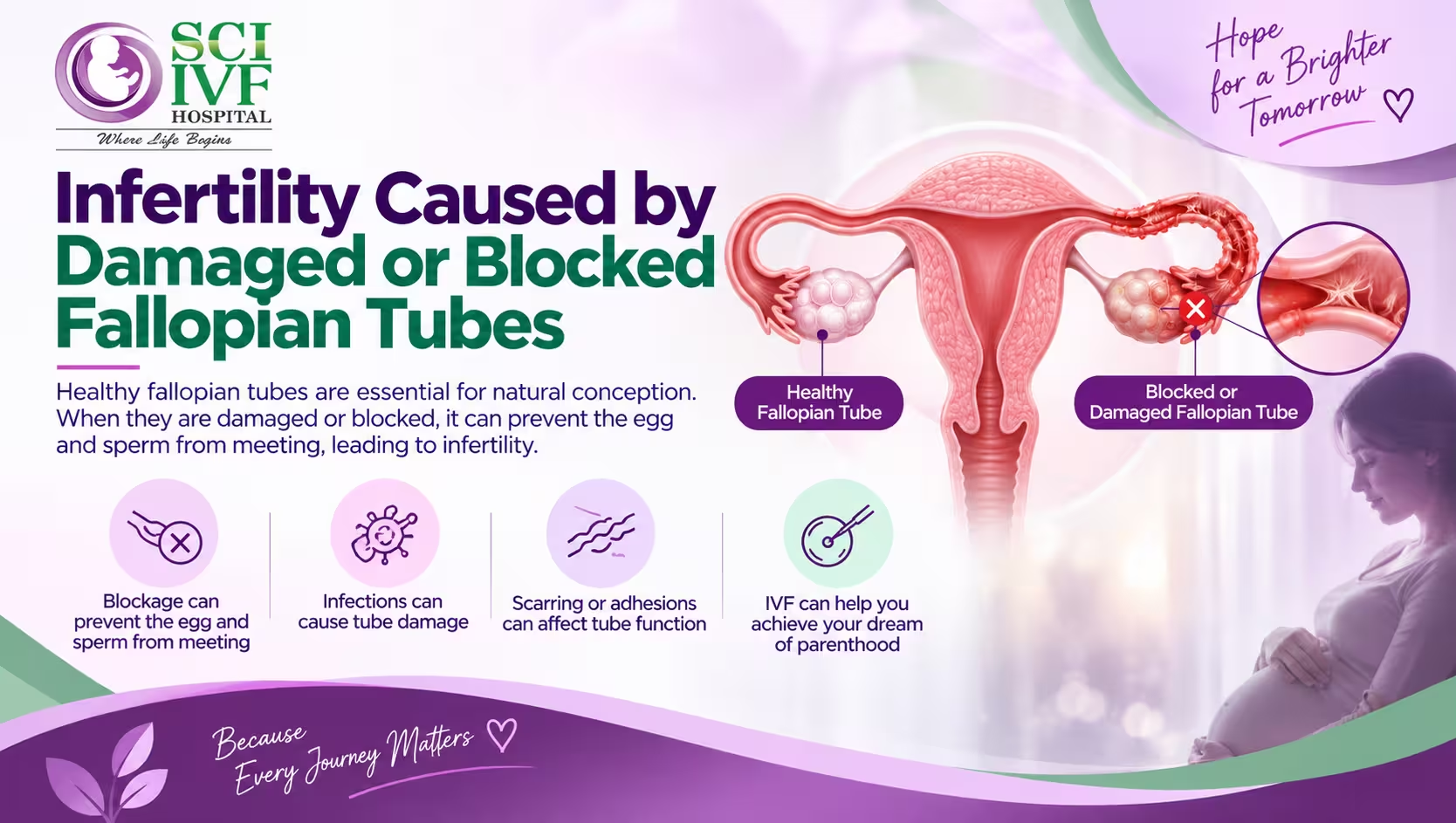
IVF is suggested to couples suffering from infertility caused by blockage in the fallopian tubes, ovulatory problems, infertility in men or unidentified causes of infertility.
Conclusion
Understanding the difference between internal fertilisation and external fertilisation helps explain how different organisms reproduce and adapt to their environments. Internal fertilisation, which occurs inside the female's body, offers greater protection for the fertilised egg and developing embryo, resulting in a higher chance of successful pregnancy and offspring survival. In contrast, external fertilisation takes place outside the body, usually in water, where animals produce a larger number of eggs to increase the likelihood of reproduction.
If you're planning a pregnancy or facing challenges with conception, seeking timely guidance from a trusted fertility center in India can make a significant difference. At SCI IVF Hospital, our experienced fertility specialists provide comprehensive fertility evaluations, advanced reproductive treatments, and personalised care to help you take the next step toward building your family.
Frequently Asked Questions
What are the differences between internal and external fertilization?
Internal fertilization takes place inside the female's body, while external fertilization happens outside the body and is commonly associated with aquatic environments.
What does internal fertilization mean for us humans?
Internal fertilization, for us, means that the sperm will meet the egg in a female's body, and that meeting occurs in the fallopian tube. From there, the fertilized egg, now called the embryo, will make the journey to the uterus.
What external fertilization does the animal kingdom utilize?
Fish, frogs, toads and many other animals that live in water tend to utilize external fertilization.
What is the comparison of the success rates between the methods of fertilization?
Success is synonymous with internal fertilization. Sperm and eggs, along with a developing embryo, all have the bonus of protective female body coverage.
Is external fertilization possible for humans, in the natural sense?
Natural reproduction in humans is confined to internal fertilization. Although external fertilization is possible with the aid of reproductive technologies like (IVF), in a controlled lab environment, the embryo once fertilized is later introduced into the female body.