Fibroids vs. Polyps: Overview, Symptoms and Treatments for Women
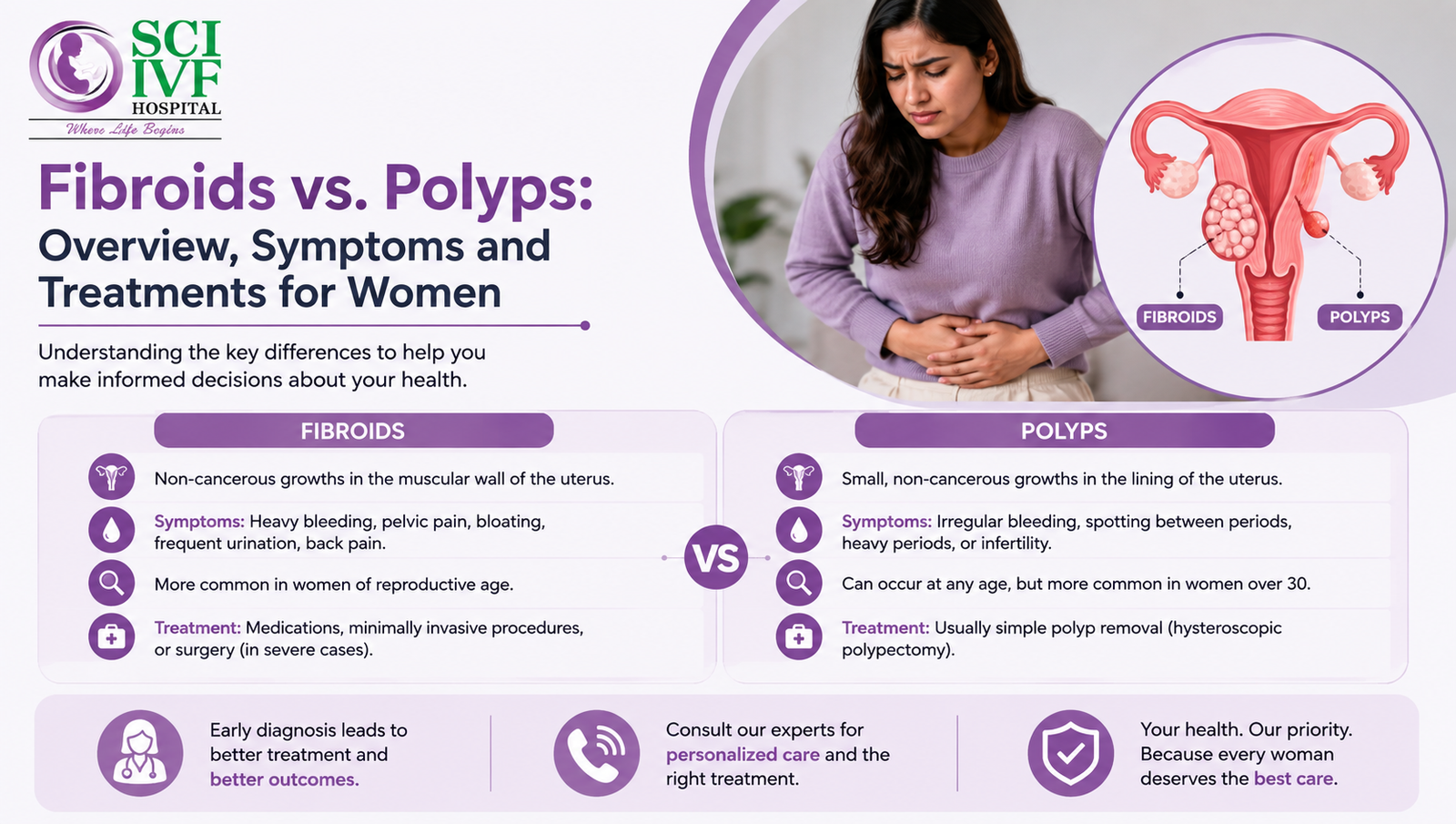
Uterine fibroids and polyps are both common, non-cancerous growths in the uterus, but they develop in different areas. Fibroids grow from the muscular wall of the uterus, while polyps develop from the inner uterine lining (endometrium). Both may cause heavy or abnormal bleeding and can sometimes affect fertility. However, fibroids can grow larger and may cause pelvic pressure or discomfort. Understanding the differences between fibroids and polyps, their symptoms, fertility effects, diagnosis, and treatment options can help women know when to consult a doctor.
What Are Fibroids?
Fibroids, medically known as uterine fibroids or leiomyomas, are non-cancerous growths made of muscle and fibrous tissue that develop in or on the wall of the uterus. They are common during the childbearing years and can vary greatly in size, from a tiny seed to a large mass. Their size and location can influence whether a woman experiences symptoms such as heavy menstrual bleeding, pelvic pressure, or fertility-related concerns.
What Are Uterine Polyps?
Uterine or endometrial polyps are soft growths that develop from the inner lining of the uterus (endometrium) when the lining cells grow excessively. They can vary in size, ranging from a tiny sesame seed to a larger growth. Most uterine polyps are non-cancerous, although a small number may be precancerous or require further evaluation.
Fibroids vs. Polyps: What Is the Difference?
Neither fibroids nor polyps are automatically more serious than the other. Their significance depends on factors such as size, location, symptoms and individual fertility goals.
Fibroids vs Polyps Symptoms: How Do They Differ?
Women may confuse the two conditions because both can result in abnormal uterine bleeding. Nevertheless, the two can also give different symptoms.
Symptoms of Fibroids
Fibroids may result in:
- Excessive or extended bleeding
- Pain or pressure in the pelvis
- Cramps or painful periods
- Pressure in bladder or bowels if fibroids grow large enough to press on adjacent organs
- Difficulty conceiving
Fibroids may not be noticeable and may not cause any symptoms.
Common Symptoms of Uterine Polyps
Polyps may present as:
- Malfunctioning period cycles
- Bleeding between cycles
- Heavy bleeding at a monthly cycle in some
- Post-menopausal bleeding
- Post-coital bleeding in some
- Difficulties conceiving in some
Since there can be overlapping symptoms, the symptoms of fibroids and polyps, by themselves, cannot be used to distinguish the conditions.
Can Fibroids and Polyps Affect Fertility?
Yes, both fibroids and polyps may affect fertility in some women, but neither automatically causes infertility.
Certain fibroids, particularly those that distort the uterine cavity, may interfere with implantation or pregnancy. Polyps can also affect the uterine lining and may potentially interfere with implantation.
The effect depends on factors such as the growth's size and location, along with the woman's age, reproductive health and other fertility factors. For women trying to conceive, a fertility specialist may assess whether treatment is actually necessary rather than treating every fibroid or polyp automatically.
At SCI IVF, fertility evaluation can help determine whether a uterine growth may be contributing to difficulty conceiving and whether further treatment is appropriate.
How Are Fibroids and Polyps Diagnosed?
Diagnosis usually begins with a review of symptoms and medical history. Depending on the situation, a doctor may recommend:
- Pelvic examination when appropriate
- Ultrasound
- Transvaginal ultrasound
- Saline infusion sonography
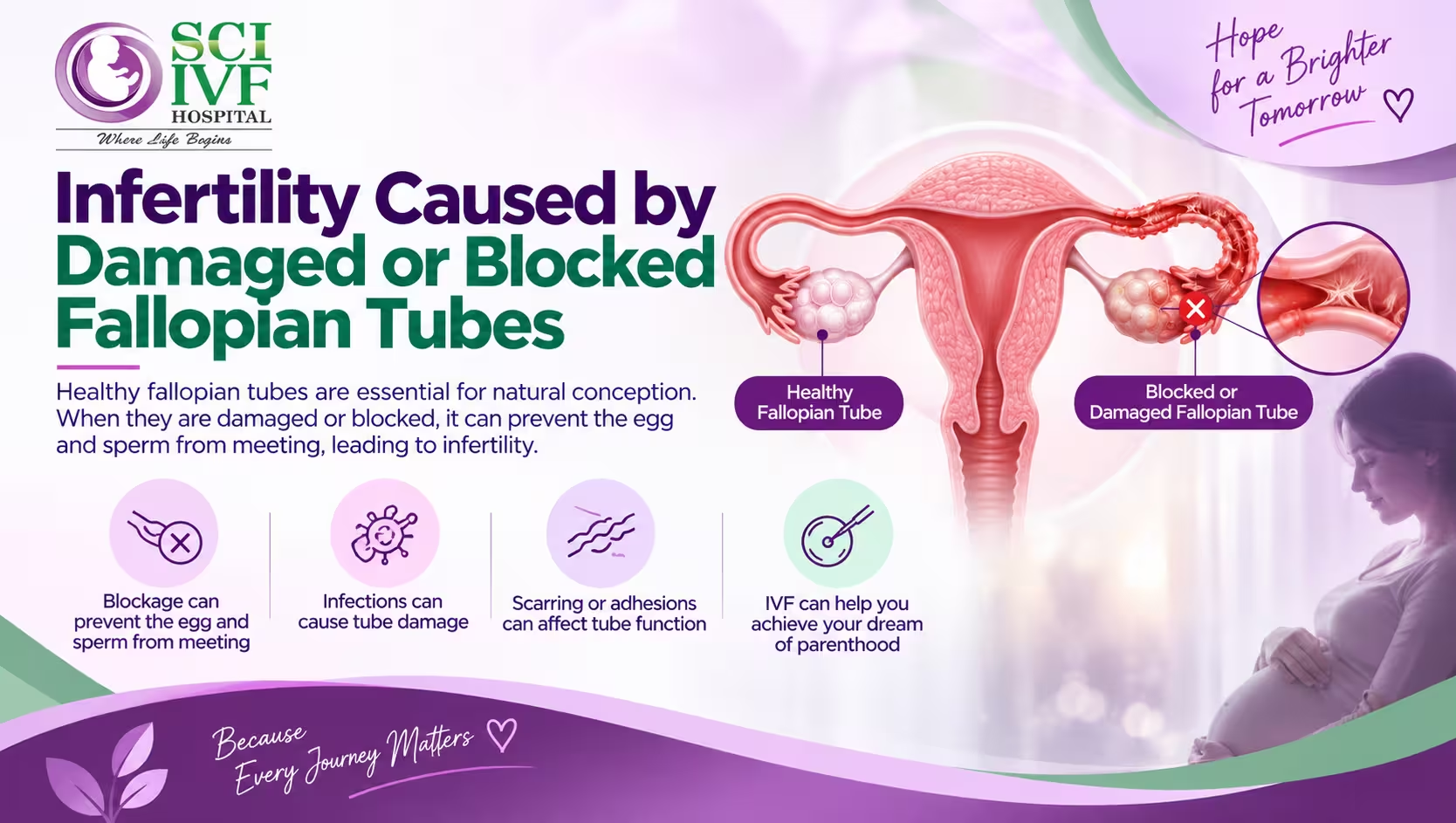
- Hysteroscopy
- Additional investigations based on clinical findings
These tests can help identify the size, location and characteristics of a uterine growth and guide treatment decisions.
Treatment for Fibroids and Polyps
Treatment is individualized according to symptoms, size, location, age, reproductive plans and other clinical factors.
Fibroid Treatment Options
Small or asymptomatic fibroids may only require observation and periodic monitoring. When symptoms are present, medicines may sometimes be used for symptom control.
For selected women, procedures or surgery may be recommended. Myomectomy, which removes fibroids while preserving the uterus, may be considered for women who want future pregnancy when clinically appropriate.
Polyp Treatment Options
Some polyps may be monitored depending on their characteristics and symptoms. When removal is recommended, hysteroscopic polyp removal is commonly used to remove a polyp through the uterus without requiring a large abdominal incision.
Any removed tissue may be evaluated when clinically appropriate.
The most suitable treatment should be decided by a gynecologist or fertility specialist after evaluation.
When Should You See a Doctor?
Consult your doctor in case of:
- Abnormally heavy or long menstruation
- Frequent bleeding in between periods
- Postmenopausal bleeding
- Constant pelvic pain and pressure
- Anemia-related symptoms due to excessive bleeding
- Infertility
- Inability to conceive again
Please do not make conclusions about the presence of a fibroid or polyp based solely on your symptoms.
Conclusion
Fibroids and polyps are kinda different uterine issues, though their signs can, on occasion, look similar. Fibroids grow out of the uterus's muscular part, while polyps usually show up from the uterine lining.
Both can lead to abnormal bleeding and, in some women, they may interfere with fertility; still, neither one is automatically “worse” than the other. What it means for you depends on several things, like the size, where they sit, how strong the symptoms are, and what your reproductive plans are. If you notice unusual pelvic discomfort, or trouble conceiving, getting checked early can help sort out the cause and point you toward suitable management.
Women who want a more personalised fertility review and treatment for fibroids, polyps, or other reproductive concerns can consider SCI IVF Hospital. It’s a trusted option for anyone looking for the fertility centre in India, with individually tailored care aligned to your fertility needs.
FAQs About Fibroids and Polyps
Which one is worse: fibroids or polyps?
Honestly, neither is always worse; it depends a lot. Like size and spot, symptoms, and if fertility is involved or if there's really heavy bleeding.
Can fibroids and polyps show up together?
Yes, it’s very possible to have both, kinda at the same time, one after the other… or both together.
Do polyps or fibroids cause heavy bleeding?
Yes. Both may lead to irregular bleeding or heavier periods, but the pattern is different for every person.
Can polyps or fibroids lead to infertility?
They can, for some women. Especially if they press into the uterine cavity or disturb the lining. But not every fibroid or polyp results in infertility.
Can uterine polyps and fibroids be taken out without removing the uterus?
Sometimes yes, in selected cases. Things like hysteroscopic polyp removal and a myomectomy can take out the growth while keeping the uterus in place.