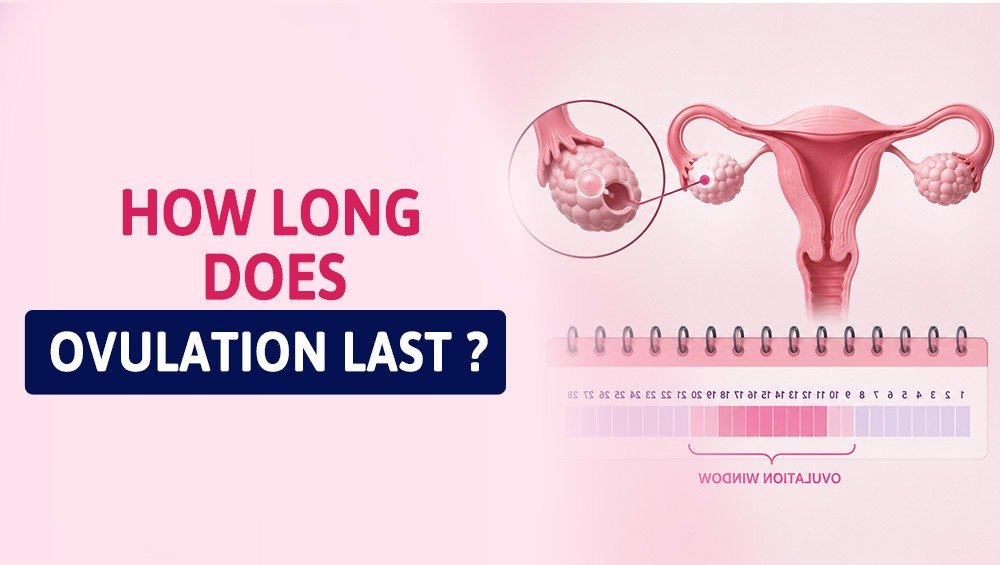
How Long Does Ovulation Last?
One of the most popular questions regarding the ovulation process is how long does ovulation last and does timing have something to do with it?
Unfortunately, timing is something that is crucial to conception. Everything else could be normal, but if one misses the fertile window, one could remain pregnant for a couple of years. That is the problem with confusion between ovulation and the fertile window. Have a good grasp of the difference between the two. It will give a significant boost to the chances of pregnant birth.
We hope this blog will be able to answer questions you have that deal with the durations of ovulation, when fertile windows occur, and how to increase pregnancy chances.
What is Ovulation?
Ovulation occurs when an ovary releases a mature egg. This ovulated egg is then escorted in the fallopian tube by the egg. If the fallopian tube has sperm in it, it can ultimately be fertilized.
Ovulation occurs in a cycle once. It is the paramount process in creating a pregnancy. If a woman cannot ovulate, then the process of conception can not take place. This then results in controlling hormones. Generally, the process occurs in the middle of the cycle, although each woman has the capability of much variation.
For women, or a couple, who are aiming to conceive correctly, diagnosing'' ovulation'' is always important.
How Long Does Ovulation Last?
Ovulation lasts for about 12 to 24 hours.
The ovary only maintains the living egg for just under a day. The ovary will then absorb the fertilized egg if no fertilization occurs.
Many people have difficulties timing their ovulation with fertilization. For this reason, it's vital to know that the body can easily handle bearing a child for more than a day. This reasoning supports a much wider fertile window.
Fertile Window & Best Time to Get Pregnant
Ovulation extends your fertility window to 5 to 6 days, despite the event only occurring on one specific day.
The reason for this extension is due to the sperm's durability being 5 days in the female body. This means if sperm were to egg, they could make a baby.
The ideal time for conception is:
- The day of ovulation
- 2 to 3 days before ovulation
Outside this time period, pregnancy is still a possibility but it is much less likely due to cycle timing.
When Does Ovulation Occur After Periods?
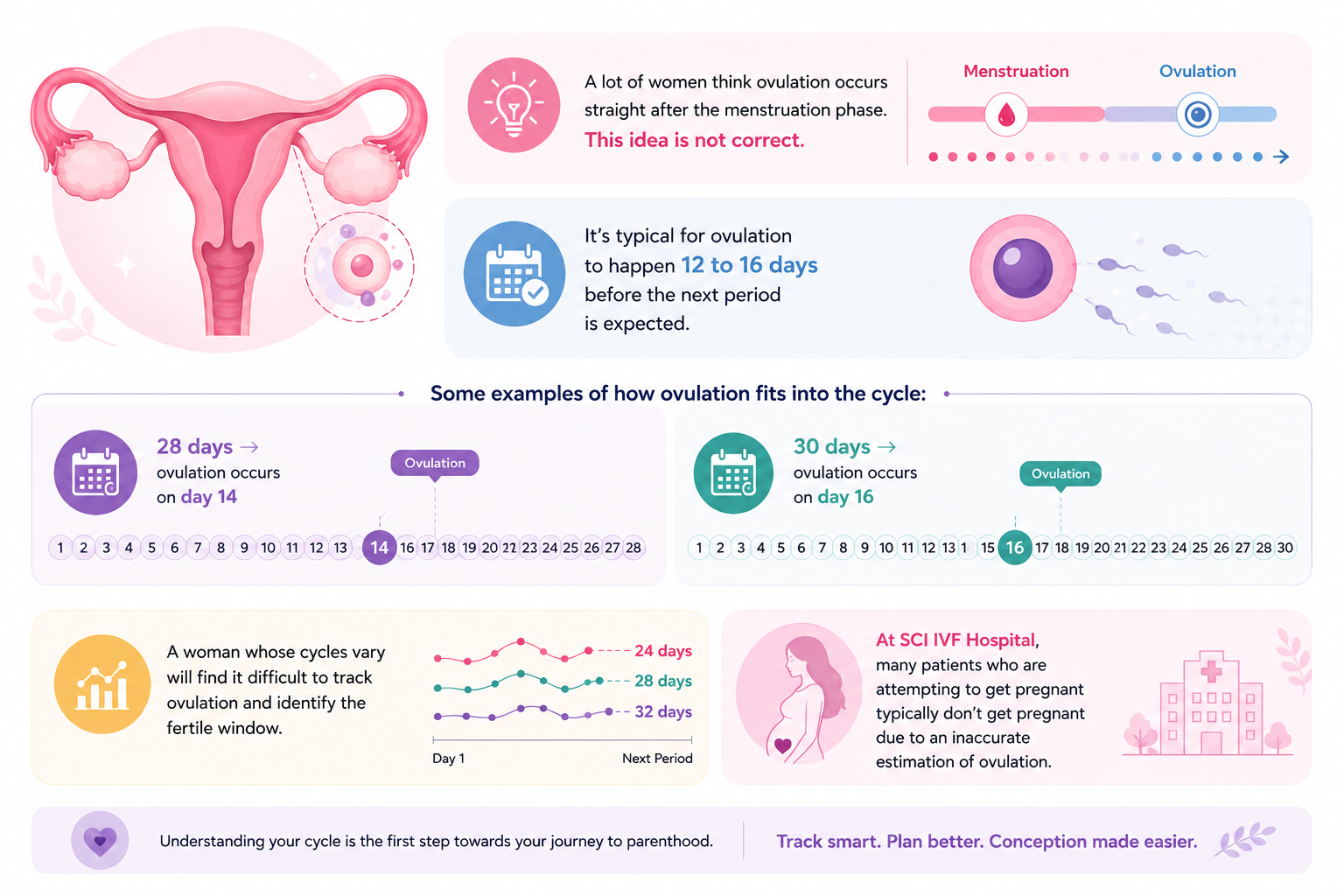
A lot of women think ovulation occurs straight after the menstruation phase. This idea is not correct.
It's typical for ovulation to happen 12 to 16 days before the next period is expected.
Some examples of how ovulation fits into the cycle:
- 28 days → ovulation occurs on day 14
- 30 days → ovulation occurs on day 16
A woman whose cycles vary will find it difficult to track ovulation and identify the fertile window.
At SCI IVF Hospital, many patients who are attempting to get pregnant typically don’t get pregnant due to an inaccurate estimation of ovulation.
Signs & How to Track Ovulation Accurately
Your body can indicate many changes as ovulation approaches. Learning how to recognize these changes can help you remember most of your fertile days.
Typical ovulation indicators include:
- Cervical mucus that is clear and stretchy
- Mild pain in the lower abdomen
- Increased libido
- A slight rise in temperature
- Breast tenderness
These can be good indicators but can not be entirely reliable for everyone. This is why you should use tracking methods in conjunction with them.
Ways to track ovulation:
Ovulation Predictor Kits (OPKs):
Capture the pre-ovulation hormonal surge
Basal Body Temperature (BBT):
Predicts ovulation based on milder subsequent body temperature spikes.
Apps:
For tracking, they are handy for prediction, though potentially overlooked for more erratic cycles.
Monitoring:
At SCI IVF, we use ultrasound-based follicular monitoring, which optimally captures ovulation. Especially useful for women with fertility challenges.
We can't stress enough that if truly attempting to conceive, just guesswork and/or the use of apps in tracking the cycle won't suffice, proper monitoring does.
When to See a Fertility Specialist
The journey toward conception may lead you to seek expert fertility care if you continue to have difficulty getting pregnant. Early evaluation can help identify potential issues and improve your chances of a successful pregnancy.
You may need the assistance of a fertility specialist if:
- You have been trying to conceive for 6–12 months without success
- Your periods are irregular
- You have concerns about your ovulation
- You have been diagnosed with Polycystic Ovary Syndrome (PCOS)
- You want a more personalized and guided fertility approach
At SCI IVF Hospital, a trusted fertility center in India, we provide comprehensive fertility assessments and personalized treatment plans. Through advanced ovulation monitoring and reproductive care, our specialists help couples better understand their fertility and improve their chances of conception..
Conclusion
Ovulation itself lasts only 12 to 24 hours, but your fertile window can extend for up to 5–6 days, making this period the most important time for conception. Understanding when you ovulate and accurately tracking your fertile days can significantly improve your chances of getting pregnant.
However, for many women, ovulation and menstrual cycles can be irregular, making it difficult to identify the right time to conceive. In such cases, professional guidance and ovulation monitoring can help remove uncertainty and provide a clearer path toward pregnancy.
At SCI IVF Hospital, our experienced fertility specialists offer personalized fertility assessments, advanced ovulation tracking, and evidence-based reproductive treatments to help couples achieve their dream of parenthood.