How to Increase Sperm Motility: Best Foods, Habits and Medical Treatments
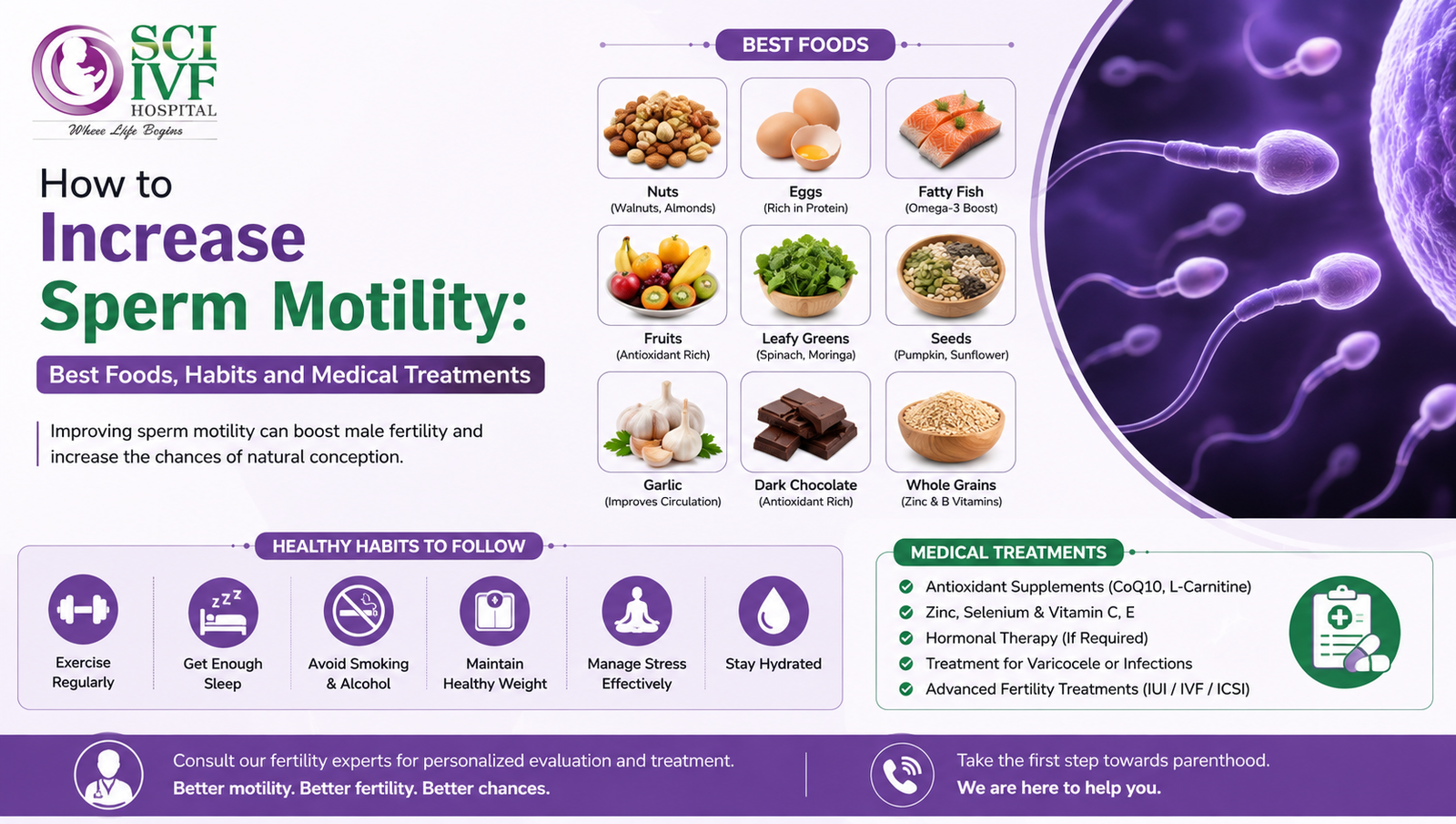
Improving sperm motility may involve a combination of healthy dietary choices, lifestyle changes, and appropriate medical care. Foods rich in antioxidants and healthy fats, such as walnuts and pumpkin seeds, can be included in a balanced diet. Maintaining a cool scrotal temperature and engaging in moderate exercise may also support overall sperm health.
However, lifestyle changes alone may not address every case of low sperm motility. If an underlying medical condition is affecting sperm movement, a fertility specialist can evaluate the cause and may recommend targeted hormone treatment or appropriate medical procedures based on the individual’s condition.
In this guide, we’ll explore the best foods, healthy habits, and medical treatment options that may help support sperm motility and when professional fertility evaluation may be appropriate.
What Is Sperm Motility?
Sperm motility is the ability of sperm to move or swim properly. This movement is important because sperm need to travel through the female reproductive system to reach the egg and fertilize it.
Some sperm may move normally, while others may move slowly, irregularly, or may not move at all. Sperm motility is an important factor in male fertility, but it should be evaluated along with sperm count, sperm morphology, and other fertility factors.
A semen analysis is commonly used to assess sperm motility and other important sperm parameters.
What Causes Low Sperm Motility?
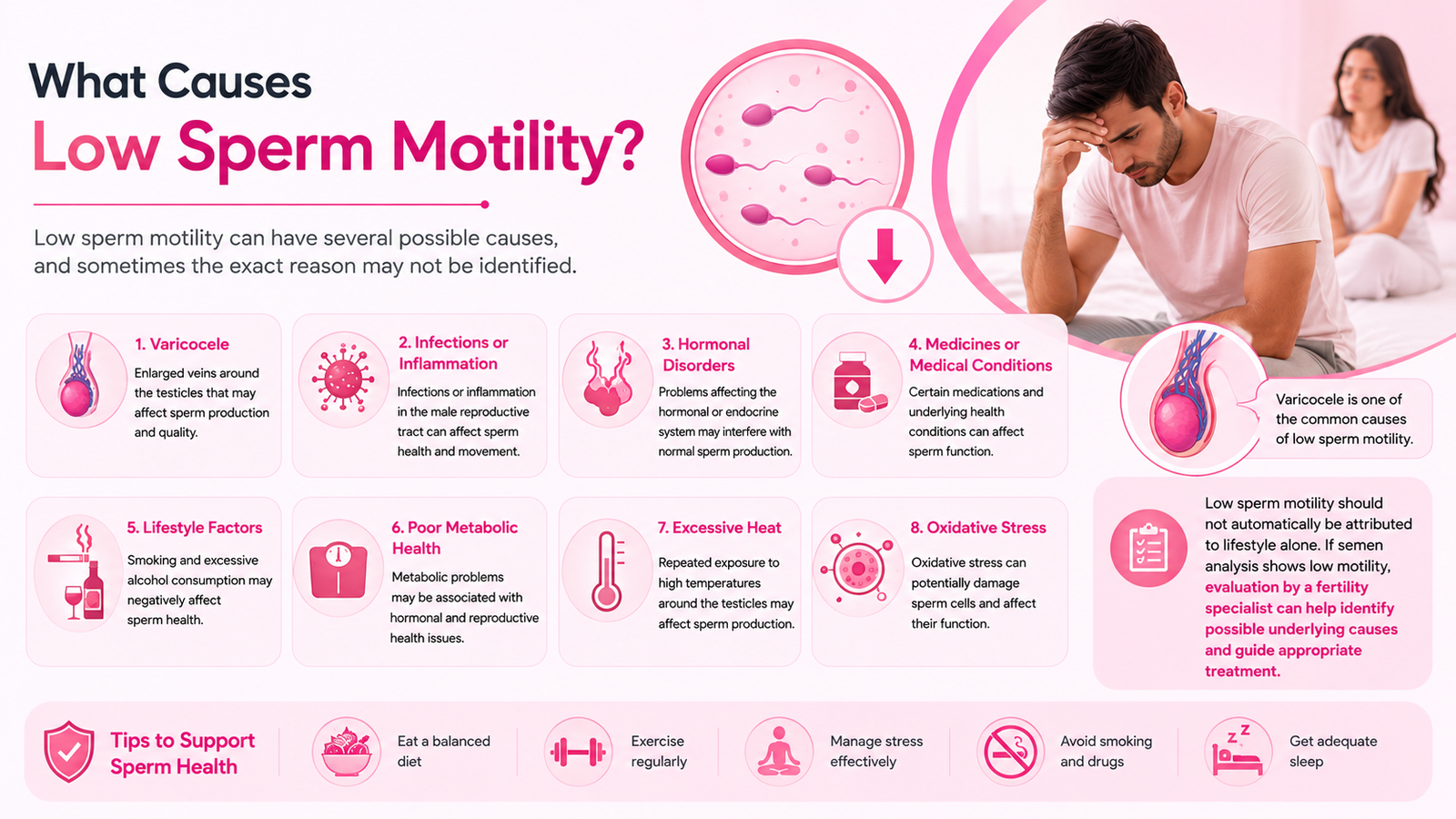
Low sperm motility can have several possible causes, and sometimes the exact reason may not be identified. Some common factors that may affect sperm movement and quality include:
- Varicocele: Enlarged veins around the testicles that may affect sperm production and quality.
- Infections or Inflammation: Infections or inflammation in the male reproductive tract can affect sperm health and movement.
- Hormonal Disorders: Problems affecting the hormonal or endocrine system may interfere with normal sperm production.
- Medicines or Medical Conditions: Certain medications and underlying health conditions can affect sperm function.
- Lifestyle Factors: Smoking and excessive alcohol consumption may negatively affect sperm health.
- Poor Metabolic Health: Metabolic problems may be associated with hormonal and reproductive health issues.
- Excessive Heat: Repeated exposure to high temperatures around the testicles may affect sperm production.
- Oxidative Stress: Oxidative stress can potentially damage sperm cells and affect their function.
Low sperm motility should not automatically be attributed to lifestyle alone. If semen analysis shows low motility, evaluation by a fertility specialist can help identify possible underlying causes and guide appropriate treatment.
How to Increase Sperm Motility Naturally
There are many lifestyle changes one can make that may have a positive impact on sperm health; however, these changes aren't guaranteed to improve sperm motility or reduce male infertility.
Balanced Diet
Diet is a good place to start, as a healthy diet is rich in antioxidants and supports healthy sperm production. Adding foods that are rich in zinc and folate as well as omega-3 and 6 fatty acids, may help.
Healthy Weight
A healthy weight supports a healthy metabolism as well as a healthy hormonal balance.
Regular Exercise
A healthy heart and metabolism can be supported with moderate exercise. Find what is right for you, whether that is swimming or walking.
Smoking and Alcohol
Both smoking and drinking can damage your sperm. Stopping these habits can support your overall health and your infertility concerns.
Heat
Repeated exposure to high heat can damage your sperm. Hot tubs and saunas should be avoided if you want to support your sperm health.
Stress and Sleep
Stress is harmful and supporting a healthy lifestyle with proper sleep is important. If you are trying to improve your fertility they are important factors to consider.
Foods to Increase Sperm Motility
Dietary changes will not bring about miraculous improvements to low sperm motility but will assist with overall better health. Some better options to help improve motility can include:
- Berries, tomatoes and greens are great additions to meals
- Whole grains like brown rice and oats
- Beans, lentils and chickpeas
- Other nutritious proteins
- Unsaturated plant oils and nuts
All of the suggestions above can help improve overall health and nutrition; however, they cannot promise improvements to healthy sperm and motility.
Can Supplements Improve Sperm Motility?
Antioxidants and other nutritional supplements used in male fertility care can include CoEnzyme Q10, zinc, selenium, folate, vitamins C and E, L-carnitine, and omega-3 fatty acids. The evidence regarding these supplements varies from one to the other. As a result, these supplements should not be thought of as treatment options.
Ideally, supplements should be discussed with a fertility specialist before use, and particularly so when the patient is on other medications or supplements.
Medical Treatments for Low Sperm Motility
Low sperm motility causes different types of issues that need different solutions.
- Infections: Allocate treatment when a specific infection is diagnosed.
- Varicocele: Varicoceles are only treated when clinically significant and affecting fertility.
- Hormonal disorders: Some disorders require the person to be on specific hormones.
- Medicines or medical conditions: A review of the medical history and medications is needed to assess the impacts on sperm production.
- Assisted reproduction: Sperm factors affecting the natural conception process may require IVF or ICSI.
A fertility specialist is the best clinician to review the above and how it relates to the specific case.
When Should You See a Fertility Specialist for Low Sperm Motility?
If a semen analysis shows low sperm motility or you have difficulty conceiving, consult a fertility specialist such as Dr. Vishal Dutt Gour (Urologist & Andrologist).
Evaluation may include:
- Semen analysis
- Medical and reproductive history
- Physical examination
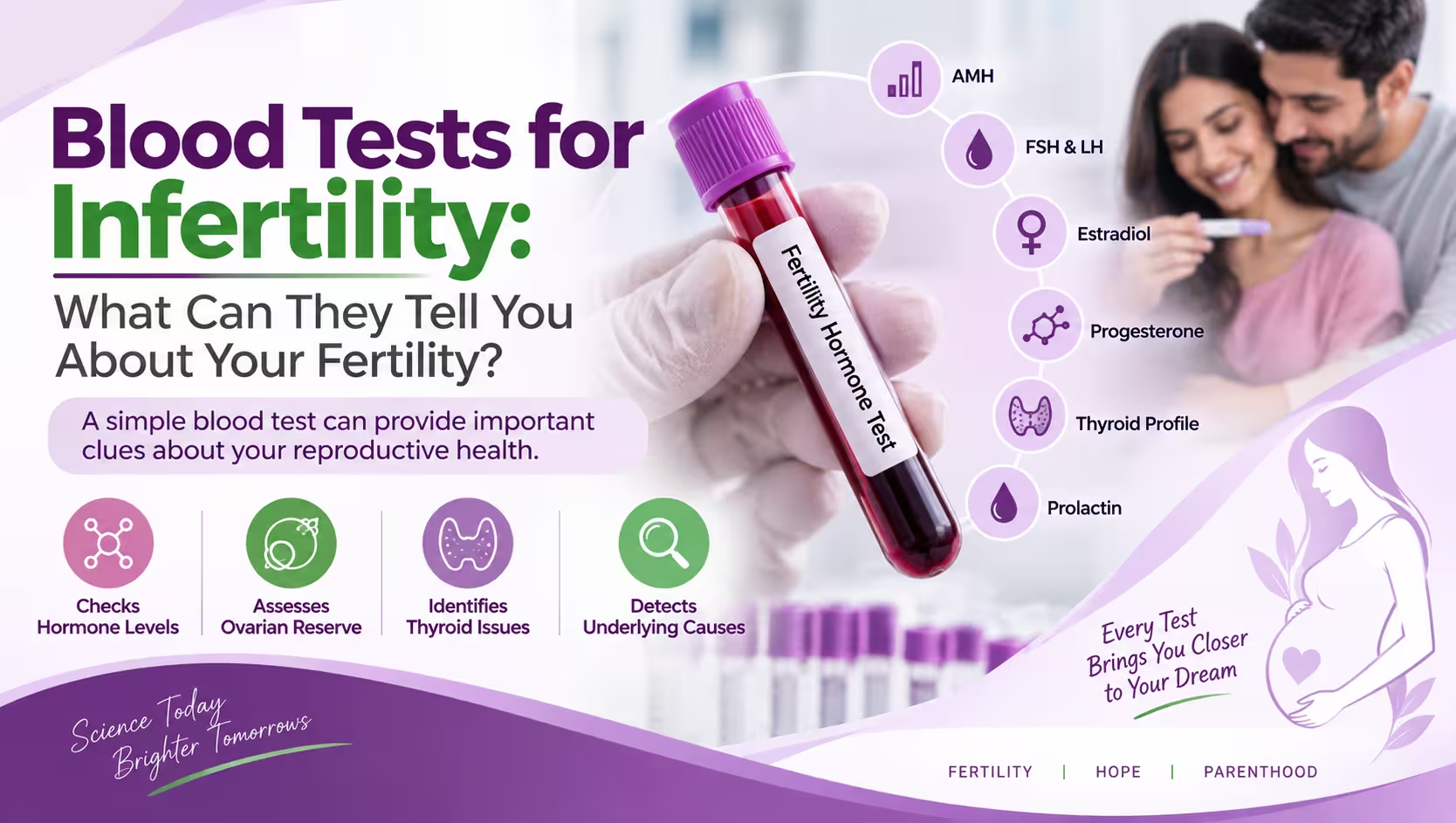
- Hormonal testing, if required
Low sperm motility does not always mean natural conception is impossible, but persistent low motility should be evaluated to identify the possible cause and appropriate treatment.
Can IVF or ICSI Help With Low Sperm Motility?
Where natural conception is concerned, IVF can be used to help couples in circumstances where there are issues with sperm or other factors of infertility. With IVF, eggs are taken and fertilised in the lab with the embryo then placed in the uterus.
ICSI can be used when there is a presence of low sperm motility or other related problematic issues of sperm where standard fertilisation becomes troublesome. With ICSI, a sperm of choice is injected into an egg.
With IVF and ICSI, and other respective treatments, the choice ultimately comes down to the fertility assessment of the pair of partners.
Conclusion
Understanding the underlying issue for low sperm motility is the first step in knowing how to improve it. Low motility is associated with poor lifestyle factors which can include a poor diet, excess body weight, lack of exercise, smoking, excess alcohol and neglecting minor heat exposure to the groin region, as well as inadequate sleep.
However, these lifestyle changes do not guarantee improved fertility. When there are no underlying medical conditions, low motility can be improved with the right diet. Motility problems that are persistent should be of concern. These issues can be caused by infections, a varicocele, hormonal problems, etc. Other options like IVF or ICSI can be utilized.
When couples are looking for a personalized fertility treatment, the best IVF and fertility center in India is SCI IVF Hospital for individual needs.
FAQs About Increasing Sperm Motility
Is there natural improvement for sperm motility?
Some healthier lifestyle changes or treatments for contributing factors can bring improvements, but natural methods to improve motility do not guarantee better fertility.
What foods increase sperm health?
A fertility diet and a diet rich in fruits and vegetables, whole grains, legumes, nuts, seeds and fish may contribute to better sperm health.
Does poor sperm motility mean infertility?
Fertilization may be more difficult with low motility, but it does not mean that it is infertility. There are several other fertility factors.
Does exercise have a positive effect on sperm quality?
A fertility-friendly lifestyle and health may be improved by moderate, regular exercise, but exercise cannot address low motility by itself.
Can ICSI be used when sperm motility is low?
ICSI is appropriate when there is low motility, as a selected sperm is injected into the egg.