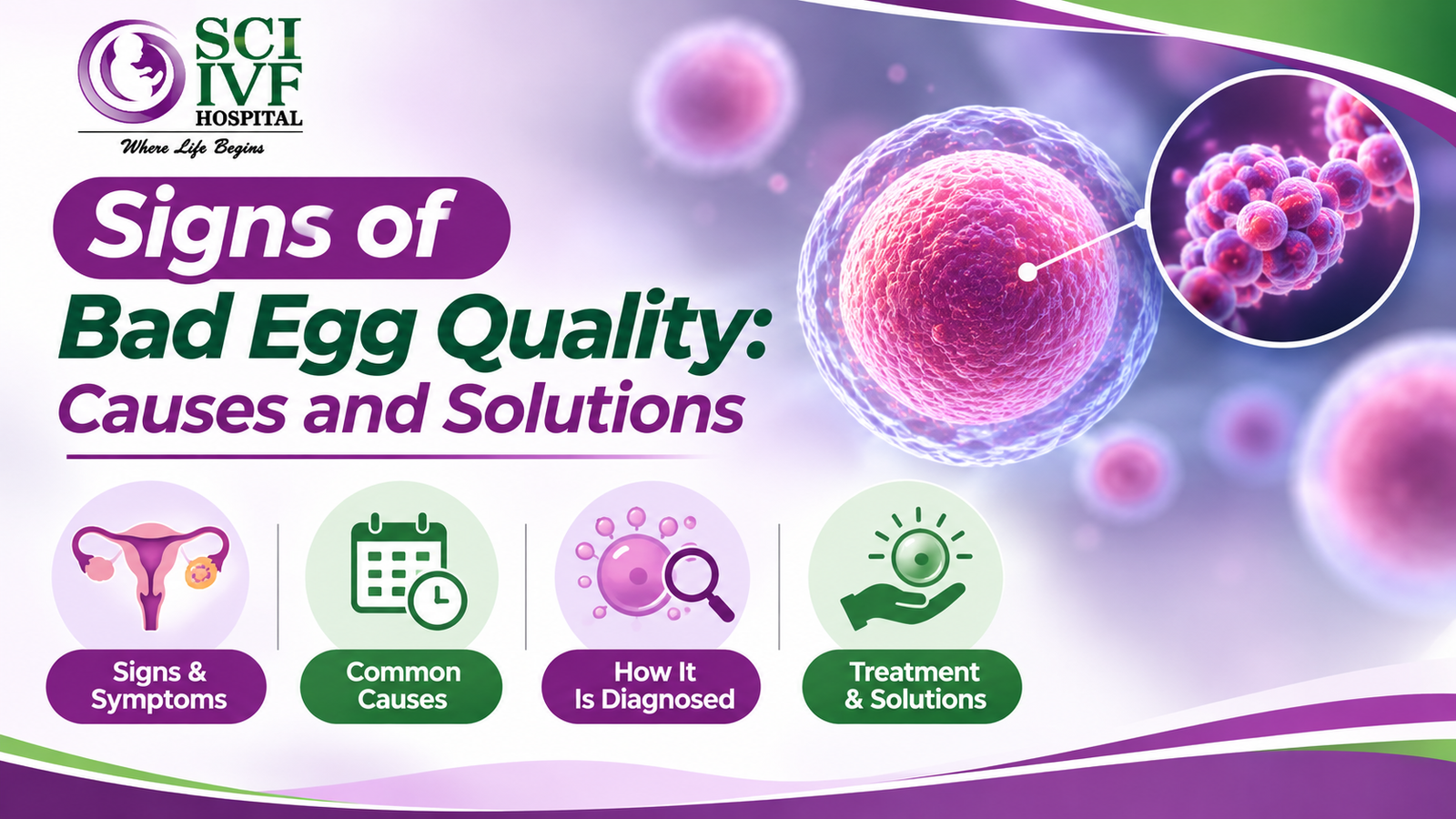
Signs of Bad Egg Quality: Causes and Solutions
Poor egg quality rarely causes obvious day-to-day physical symptoms, so it is usually identified through fertility patterns, lab tests, or how eggs respond during fertility treatment. Even women with regular periods can have reduced egg quality.
What Is Egg Quality and Why Is It Important?
Quality of the egg describes the capability of the egg to be fertilized, develop normally to form a healthy embryo, and finally, lead to a pregnancy. The normal egg typically has the required number of chromosomes and the required structures for proper development.
The quality of the egg is not the same as the quantity of the egg. Quantity of the egg means the number of eggs available in the ovaries, while the quality of the eggs is about the development potential of the egg. One can have enough ovarian reserve yet still face challenges due to poor egg quality.
Signs and Symptoms of Poor Egg Quality
Poor quality eggs do not usually present any physical symptoms. However, some problems related to fertility may be indicative of the need for further investigation.
Trouble with Conceiving
The first symptom which may be related to poor egg quality is trouble with conceiving. Eggs that have chromosomal abnormalities or development issues are less likely to be successfully fertilised and developed. However, trouble conceiving may be caused by various reproductive issues.
Recurrent Miscarriages
Abnormal eggs may cause early pregnancy loss. If the fertilised egg has abnormal chromosomal numbers, the embryo may fail to develop properly, resulting in miscarriage.
Poor Embryo Development
At times, the egg may fertilise successfully; however, the embryo may not develop correctly. There are several factors affecting embryo development, including egg quality.
Aging-Related Fertility Changes
With aging, eggs start losing their quality, especially starting from age 35. This affects conception and increases the risk of chromosomal abnormalities.
Poor Egg Response to IVF
Some women may have a low number of eggs during the IVF procedure. This may mean poor egg reserve or response; however, this does not necessarily mean poor egg quality.
What Causes Poor Egg Quality?
There are a number of factors that can affect egg health. It is important to understand these factors in order to take proper care of your reproductive system.
1. Advanced Age
Advanced age is one of the most important factors that affect egg quality. In older women eggs have a higher chance of developing chromosomal abnormalities which affect fertilisation, embryos and pregnancy.
2. Hormonal Imbalances
Hormonal problems may impair normal functioning of ovaries and development of eggs. Thyroid problems and other reproductive hormonal imbalances may impair ovulation and fertility.
3. Diseases
Diseases such as endometriosis and some types of ovarian disorders may affect the female reproductive system. PCOS may affect normal follicular development and ovulation, but it does not mean poor egg quality.
4. Smoking and Drinking
Smoking and drinking alcohol in excess may harm the reproductive system. These habits cause oxidative stress and may accelerate reproductive aging.
5. Poor Nutrition and Oxidative Stress
Unhealthy nutrition and malnutrition can harm your general well-being. Oxidative stress is caused by excess free radicals over the level of antioxidants in the body.
6. Genetics
Some genetic diseases may affect ovarian function and reproductive aging. They may cause premature infertility.
How Is Egg Quality Diagnosed?
There is no definitive test for assessing the quality of an egg. There are some tests that fertility experts perform in order to evaluate ovarian status and its ability to reproduce.
These include:
- AMH Test: This test evaluates the anti-Müllerian hormone and gives insight into the ovarian reserves and predicts the number of eggs responding to stimulation.
- FSH Test: It evaluates follicle-stimulating hormone. It is taken on day three of the menstrual period.
- Antral Follicle Count (AFC): Ultrasound scan used to evaluate the number of follicles that are developing in the ovaries.
- Ultrasound monitoring: To help evaluate follicle development and ovarian responses to infertility treatments.
- IVF cycle assessment: Egg maturity, fertilisation and embryo development provide other information.
It should be understood that AMH, FSH and AFC test for ovarian reserves.
How to Improve Egg Quality: Causes and Solutions
Though the changes in egg quality that occur with age cannot be reversed at present, there are some lifestyle choices that can contribute to good reproductive health.
1. Have a Balanced Diet
Eat a diet consisting of fruits, vegetables, whole grains, nuts, seeds, and proteins. A balanced diet ensures adequate intake of nutrients required for good general and reproductive health.
2. Keep Your Body Weight Normal
Maintaining a normal body weight is beneficial for your reproductive health. Exercise and a balanced diet can keep you in good shape.
3. Quit Smoking and Drinking Excessively
Smoking and drinking excessively may harm your reproductive health. Stay away from these bad habits.
4. Control Stress and Get Adequate Sleep
Consistent sleeping patterns, exercise, and relaxing activities may be helpful for your overall well-being. While none of the above factors may prevent egg aging, they will be good for you overall.
5. Treatment of Pre-existing Conditions
Women with thyroid conditions, PCOS, and endometriosis need to adhere to proper treatment regimens. The conditions can be managed, and the effect on your reproductive system can be addressed.
6. Visit a Fertility Specialist
If you are having difficulties conceiving or losing pregnancies, it is advisable to consult a fertility specialist who will be able to check your reproductive condition.
Treatment Options for Poor Egg Quality
It will depend on the patient’s age, her ovarian reserve, past medical history, and past results from fertility treatments. Some of the treatment options that exist include the following:
- IVF Treatment: This method enables fertilisation and development of the embryos to take place in a laboratory environment, where doctors can gauge the response to the treatment.
- ICSI: This technique involves injecting a single sperm into an egg. It might help with some fertilisation issues but is unable to solve the problem of poor-quality eggs.
- Egg Donor IVF: This option might be suggested for patients whose age or other factors have decreased the probability of achieving pregnancy using their own eggs.
Conclusion
The quality of the egg is a significant factor during conception, development of the embryo and attaining a pregnancy. Age, hormone levels, medical history and lifestyle factors affect one's reproductive health. Poor quality eggs do not necessarily present with any signs; however, inability to conceive or multiple miscarriages might prompt a closer look.
An early evaluation for fertility issues will help recognize possible problems and find the appropriate treatment options. Should you be faced with fertility issues, contact the experts from SCI IVF Hospital, Best IVF & Fertility Center in India to evaluate your fertility and provide treatment options to help you become a parent.
Frequently Asked Questions
1. What are the symptoms of poor egg quality?
There is no definitive sign or symptom of poor egg quality. Trouble getting pregnant, miscarriage, and poor embryo development may point to infertility.
2. When does egg quality start deteriorating?
It deteriorates gradually as one gets older. The deterioration is usually significant at 35 years of age.
3. Is poor egg quality naturally treatable?
Eating well, exercising, and quitting smoking may aid in reproductive health but cannot fix poor egg quality associated with aging.
4. Does poor AMH mean poor egg quality?
Not necessarily. AMH mostly determines the egg supply rather than its quality.
5. Does IVF improve poor egg quality?
IVF may allow experts to see how fertilization and embryo formation take place. Donor egg IVF may be another solution in some cases.