What Is the Correct Time to Take a Pregnancy Test After a Missed Period?
A delayed menstrual cycle can cause a range of feelings such as thrill, worry, and wonder. Most women immediately think: “What is the right time for a pregnancy test to be taken?” Understanding when to check and how these tests work increases the likelihood of getting correct results and reduces the anxiety of choosing the next steps.
In this blog, we'll cover and explain when to take a pregnancy test after a missed period, how pregnancy tests work, the best time to test, early pregnancy signs, and much more.
What Is a Pregnancy Test?
A pregnancy test is an instrument that verifies pregnancy by checking for the presence of the hormone human chorionic gonadotropin (hCG) in the female body. This hormone begins to be secreted right after the fertilisation of the egg and its implantation into the uterine lining, thus making hCG a very precise indicator of pregnancy during the early days.
Pregnancy tests are primarily divided into two categories, i.e., urine tests, which can be performed at home, and blood tests, which are done in a medical facility. Home urine tests are immediate and produce results in a matter of minutes, whereas blood tests can identify pregnancy sooner and determine the hCG level with precision.
When applied correctly and at the appropriate time—typically after a missed period—pregnancy tests are very reliable and play a significant role in deciding the following measures in prenatal care.
How Does a Pregnancy Test Work?
Pregnancy examinations spot the hCG hormone that is produced only during the time of a woman being pregnant.
How Urine Pregnancy Tests Work
The strip will react with the particular antibodies that are present in the test if urine which contains hCG comes into contact with it. In case the hCG levels are sufficiently high, the strip will either change colour or display a symbol to indicate pregnancy.
How Blood Pregnancy Tests Work
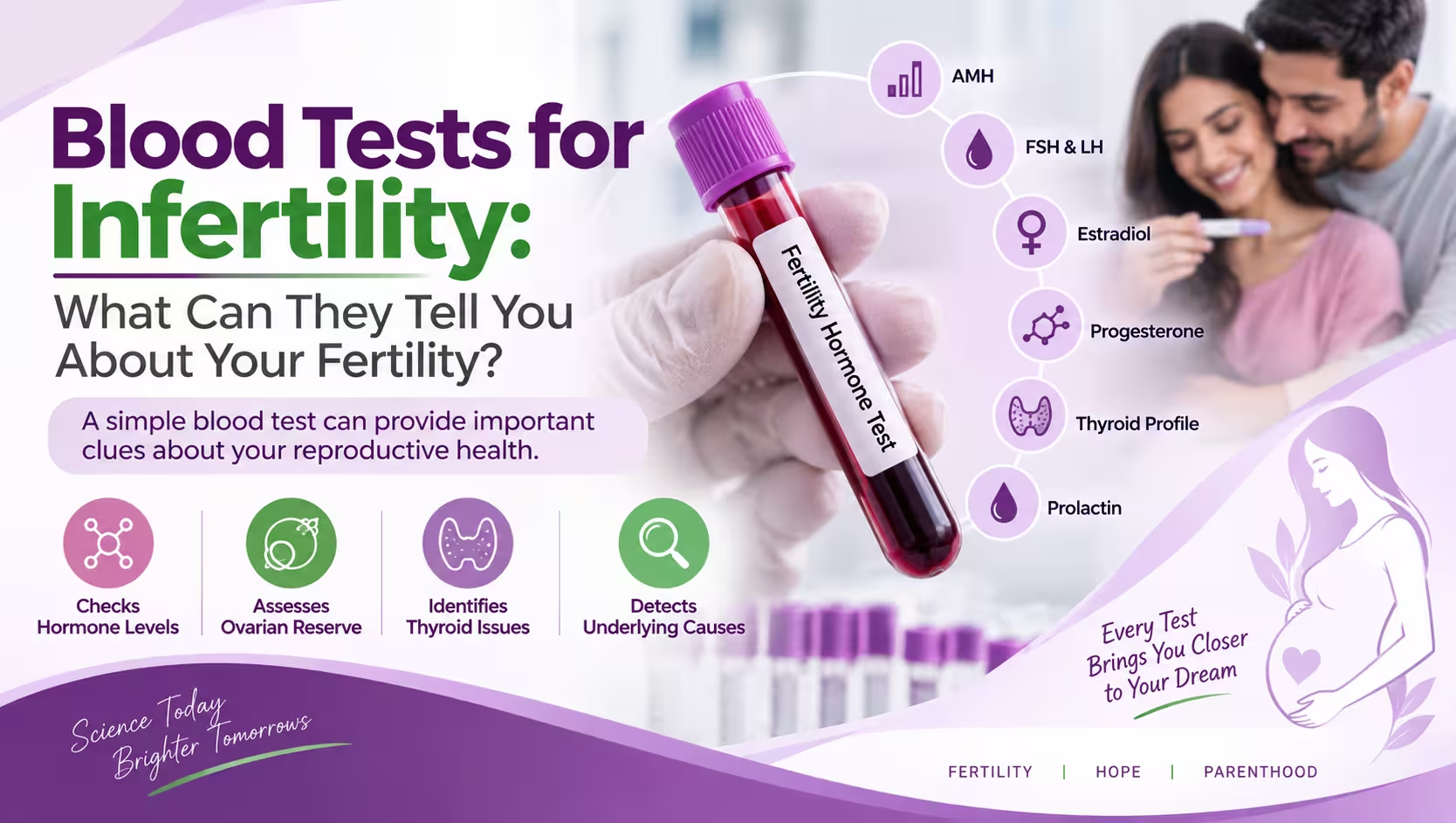
Blood tests done at medical facilities can detect pregnancy earlier because they can find even very small amounts of hCG
They come in two forms:
- Qualitative hCG test: Gives a yes/no answer for confirming pregnancy
- Quantitative (Beta hCG) test: Determines the precise hormone levels, hence being able to detect early pregnancies and even assist IVF patients.
Different Types of Pregnancy Tests
Pregnancy tests vary in terms of sensitivity, accuracy, and how easy they are for the user.
1. Standard Urine Pregnancy Test
They are cheap and easily accessible everywhere. When used from the first day of a missed period, they are considered reliable.
2. Midstream Pregnancy Tests
These tests let you urinate straight onto the stick. They are easy, clean, and minimise the risk of user mistakes.
3. Early Detection Pregnancy Tests
These pregnancy testing kits, intended for the detection of lower hCG hormone levels, can render positive results about 4 to 6 days before your next period, but the chances of false negatives are very high at this time.
4. Digital Pregnancy Tests
They provide explicit results and are usually more precise, thus avoiding the misunderstanding caused by faint lines.
5. Blood Pregnancy Tests
They are the most accurate ones:
Qualitative tests: An earlier confirmation of pregnancy
Beta hCG tests: Determine hormone levels accurately; therefore, they are perfect for both fertility treatments and high-risk pregnancies.
When to Take a Pregnancy Test After a Missed Period?
Many women wonder, “After missing a period, when to test for pregnancy,” and the answer is-
A pregnancy test should be done about a week after the expected date of your period for the best accuracy. Usually, by this time, your body has made a sufficient amount of hCG hormone for the test to recognise.
If you take the test earlier, particularly right after a missed period, it could be negative since the hormone is at its early stage and is still rising.
In the case of irregular periods, a full week's wait gives a more accurate result. For the ultimate confirmation, you can get a blood test done, as it can detect pregnancy even more accurately and earlier.
When Should I Test for Pregnancy if My Period Is Late?
Your testing schedule will rely on your period being delayed.
- 1–7 Days Late- A test may be taken, though its accuracy will be higher on the following day. Hormonal variations or late ovulation can modify your cycle naturally.
- More Than 7 Days Late- At this time, a home pregnancy test would be very accurate.
Early Signs of Pregnancy You Should Look For
Even before taking a test, numerous females have observed signs of the condition. The most prevalent initial signs are:
- Breasts are very sensitive or painful
- Quick tiredness or extreme tiredness
- Nausea or vomiting
- Mild pain in the lower abdomen
- food craving
- More frequent urination
- Frequent changes in mood or feelings
- Light bleeding
Best Time of the Day to Take a Pregnancy Test
Taking the test at the right moment within the day boosts the accuracy.
The best time is early morning.
The urine of the first morning has the highest hCG levels, thus giving the most reliable results. This is especially true for very early pregnancies.
Testing in The Afternoon
Later testing is allowed, but:
- Limit water intake before testing
- Strictly adhere to the instructions
- Be aware that urine dilution may cause false-negative results
Conclusion
The best and most reliable time for checking pregnancy is one week after your missed period and it is perfect to use the first morning urine for this test. You can obtain clear and trustworthy results without any doubt if you know how pregnancy tests work and when the best time is for testing.
In case you are looking for professional assistance, precise testing or fertility assessment, the SCI IVF Hospital, which is recognised as the best fertility centre in India and provides the best IVF treatment in Delhi which offering dependable support all the way through your pregnancy journey.
FAQs Pregnancy Test After a Missed Period
1. Is it possible that stress might lead to a late period and, at the same time, affect the test result?
Definitely! Stress might stop the ovaries from releasing an egg which results in a late period without pregnancy.
2. Do home pregnancy tests give accurate results?
In general, the accuracy of most home kits is 97% to 99% if done during the time period when menstruation is missed.
3. If it is negative, when should I do the test again?
Retest in 2–3 days since hCG levels are doubling every 48 hours.
4. Is it the same with pregnancy tests in case of women with PCOS?
Women with PCOS can have a hard time and get misled by the timing of the tests due to irregular cycles, but hCG detection is not affected by the test.
5. Is a blood test more accurate than a urine test?
Yes—blood tests can detect lower levels of hCG and confirm pregnancy earlier and with more precision.
6. What Is the Correct Time to Take a Pregnancy Test After a Missed Period?
The Correct Time to Take a Pregnancy Test After a Missed Period is usually 5–7 days after your missed period. Testing too early may give a false negative. For more accurate results, take the test in the morning and repeat after a few days if your period does not begin.