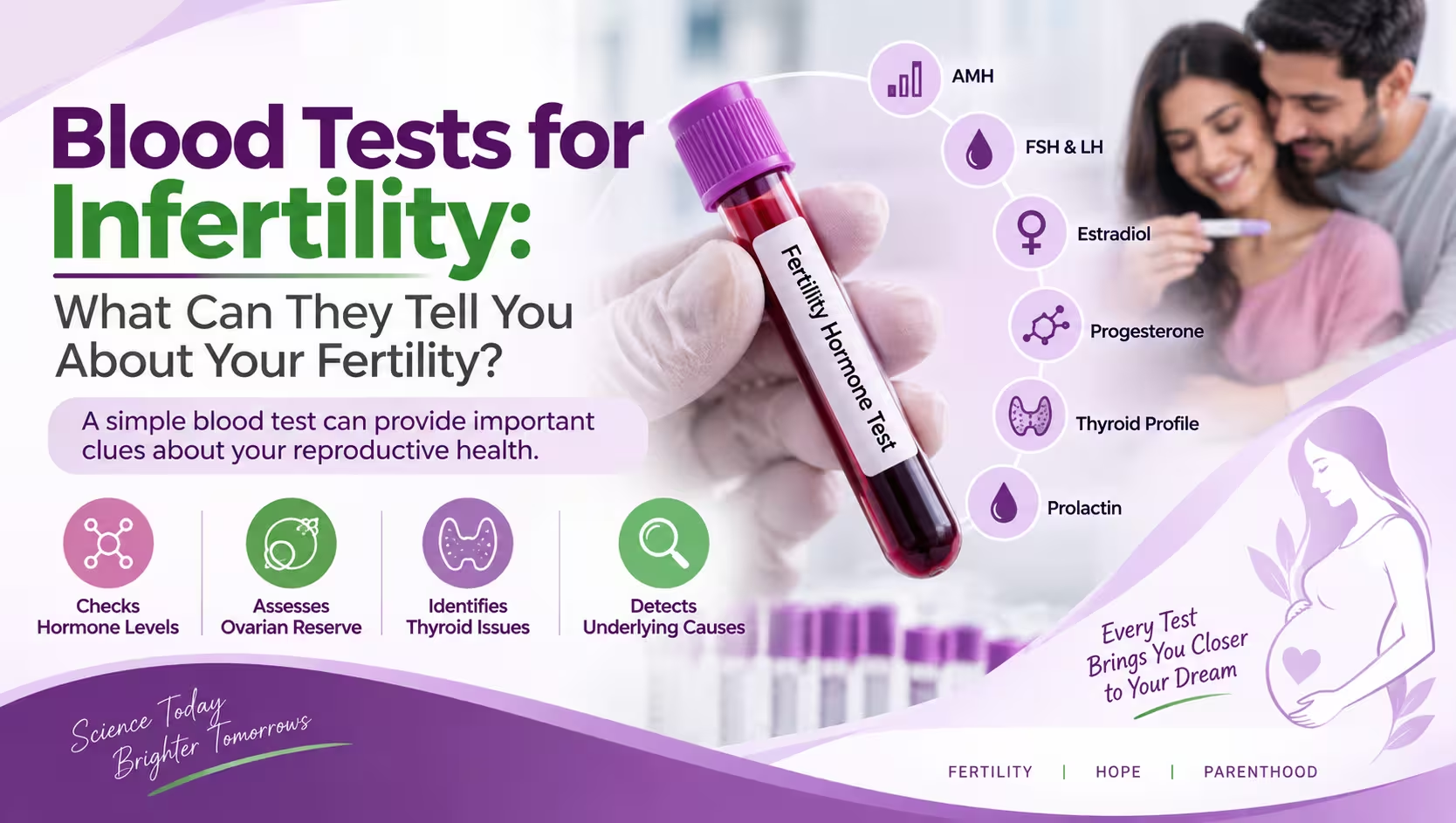
Blood Tests for Infertility: What Can They Tell You About Your Fertility?
A fertility blood test measures key reproductive and general health hormones to help identify possible reasons why you may be having difficulty getting pregnant. These tests can provide information about ovulation, ovarian reserve, reproductive hormone levels, thyroid function, and other factors that may affect fertility. However, no single blood test can identify every cause of infertility.
The type and timing of blood tests may depend on factors such as age, menstrual cycle, symptoms, medical history, and fertility goals. In this blog, we will explore common blood tests for infertility, what they assess, when they may be performed, and how they contribute to a complete fertility evaluation.
Why Are Blood Tests Done for Infertility?
Blood tests are done for infertility to measure hormone levels, evaluate ovarian reserve, check ovulation, and find underlying medical causes that may prevent pregnancy. They can provide useful information about reproductive hormones, thyroid function, prolactin, and androgen levels, depending on the individual's fertility concerns.
Fertility specialists may recommend blood tests to evaluate:
- Ovarian reserve
- Ovulation
- Reproductive hormone levels
- Thyroid function
- Prolactin levels
- Androgen levels
- Female-factor infertility
- Some aspects of male-factor infertility
Blood tests are usually interpreted along with medical history, physical examination, and other fertility tests to build a more complete understanding of possible fertility concerns
Common Blood Tests for Female Infertility
Anti-Müllerian Hormone (AMH) Test
AMH Tests are used to check the ovarian reserve, or egg supply. AMH can be tested any time during your menstrual cycle.
AMH gives no indication of the quality of your eggs or of your chances of getting pregnant naturally or having an IVF baby. Your fertility specialist will consider your age, ultrasounds, your AMH results and other factors.
Follicle Stimulating Hormone (FSH) Test
FSH stimulates the growth of follicles in the ovary. When done as part of a fertility test, FSH is most often checked on day 2 or 3 of your cycle.
Elevated FSH levels suggest a poor egg supply or a change in egg supply and/or egg quality. FSH is also tested in some male fertility investigations since it is implicated in producing sperm.
Estradiol (E2) Test
Evaluation of ovarian function usually includes testing of follicle-stimulating hormone (FSH) and estradiol, which is a form of estrogen predominantly produced in the ovary, during the early stage of the menstrual cycle.
Analyzing these results along with FSH will give your doctor more insight into the functioning of your ovaries.
Luteinizing Hormone (LH) Test
Luteinizing hormone (LH) remains significant for ovulation. Qualitative LH blood tests may assist in the evaluation of hormonal patterns or ovulation at various time frames.
LH testing may also be warranted in suspected cases of polycystic ovary syndrome (PCOS) and is also applicable in some cases of male factor infertility.
Progesterone
After ovulation, progesterone can be found in the bloodstream and begins to prepare the uterus for possible pregnancy. A progesterone blood test may determine ovulation.
Progesterone levels begin to change after ovulation occurs and testing is done several days post-ovulation as opposed to being done day-to-day on a case-by-case basis.
Prolactin
Produced in the pituitary gland, high levels of prolactin can interfere with fertility by affecting ovulation. If a patient has symptoms of high prolactin, irregular and/or absent menstrual cycles, then this test would be indicated.
Thyroid Stimulating Hormone (TSH)
Thyroid problems can affect reproductive health and may be tested to see if they are affecting the menstrual cycle or even ovulation, therefore affecting pregnancy.
Blood Tests for Male Infertility
A male infertility blood test checks reproductive hormone levels and genetic markers that can affect sperm production. These tests may help fertility specialists understand whether hormonal or other underlying factors could be contributing to difficulty conceiving.
Depending on the suspected cause, commonly assessed hormones may include:
- FSH
- LH
- Testosterone
- Prolactin
- Other androgen or related hormone tests
Blood tests are generally considered alongside a semen analysis, which provides important information about sperm concentration, motility, and morphology. Together, these evaluations can help provide a more complete picture of male reproductive health.
What Can Infertility Blood Tests Tell You?
Not everyone needs every test. The choice and timing depend on your individual circumstances.
When Should You Consider Infertility Testing?
Fertility assessment is advised when:
- You are less than 35 years old and you haven’t gotten pregnant despite having unprotected sexual intercourse for one year.
- You are 35 years or older and have not conceived after 6 months.
- You have abnormal or absent menstrual periods.
- You have a reproductive disorder or hormonal disorder.
- You have infertility risk factors.
Fertility assessment should be considered earlier when there are known infertility issues.
Are Blood Tests Enough to Diagnose Infertility?
No. Blood tests are not a complete fertility evaluation.
Based on your individual needs, your fertility specialist may also advise the following:
- A complete medical and reproductive history
- Physical examination
- Transvaginal Ultrasound
- An assessment of ovarian reserve
- Evaluation of the Fallopian tubes
- Semen analysis
- Additional assessments as clinically warranted
The purpose of these additional assessments is to better determine the fertility evaluation and the obstacles that may be present in the conception process.
Conclusion
Blood tests for fertility assess options for ovarian reserve, ovulation, reproductive hormones, thyroid, and also some male fertility issues. Yet, there is no fertility blood test available that can answer all infertility issues.
Your test results always need to be correlated with your history and other assessments for fertility. If you are attempting to conceive and have not been successful or you have irregular cycles or have other fertility-related issues, timely assessment can provide information and help identify possible causes.
SCI IVF Hospital is the top fertility center in India. They offer custom evaluations of their patients’ needs and help build their families. They use their experience to create fertility treatment plans to meet your individual needs.
Frequently Asked Questions
What blood tests are performed for infertility?
Blood tests for infertility may include AMH, FSH, LH, estradiol, progesterone, prolactin, and TSH. Men may also need other hormonal tests, as needed.
Which blood test checks female fertility?
AMH, FSH, estradiol and progesterone blood tests are some of the tests that assess female fertility. This may depend on what your doctor is looking for.
Does an AMH test check fertility?
AMH tests do not check fertility. AMH tests give information about the ovarian reserve and do not test egg quality or guarantee pregnancy.
Does a blood test check for male infertility?
While blood tests can give a range of hormonal data for male fertility, semen analysis is the most important component of male infertility evaluation.