Can You Get Pregnant with One Ovary?
Yes, you can absolutely get pregnant with one ovary. Many women with a single healthy ovary go on to conceive naturally and have healthy pregnancies. In most cases, the remaining ovary compensates by continuing to release an egg regularly, allowing pregnancy to occur as long as ovulation is taking place normally.
Natural conception is often possible if the remaining ovary is healthy, at least one fallopian tube is functioning properly, and there are no other significant fertility concerns. Factors such as age, egg quality, overall reproductive health, and sperm quality also play an important role in fertility.
Whether you're concerned about pregnancy with one ovary or wondering about your fertility after ovary removal, understanding your reproductive health is the first step. In this article, we'll explain how pregnancy happens with one ovary, the factors that affect fertility, your chances of conceiving naturally, and when it may be helpful to consult a fertility specialist.
Can You Get Pregnant with One Ovary?
Yes, it is possible to get pregnant with one ovary. In most cases, a single healthy ovary can continue to ovulate regularly and produce the hormones needed for conception and pregnancy.
For natural pregnancy to occur, the following factors are important:
- One healthy ovary that releases eggs regularly
- At least one healthy and functioning fallopian tube
- A healthy uterus capable of supporting implantation
- Good sperm quality from the partner
Many women with one ovary continue to have regular menstrual cycles, normal ovulation, and successful pregnancies. As long as the remaining ovary and reproductive system are functioning well, having one ovary does not necessarily reduce your chances of conceiving naturally.
How Does Pregnancy Happen with One Ovary?
Many women are surprised to learn that one healthy ovary is often enough to achieve pregnancy. Even if one ovary has been removed due to surgery or a medical condition, the remaining ovary can usually continue to release eggs and produce important hormones like estrogen and progesterone.
During ovulation, the remaining ovary releases a mature egg, which travels through the fallopian tube. If the egg meets a healthy sperm and becomes fertilized, it can implant in the uterus and develop into a pregnancy.
A common myth is that the ovaries strictly take turns releasing eggs each month. In reality, one ovary is often naturally more active than the other. When one ovary is removed, the remaining ovary typically takes over the job and continues ovulating regularly, allowing many women to conceive naturally and have healthy pregnancies.
Why Might a Woman Have Only One Ovary?
There are a few reasons as to why some women have one ovary.
Ovarian Cyst Surgery
Sometimes, large or complex cysts may lead to the removal of the ovary if it cannot be preserved.
Endometriosis
Endometriosis affects ovarian tissue and can cause severe complications that may require surgery.
Ovarian Torsion
An ovary that twists and loses blood supply requires removal in an emergency surgery.
Ovarian Cancer
Surgery to treat ovarian cancer may warrant removal of an ovary and leave the other in place.
Congenital Conditions
Some women have one ovary due to a congenital condition.
Injury or Trauma
An ovary may also be removed due to severe trauma to the pelvis, though that is rare.
Some of the reasons you may have one ovary may also affect your fertility, so you should share your medical history with your doctor.
What Are the Chances of Getting Pregnant with One Ovary?
If the remaining ovary is healthy, many women still have good chances of conceiving.
Studies have shown that if there are no other issues with fertility, the pregnancy rates of women with one functioning ovary are often comparable to those of women with two ovaries.
Several factors determine your odds of conceiving including:
- Age
- Egg Quality
- Ovarian Reserve
- Regular Ovulation
- Health of the Fallopian Tubes
- Health of the Uterus
- Quality of Partner's Sperm
- Lifestyle Factors
If all of those factors are normal, the chances of conceiving are good even without assisted reproduction.
Can You Have a Baby with One Ovary and One Fallopian Tube?
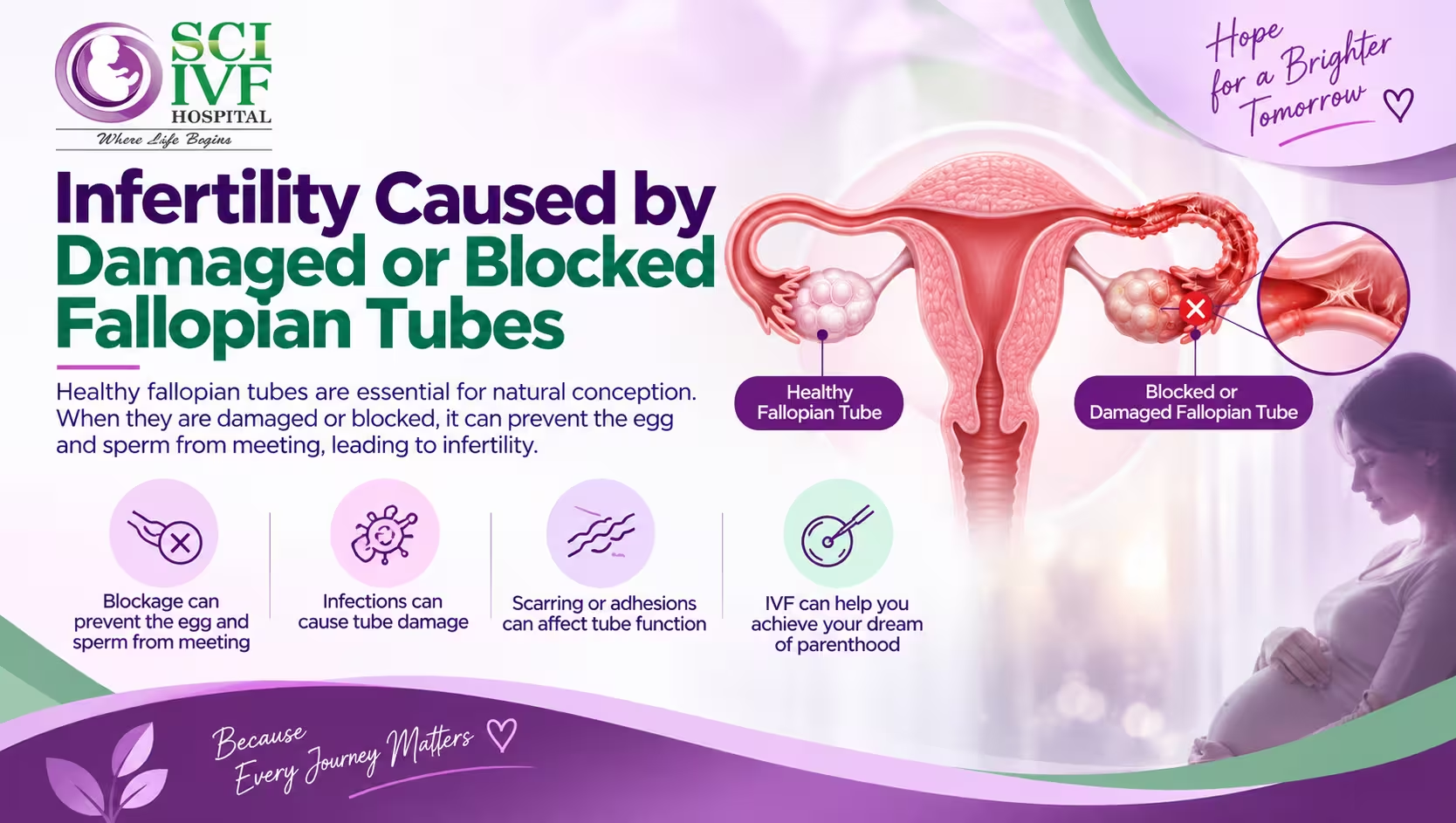
Yes. Women are able to conceive with one ovary and one fallopian tube assuming the remaining ovary and fallopian tube are healthy and are connected.
Pregnancy may even happen naturally. In this case, the healthy connected fallopian tube can receive the egg from the remaining ovary, which can then be fertilized.
If the remaining fallopian tube is damaged or blocked, an In Vitro Fertilization may be suggested by your doctor to increase your chances of getting pregnant.
Does Having One Ovary Affect Fertility?
Women can be fertile with one ovary as long as some conditions are met.
In a lot of cases a woman can:
- Maintain regular menstrual cycles.
- Maintain normal production of hormones.
- Continue monthly ovulation.
- Become pregnant without needing any medical assistance.
Fertility can be impacted by other issues, including:
- Endometriosis
- PCOS
- Blocked fallopian tubes
- Low ovarian reserve
- Advanced maternal age
- Male factor infertility
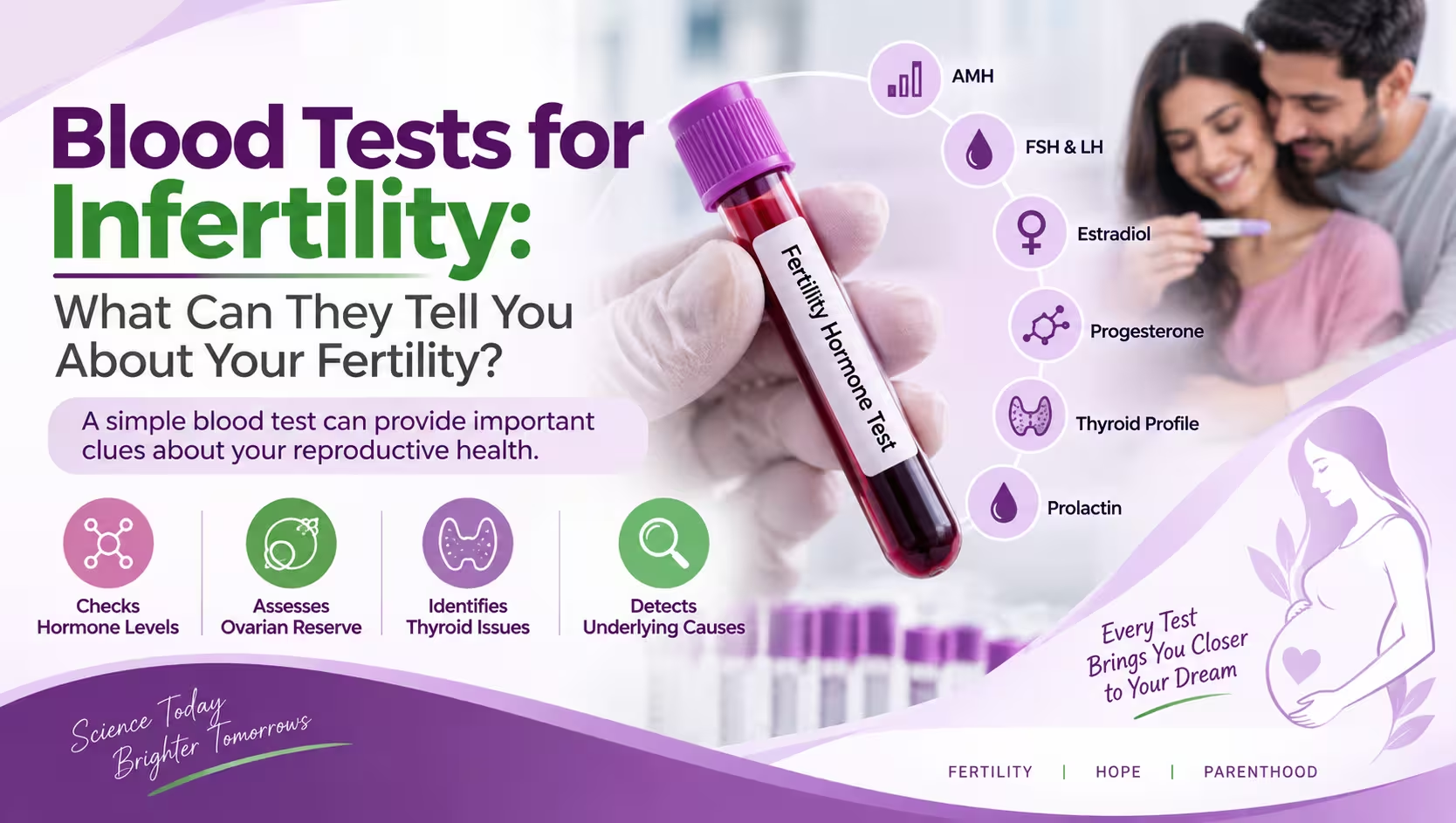
For this reason, a comprehensive fertility assessment is highly indicated when a couple is attempting to conceive and is not successful.
When Should You See a Fertility Specialist?
If you have one ovary and are planning a pregnancy, it may be a good idea to consult a fertility specialist if:
- You are under 35 years of age and have been trying to conceive for more than 12 months without success.
- You are 35 years or older and have been trying to conceive for 6 months or longer.
- Your menstrual cycles are irregular or absent.
- You have a history of endometriosis, pelvic infections, or pelvic surgery.
- Your remaining fallopian tube is blocked or damaged.
- You have experienced recurrent miscarriages.
- There are known or suspected male fertility issues affecting conception.
Early fertility evaluation can help identify potential challenges, assess your reproductive health, and guide you toward the most appropriate treatment options to improve your chances of achieving a healthy pregnancy.
Fertility Treatments for Women with One Ovary
When conception does not happen naturally within the expected time, several methods can be employed.
Ovulation induction
The use of drugs can assist in inducing ovulation in cases where ovulation is irregular.
Intrauterine insemination (IUI)
Intrauterine insemination is another method that may be used in case of normal ovulation but requires further assistance in the process of conception.
In vitro fertilization (IVF)
In cases of one ovary and various other problems like blocked fallopian tubes or male infertility, IVF proves quite effective.
Although a woman with only one ovary produces fewer eggs than a woman with two ovaries when undergoing egg stimulation, many of them have successfully conceived using this method.
Tips to Improve Your Chances of Pregnancy with One Ovary
Even though you cannot alter the number of ovaries you have, there are many ways to keep healthy through good practices that will help you get pregnant.
- Stay at a healthy weight
- Consume nutritious food
- Be physically active
- Do not smoke, and limit alcohol intake
- Handle your stress
- Keep track of your ovulation cycle to find out when your fertile time is
- Sleep well
Listen to your doctor's advice and visit him/her regularly.
Conclusion
If you’re asking, “Can a woman get pregnant with one ovary?” then the simple answer is yes. Many women with one ovary are still able to sustain pregnancy.
Many factors affect your ability to get pregnant like your age, how many eggs you have left, the state of your fallopian tubes, and your overall reproductive health. The fact that you have just one ovary doesn’t mean you can’t have children, though. If you are worried about your ability to get pregnant, it is best to visit a health professional as soon as you can.
Our team of specialists at SCI IVF Hospital are here to help you achieve the family you want to have. We offer personalized fertility treatments and advanced IVF options.
Frequently Asked Questions
Can I still get pregnant the natural way with only one ovary?
Yes, many women are still able to conceive without issue if they have one healthy ovary with regular ovulation.
Can having one ovary still allow you to have children?
Definitely, having one ovary does not inhibit many women from giving birth to healthy children.
Does the remaining ovary release eggs every month?
Yes, in typical cases the remaining ovary will continue to release regular ovulatory eggs every month.
Can women with only one ovary be eligible candidates for IVF?
Yes, for some women with one ovary IVF can be successful, and it still depends on other factors like how old the patient is, the remaining ovarian reserve, and other aspects of health and fertility.
Does the removal of one ovary lead to early menopause?
No, in healthy women with one remaining ovary, early menopause is not expected, and the healthy remaining ovary can lead to the same expectations regarding menopause as women with the normal healthy reserve of two ovaries.