How to Get Pregnant?
Is starting the pregnancy journey something you are thinking about? Don't worry. Many people have the mindset that one day of trying leads to pregnancy, but this process is much more intricate. We are going to outline the most important factors.
The positive aspect of this is that you can make a few lifestyle changes and educate yourself to help increase the likelihood of natural conception. You can make the process of pregnancy planning much calmer and attainable with the necessary information, whether you're new to this process or have been attempting for many years.
This blog is going to describe the mechanism of natural conception and outline actionable steps to improve your chances of achieving this goal.
How Do You Get Pregnant?
Pregnancy begins when a sperm cell reaches an egg cell post-ovulation. One of the ovaries forms a mature egg cell and releases it into the fallopian tube. This is also known as ovulation. It's also during ovulation that sperm may be present to induce fertilization.
The fertilized egg then travels to the uterus. Upon arrival, the fertilized egg implants into the lining of the uterus and pregnancy begins.
The egg has a short lifespan after ovulation. This is why it is essential to have intercourse during the fertile window. Couples who wish to learn how to become pregnant naturally should begin with this process.
Best Time to Get Pregnant
Conception is all about timing. Couples usually learn how to get pregnant fast by identifying the fertile window.
This window lasts about 5–6 days. This includes:
- 5 days before ovulation
- the day of ovulation
Sperm can survive up to 5 days inside the female body while the egg can only survive 12–24 hours after ovulation.
Ovulation occurs on day 14 for most women with a 28-day cycle. Though this can differ for every woman.
Irregular periods can further complicate predicting ovulation.
Can be improved with the use of ovulation kits, menstrual apps, and fertility monitors.
How to Get Pregnant Fast Naturally
There is no surefire way to get pregnant, but you can definitely improve your chances by prepping your body.
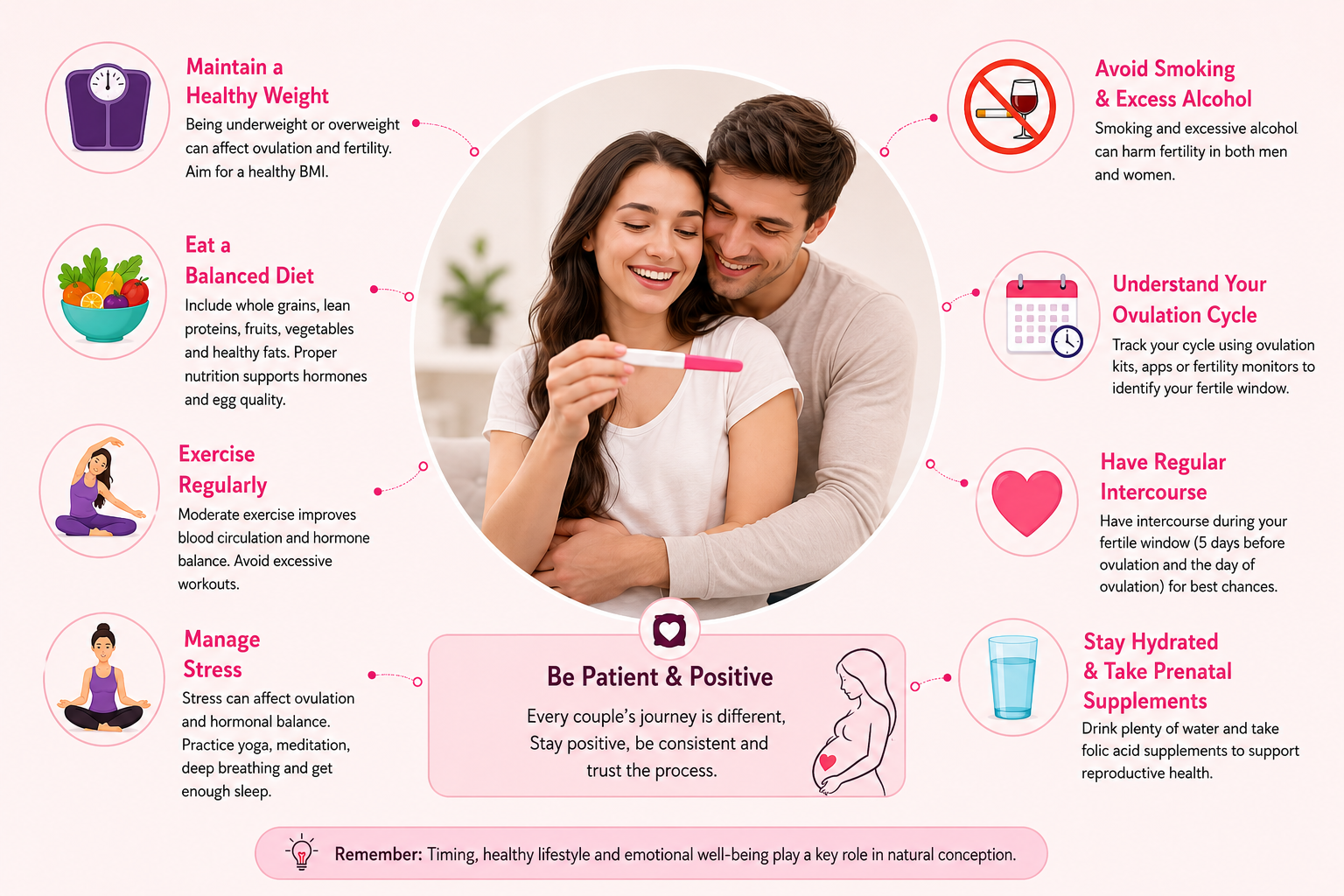
Healthy Weight
Being significantly underweight or overweight can affect ovulation and fertility. You wanna be just right to keep your body balanced to promote good reproductive health.
Balanced Diet
It is good to eat the recommended servings of grains, proteins, fruits and veggies, but make sure you balance everything with some fats. Hormones and egg quality need some good nutrition to thrive.
Exercise
Regular exercise supports fertility, but excessive physical stress may affect hormonal balance. Managing stress won’t actually happen if you lose your balance.
Less Stress
Stress alone may not directly cause infertility, but it can affect hormonal balance and ovulation. Getting good sleep, emotional support, and relaxation techniques can help with this.
Don’t Smoke or Drink
Smoking and drinking a lot harm the fertility of both males and females. Working on these can help with fertility.
Understand Your Ovulation Cycle
Knowing your ovulation cycle can help determine the best times to try to get pregnant and can greatly help with natural conception.
Have Regular Intercourse
Couples looking to conceive should have intercourse throughout the fertile window and not just on one of the key days to try to get pregnant.
These simple lifestyle changes can help couples looking for natural ways to get pregnant.
How Easy is it to Get Pregnant?
For most couples, being under 35 years old, trying to conceive can take up to a year in most cases of unprotected sex. For some, this can take a couple of months; it can also take a few years for some couples.
Some factors that make getting pregnant take longer include:
- Age
- Ovulation timing
- Sperm health
- Hormonal balance
- Lifestyle habits
- Underlying fertility conditions
For women, fertility gradually declines with age, especially after 35. For couples, waiting longer to conceive does not suggest that they are infertile.
The best advice seems to be patience and proper timing. Getting timed evaluations can lead to the most significant improvements.
Common Reasons for Difficulty Conceiving
When conception is delayed, it may be a result of one or more factors related to fertility. Many couples face challenges when trying to conceive, and identifying the underlying cause is often the first step toward finding the right solution. They include the following:
Irregular Ovulation
Ovulation may be unpredictable in conditions such as Polycystic Ovary Syndrome, affecting the chances of conception.
Age-Related Fertility Decline
Once a woman has reached the age of 35, there are several changes in relation to the ovaries and eggs including changes in ovarian reserve and egg quality.
Male Fertility Issues
As a result of a low sperm count, poor motility, and abnormal morphology of the sperm, the chances of conception may be affected.
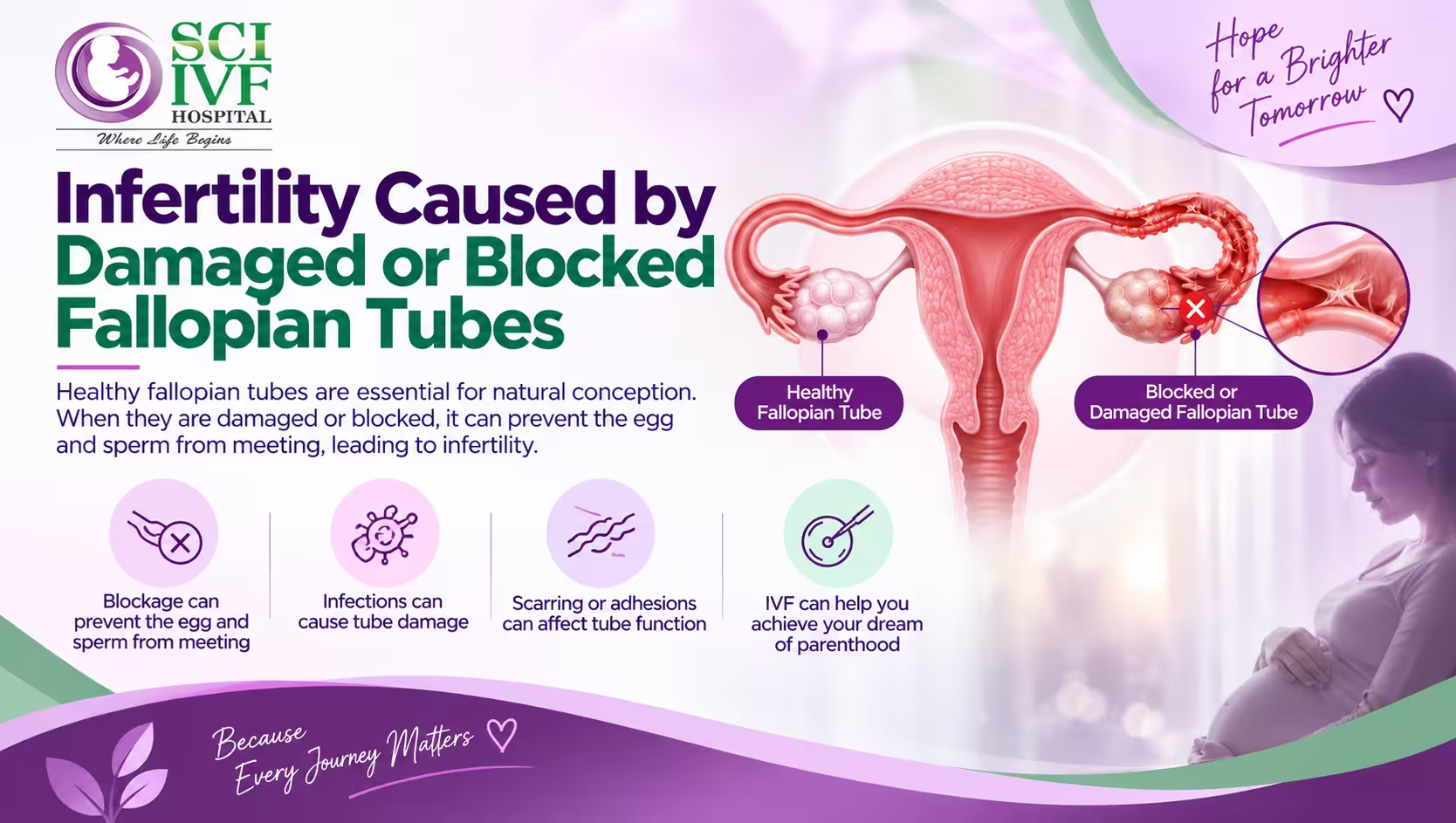
Blocked Fallopian Tubes
The chances of sperm meeting an egg may be inhibited due to blockage or damage to the fallopian tubes.
Hormonal Imbalance
Hormonal disorders may lead to anovulation, changes in the menstrual cycle and implantation.
Stress & Lifestyle Factors
There may also be an impact on fertility as a result of poor quality sleep, poor diet, obesity, smoking, and increased stress.
The effect of these factors on fertility may be worsened by the lack of early detection.
When Should You See a Fertility Specialist?
Factors signalling a need for a fertility expert are:
- If you’re under 35 and trying for a baby for 12 unsuccessful months
- If you’re over 35 and attempting for 6 months
- If your period cycles erratically or inconsistently
- If you have a reproductive illness
- If you have multiple miscarriages
- If you have a suspected ovulation or hormonal imbalance
Couples tend to postpone checking fertility, assuming more time helps. However, diagnosing earlier and taking a course of action to correct it brings relief and reduces emotional pressure improving the chances of conception.
How SCI IVF Helps Couples Conceive
At SCI IVF, we appreciate the fact that every fertility experience is unique, which is why our experts deliver tailored care to all clients using cutting-edge diagnostics and proven techniques.
The services that we offer include:
- Fertility tests
- Ovulation tracking
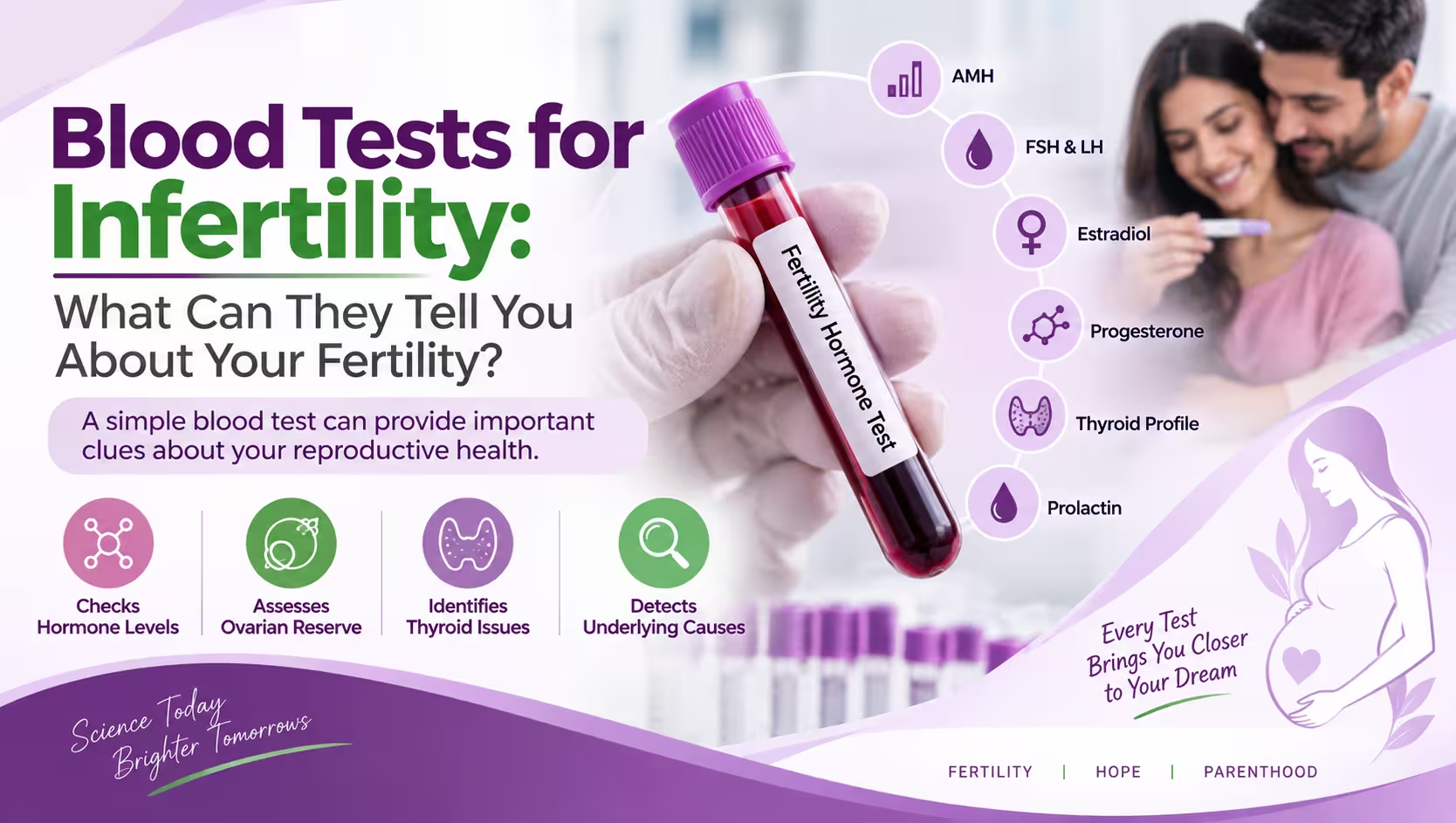
- Hormone analysis
- Fertility tests for men
- IUI and IVF treatment
- Tailored fertility solutions
Our objective is to enhance your probability of becoming parents while providing emotional support during the process.
Conclusion
Knowing the process of conception and having knowledge about your fertile days will greatly increase your odds of conceiving. Healthy living, accurate tracking of ovulation and timely recognition of fertility issues will all contribute to your goal of natural conception.
Although there are couples who conceive easily, there are those who will require further help, which is perfectly alright.
For those who are trying but failing to conceive or wish for professional guidance regarding their fertility, we highly recommend visiting SCI IVF. Our team of specialists will provide you with expert fertility evaluation and treatment options to bring you closer to parenthood.
FAQs
1. How often should couples try when planning a pregnancy?
When attempting to conceive, a couple should simply partake in sexual activity during the female's fertile window as there is no focus on a specific day.
2. Can irregular periods make it harder to get pregnant?
Yes. Irregular period cycles can make Irregular periods can make ovulation difficult to predict, which may reduce the chances of conception.
3. Does age affect fertility in women?
Yes. Age can lead to a decline in consistent fertility cycles in addition to the decline in females post 35 as the natural ovarian reserve, in addition to egg quality, declines.
4. Can stress delay pregnancy?
Stress can cause a change in hormone levels as well as overall reproductive health, which can lead to a delay in ovulation and in turn the overall conception.
5. When should couples seek fertility advice?
Couples should seek the help of a fertility specialist especially when there is a known complication with fertility and regular cycles when there is no pregnancy after several months of attempts to conceive.