Infertility and Sterility: Understanding the Differences, Myths, and Treatment Options
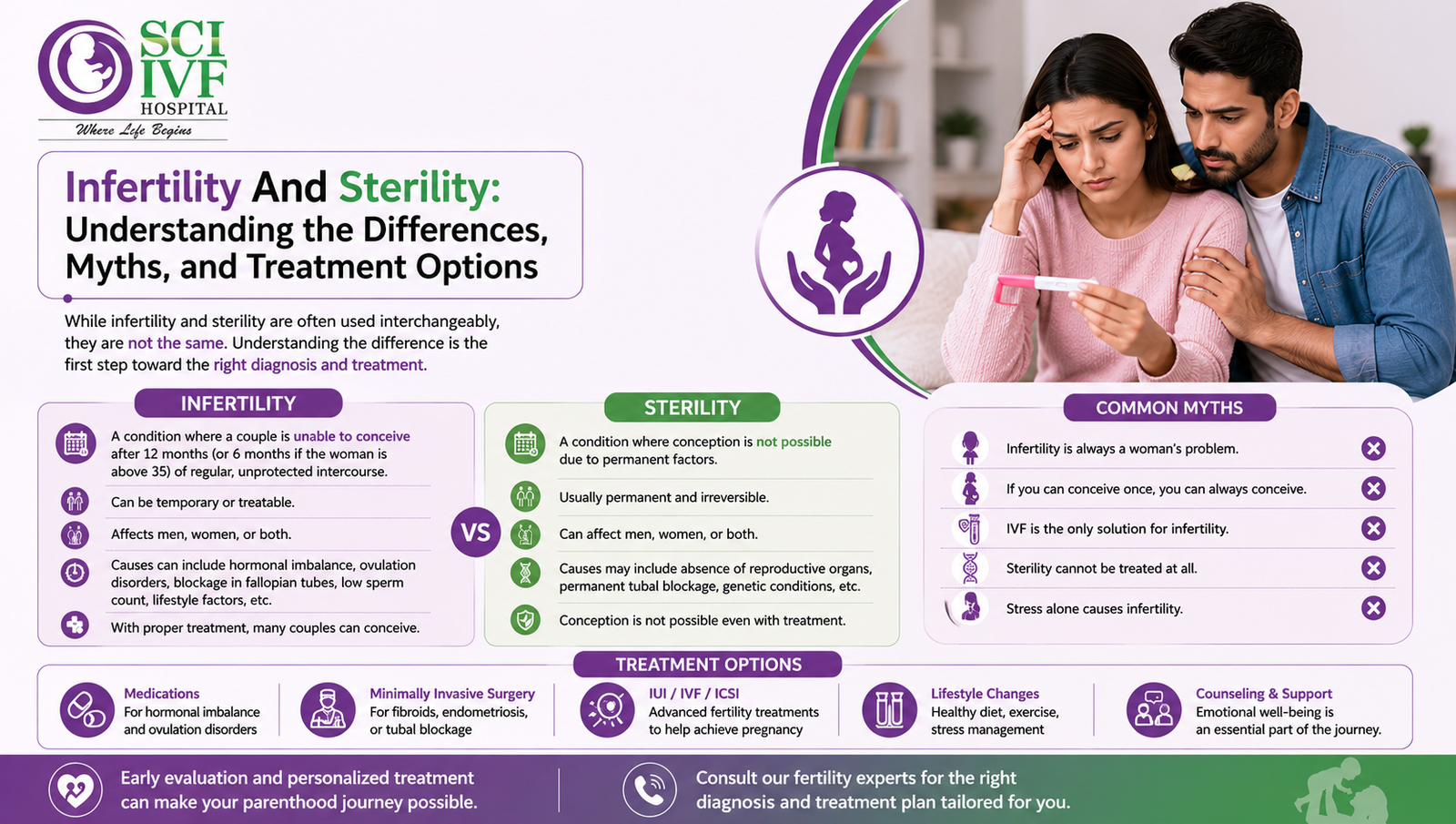
Infertility means a delay or difficulty in achieving or carrying a pregnancy to term, and in many cases, it may be treatable with appropriate medical care. Sterility, on the other hand, traditionally refers to a permanent biological inability to achieve natural conception.
Understanding the difference between infertility and sterility is important because difficulty conceiving does not always mean that pregnancy is impossible. Infertility may be related to factors affecting either partner and can sometimes be managed through medicines, surgery, lifestyle changes, or assisted reproductive techniques such as IUI, IVF, or ICSI.
In cases of true sterility, natural conception may not be possible, and alternative reproductive options such as donor eggs or sperm may be considered depending on the individual situation.
This article explains the difference between infertility and sterility, their possible causes, how fertility problems are evaluated, common misconceptions, and the treatment or reproductive options that may be available.
What Is Infertility?
Infertility is defined as difficulty in becoming pregnant and is not necessarily indicative of being incapable of conception.
It may be categorized as:
- Primary infertility: No pregnancy has been recorded before.
- Secondary infertility: Difficulty in becoming pregnant happens after pregnancy has taken place before.
Infertility may be caused by female causes, male causes, combined causes, or sometimes by unknown reasons.
What Is Sterility?
Sterility can refer to the permanent inability to reproduce and have children. In the context of fertility, it describes a biological condition in which natural reproduction is not possible.
The term can also have a different medical meaning, referring to a state that is completely free from living germs or microorganisms. Therefore, the meaning of sterility depends on the context in which the term is used.
Infertility vs Sterility: What Is the Difference?
The important point is that infertility and sterility are not interchangeable terms, and reproductive potential should be assessed medically rather than assumed from terminology alone.
What Causes Infertility?
Infertility is caused by a variety of factors on either side of the equation.
Causes in Females
These may include:
- Problems with ovulation
- Polycystic ovary syndrome (PCOS)
- Endometriosis
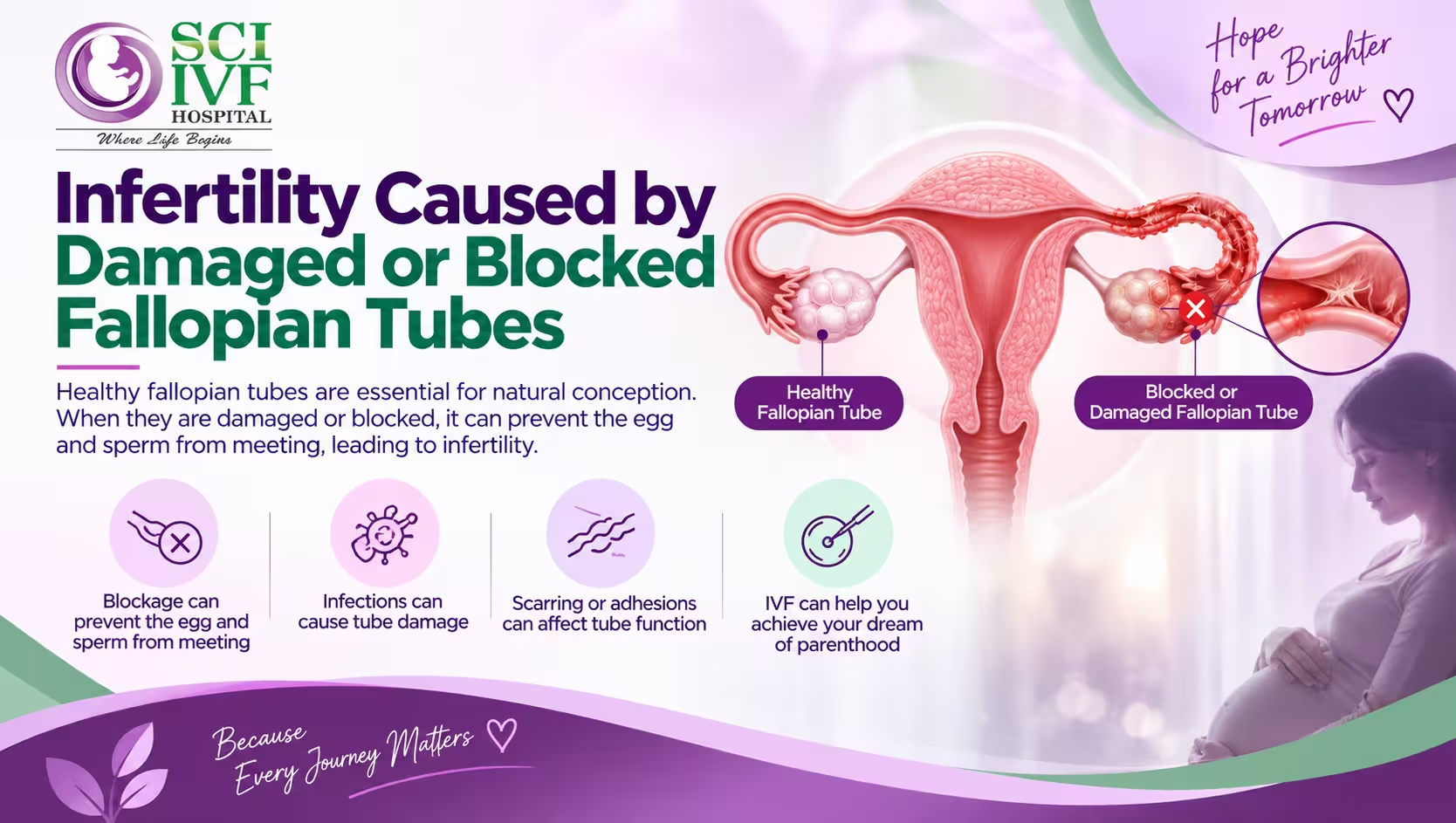
- Fallopian tube damage
- Abnormalities in the uterus
- Advanced age causing decreased fertility
- Some hormonal problems
Causes in Males
These may include:
- Low sperm count
- Decreased sperm motility
- Abnormal sperm shape
- Varicocele
- Hormonal imbalances
- Infections and other diseases
Sometimes, the tests do not show any specific cause for the problem. This condition is known as unexplained infertility.
What Can Cause Sterility?
Sterility can be linked to those situations that have an extremely adverse effect on the capability to reproduce, such as certain birth defects, removal of reproductive organs or certain other reproductive problems that are permanent in nature.
But one must not use this term to diagnose oneself. A fertility specialist can help in determining the reproductive potential of a person.
Common Myths About Infertility and Sterility
Myth 1: Infertility means that you will never conceive a child.
Fact: Infertility simply means the inability to conceive a baby. Depending on the cause of infertility, it may be treatable and conception is possible through treatment.
Myth 2: Infertility is always the woman’s problem.
Fact: Fertility problems are caused by women’s problems, men’s problems, by a combination of the two or other causes.
Myth 3: In vitro fertilization is the only available method of treatment.
Fact: Infertility treatment varies with the cause and ranges from lifestyle changes, medication, surgery, IUI, IVF and even ICSI when necessary.
Myth 4: Infertility and sterility are synonymous terms.
Fact: Sterility and infertility are not synonymous. While infertility simply describes the inability to conceive, sterility is a far more serious condition of reproductive inability.
Myth 5: All fertility issues have symptoms.
Fact: Fertility problems do not necessarily present symptoms. Difficulty conceiving can sometimes be the only symptom of the need for treatment.
How Are Infertility and Fertility Problems Diagnosed?
Evaluation of fertility usually takes into account both people when appropriate. The tests will be tailored for each individual and can consist of the following:
For the female:
- History
- Ovulation
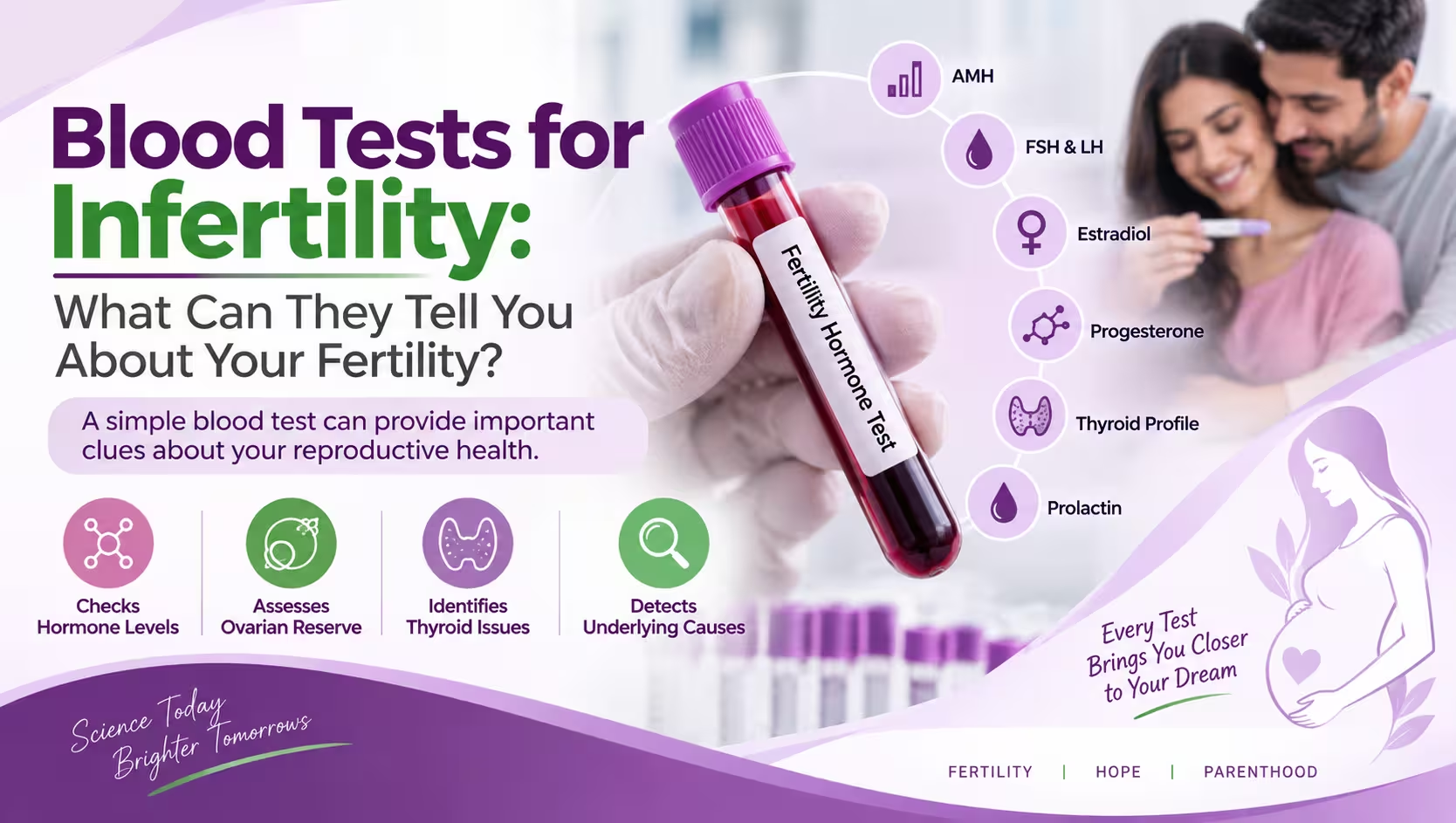
- Testing of hormones when needed
- Ultrasound
- Uterus and fallopian tube evaluation when necessary
For the male:
- Semen analysis
- History
- Examination
- Hormonal or other testing when clinically needed
Not every individual needs all the tests. The testing depends on their history and fertility problems.
What Are the Treatment Options for Infertility?
Management is based on the underlying cause, age, period of infertility, and fertility aims.
Some of the available treatments may include:
- Optimization of lifestyle and general health
- Medications for ovarian problems
- Management of other medical conditions
- Surgery to correct certain structural issues
- Intrauterine insemination (IUI)
- In vitro fertilization (IVF)
- ICSI for selected cases, especially for male infertility problems
- Use of donor eggs or sperm when required
However, all couples with infertility do not require IVF. The right treatment should be determined by fertility testing.
Can Infertility Be Treated?
Many infertile issues are treatable or manageable, but it depends upon the cause of the problem as well as the situation.
There may be treatments for ovulatory disorders, abnormal sperm, hormones and even physical reproductive system issues among others. There are also assisted conception methods like IUI, IVF and ICSI.
At SCI IVF, you will be able to get an assessment and also consider treatment options according to your unique reproductive requirements instead of just going for one treatment plan that fits all.
When Should You See a Fertility Specialist?
You should consider a fertility evaluation if pregnancy has not occurred after an appropriate period of trying, or sooner if you already have a known reproductive health concern.
Early evaluation may be helpful if you have:
- Irregular or absent menstrual periods
- A known reproductive problem
- Existing pelvic or reproductive health concerns
- Suspected male fertility issues
- A previous history of fertility problems
- Age-related fertility concerns
Fertility problems can have different causes, so the right evaluation depends on your individual situation. If you or your partner are facing any of these concerns, consider consulting fertility specialists at SCI IVF Hospital for appropriate evaluation and personalized guidance.
Infertility vs Sterility: Key Takeaways
- Infertility usually signifies problems conceiving a baby.
- Sterility usually indicates a problem of serious reproductive inadequacy.
- Infertility does not mean that pregnancy is completely unattainable.
- Issues in fertility may occur on the part of one partner or both.
- The method of treatment depends on the reason for the infertility.
Conclusion
Trying to get your head around the gap between infertility and sterility can help couples avoid unnecessary fear or confusion, sometimes even when people don’t say much. In plain terms, infertility usually means trouble getting pregnant, and it does not automatically suggest that becoming a biological parent is out of the question.
Fertility issues can show up for women, men, or both partners, and the reasons can be various, often complex. So instead of jumping to conclusions like “we can’t have a child so it must be sterility”, couples should go for a proper fertility assessment, a thorough check that clarifies what’s really going on. After that diagnosis, the path forward might involve medicines, a surgical approach, IUI, IVF, ICSI, or other assisted reproductive choices, depending on what the evaluation finds.
If you’re finding it hard to conceive, SCI IVF Hospital can offer a personalised fertility evaluation and clear treatment guidance, as a trusted option for couples who want the best IVF and fertility centre in India—focused on your own reproductive situation and individual needs.