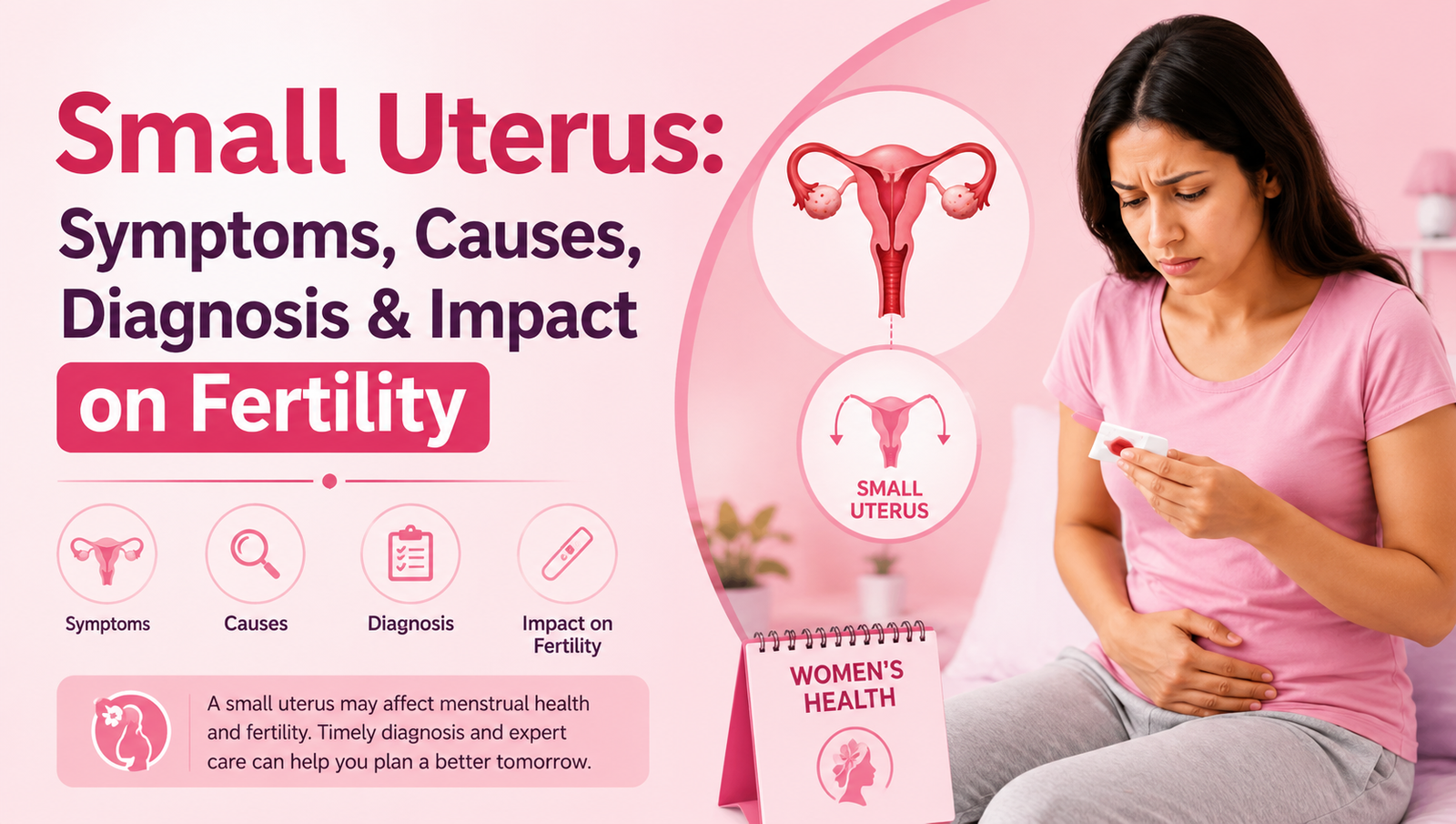
Small Uterus: Symptoms, Causes, Diagnosis & Impact on Fertility
Being told that you have a small uterus can be concerning, especially if you're planning a pregnancy or undergoing a fertility evaluation. Medically known as uterine hypoplasia or an underdeveloped uterus, a small uterus is generally defined as a uterus measuring less than 6 cm in length, compared to the average adult uterine size of approximately 7–8 cm.
Women with a small uterus may experience symptoms such as irregular or absent periods (amenorrhea), delayed puberty, or difficulty conceiving. Common causes include hormonal imbalances, particularly low estrogen levels, congenital developmental abnormalities, genetic conditions, and certain medical conditions that affect reproductive growth.
While a small uterus and fertility can sometimes be linked, having a smaller-than-average uterus does not automatically mean infertility. Many women with a hypoplastic uterus are able to conceive and have successful pregnancies with proper medical evaluation and treatment. In this article, we'll discuss the causes, symptoms, diagnosis, treatment options, and the impact of a small uterus on fertility and pregnancy.
What is a small uterus?
A small uterus, medically known as a hypoplastic uterus or infantile uterus, is a uterus that is smaller than the typical adult size. While the average adult uterus measures around 7–8 cm in length, a small uterus is generally smaller than expected for a woman's age and reproductive stage.
Some women are born with a small uterus, while others may develop it due to hormonal imbalances, genetic conditions, or other medical factors that affect reproductive development. It is often discovered during a pelvic ultrasound, fertility assessment, or evaluation for irregular menstrual cycles.
Although a small uterus can sometimes be associated with irregular periods, fertility challenges, or pregnancy-related concerns, it does not automatically mean infertility. Many women with a mildly small uterus have few or no symptoms and can conceive naturally or achieve a successful pregnancy with appropriate medical care and fertility support.
What Are the Symptoms of a Small Uterus?
Many women with a small uterus (uterine hypoplasia) may not experience any noticeable symptoms and often discover the condition during a pelvic ultrasound or fertility evaluation. However, when the uterus is significantly underdeveloped, certain symptoms may occur depending on the underlying cause.
Common symptoms of a small uterus include:
- Irregular or absent menstrual periods (amenorrhea)
- Very light or infrequent menstrual flow
- Delayed puberty or delayed development of secondary sexual characteristics
- Difficulty conceiving
- Recurrent pregnancy loss in some cases
- Chronic pelvic discomfort or pain
Since these symptoms can also be associated with other reproductive or hormonal conditions, it is important to consult a gynecologist or fertility specialist for an accurate diagnosis and appropriate treatment.
What Causes a Small Uterus?
Many things can cause a small uterus.
Congenital Conditions
Some women are born with a small or underdeveloped uterus because of congenital reproductive organ malformations. A small, underdeveloped uterus may be referred to as a hypoplastic uterus.
Hormonal Imbalances
Hormonal imbalances can also result in a small uterus. Low estrogen levels in women during their pubescent and adult years can also result in a small uterus.
Some pituitary and ovarian hormonal disorders can also affect uterine development.
Genetic Conditions
Some genetic disorders that result in a small uterus include some chromosomal conditions like Turner syndrome, which may be related to underdeveloped reproductive systems.
Other Medical Conditions
A small uterus may also result from any of the following:
- Premature ovarian insufficiency
- Chronic disorders that result in developmental and growth delays
- Endocrine disorders
Identifying the cause of a small uterus helps to determine the appropriate treatment.
How is a small uterus diagnosed?
Diagnosis of a small uterus is generally made by clinical assessment and imaging procedures.
The following tests can be ordered by your doctor:
Pelvic Exam
A physical exam serves as an initial step in evaluating the reproductive system.
Ultrasound (USG)
A pelvic or transvaginal USG scan is the most popular method for assessing the uterus.
MRI Scan
An MRI scan may be used in certain situations to get more details, especially when a congenital issue is suspected.
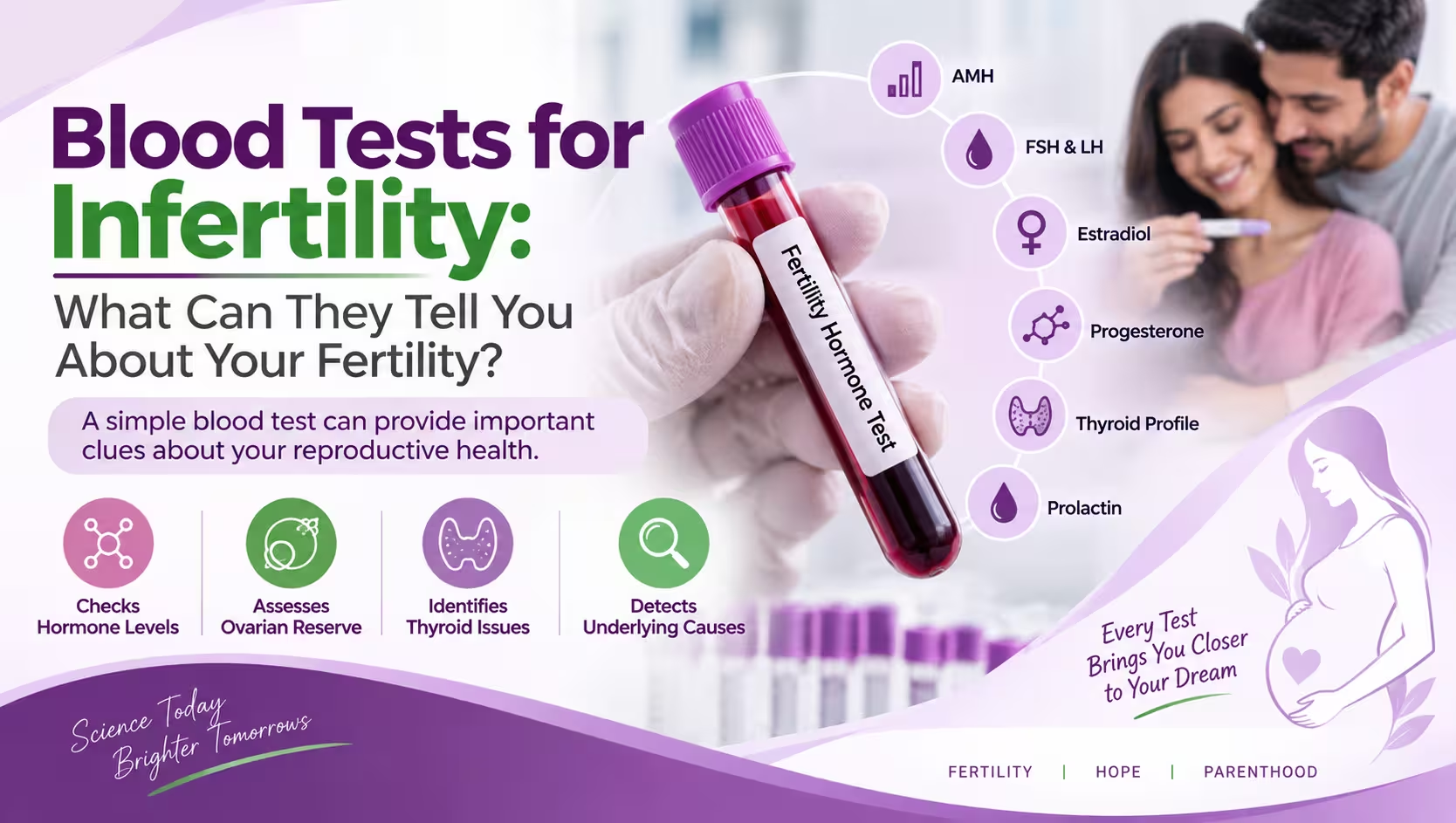
Blood Tests for Hormones
Blood tests are useful to assess estrogen and other reproductive hormones.
Evaluation of Fertility
In case there are issues with conceiving, further tests could include assessment of ovulation, ovarian reserve, and fallopian tubes.
Side Effects of Having a Small Uterus
Side effects associated with a small uterus are not identical for each woman. While some ladies do not encounter any considerable issues, others might have problems with reproduction.
They can be:
- Trouble conceiving
- Irregular or missing periods
- Increased chance of miscarriages in particular cases
- Greater possibility of monitoring pregnancy in case of conception
- Psychological distress due to reproductive problems
It should be noted that all these side effects greatly depend on the reason behind them and on the general health of the reproductive system.
Can You Get Pregnant with a Small Uterus?
Yes, there are cases where a woman with a smaller-sized uterus can get pregnant.
There are several considerations for natural conception which include:
- Normal functioning of the ovaries
- Ovulation is normal
- The quality of eggs is good
- The fallopian tube is healthy
- Uterus lining is favorable
- Normal hormone levels
If all these are normal, then natural conception can still happen.
But in certain cases, the woman might need fertility treatment.
Small Uterus Pregnancy: What to Expect
Pregnancy with a small uterus needs to be monitored carefully; however, most women end up delivering normal babies.
Depending on what the underlying causes of a small uterus are, your doctor will advise you to:
- Have more ultrasounds
- Undergo regular prenatal visits
- Monitor baby’s development
- Check on the cervix health
- Treat any complications that arise from pregnancy
Women may have a slightly increased risk of giving birth prematurely or miscarrying; however, depending on how bad the problem with the uterus is.
Treatment for a Small Uterus
Treatment is determined based on the underlying condition rather than just uterine size.
Hormone Therapy
In the case where a lack of estrogen causes an underdeveloped uterus, hormone therapy may be considered.
Treatment for the Underlying Condition
Management of hormones or nutritional deficiencies can help achieve better reproductive health.
Fertility Treatments
When conception fails, you can consider:
- Ovulation induction
- Intrauterine insemination
- In vitro fertilization
The fertility specialist would suggest which one suits your case after your consultation.
When Should You See a Fertility Specialist?
Visit a fertility expert in case you:
- Fail to get pregnant despite your efforts
- Have irregular or non-existent menstrual cycles
- Have experienced miscarriage repeatedly
- Have been told that you have a small uterus through ultrasonography
- Have had a history of hormonal imbalances or congenital anomalies of the uterus
The above problems need to be evaluated early for a proper solution.
Tips for Women with a Small Uterus Planning Pregnancy
In case you have a small womb and plan to become pregnant, these lifestyle choices may be helpful to promote your fertility:
- Keep an appropriate weight of the body.
- Adopt healthy nutrition.
- Practice physical activity.
- Don’t smoke or drink much.
- Use your medicines as directed.
- Have regular visits to a gynecologist.
- Consult a doctor if conception does not occur.
All these measures could positively affect your ability to conceive.
Conclusion
Being diagnosed with a small uterus can feel concerning, especially if you're planning to start or grow your family. However, a small uterus does not automatically mean infertility. Fertility depends on several factors, including hormone levels, ovarian function, egg quality, uterine health, and overall reproductive well-being.
With early diagnosis, proper evaluation, and the right medical support, many women with a small uterus are able to conceive and have successful pregnancies. If you're facing difficulties with conception or have been told you have a small uterus, consulting a fertility specialist can help you understand your options and create a personalized treatment plan.
At SCI IVF Hospital, a trusted Fertility Center in India, our experienced fertility specialists provide advanced diagnostic services, fertility treatments, and compassionate guidance to help you take the next step toward parenthood with confidence.
Frequently Asked Questions
What does a small uterus indicate?
A small uterus is a term used to describe a small uterus due to a woman’s age or her stage of development. It is often due to underdevelopment which can be because of congenital reasons or due to hormonal reasons.
Is natural pregnancy possible with a small uterus?
Yes. Many women with a small uterus can achieve a natural pregnancy. This also depends on the health of the ovaries along with the hormonal health and the health of the reproductive system overall.
Is a small uterus equal to infertility?
Not necessarily. A woman having a small uterus does not mean that she will be infertile. In fact, a lot of women with a small uterus can carry and give birth to babies.
Is having a small uterus a permanent condition?
There may be a slight development of the uterus in cases of a small uterus due to hormonal deficiency. Other than that, conditions are permanent.
Is IVF possible for women with a small uterus?
IVF is definitely possible for women having a small uterus especially when achieving the natural process of conception is difficult or in cases of associated infertility factors.